Adult Use Cannabis Industry is on Tenterhooks After Spicer's Comments

With products that rival that of fine wine, high-end health, and wellness brands and gourmet foods that are fit for a gift basket, this controversial plant is already a big business in the US as more states make it mainstream. However, the new Trump administration is leaving those in the recreational marijuana industry to feel extremely nervous.
Last Thursday, White House press secretary Sean Spicer put the industry on tenterhooks by telling reporters that under President Donald Trump and Attorney General Jeff Sessions, the U.S. Department of Justice will administer “greater enforcement” of the recreational market, also referred to as “adult use” cannabis.
Spicer states, “I think there’s a big difference between medical marijuana, which states have allowed in accordance with the appropriations rider, have set forth a process to administer and regulate that usage, versus recreational marijuana and that’s a very, very different subject.”
The cannabis industry is in flux—federally, it’s legal but each state is in charge of its respective law—but that hasn’t stopped marijuana producers, processors, and dispensary owners from creating successful brands and products for the occasional user. In 2016, the legal market for medical and recreational cannabis combined reached almost $7 billion in the United States, which may have lulled some advocates into a sense of security that the marijuana legalization bell cannot be unrung. Arcview Market Research, which describes cannabis as the “fastest growing industry in the world,” expects revenue to increase to more than $21 billion by the end of Trump’s first term in office. How is Congress is responding to the growing popularity of marijuana? Four members have already formed a bipartisan “Cannabis Caucus” to banish conflicting laws between state and federal governments so that the entire country can capitalize on the growing industry.
Those already invested in the recreational side of the marijuana business, or hoping to enter it, must now wait for news on what will happen next.

celeb w

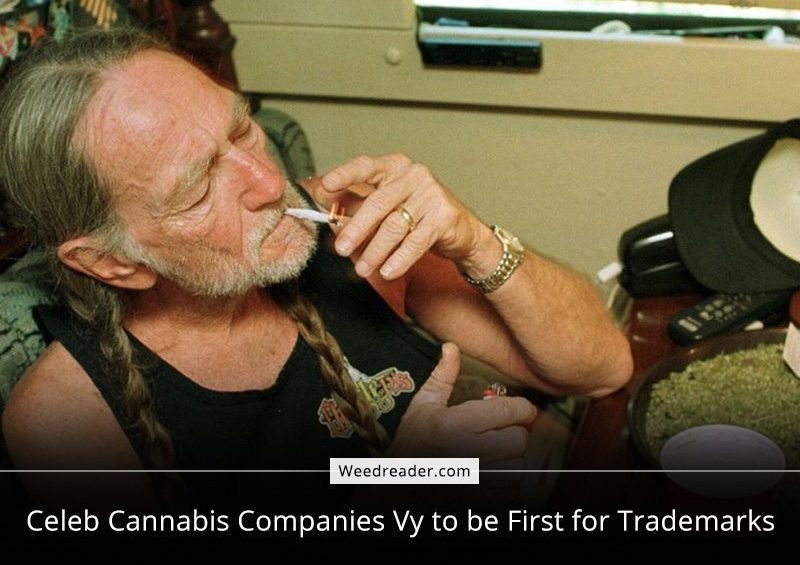
Celeb Cannabis Companies Vy to be First for Trademarks

What do country singer Willie Nelson, Snoop Dogg, Bob Marley, Whoopi Goldberg and Hunter S. Thompson have in common? Not only are they all icons in their own right but they may soon be trademarked, or at least their pot products will be. They are just a handful of an expanding number of celebs who are (or were) marijuana advocates and regular smokers who themselves, or their still-living relatives, have an eye on the burgeoning pot market.
Because marijuana is illegal under federal law, the U.S. Patent and Trademark office won’t issue trademarks to protect marijuana brands, so marijuana companies that can afford it—like investor-backed celebrity brands—are turning to state lawmakers for help.
Enter Rob Bonta, a Democratic assemblyman from Alameda, who introduced a bill that would grant cannabis companies state trademarks. The bill could ban marijuana billboards near freeways and provide money to develop standards for testing impaired drivers. Law enforcement officials who opposed the legalization of recreational pot have yet to take a position on this motion.
The pot-loving celebrities mentioned above have fame and backstory with the drug to help them get attention in this matter, including the children of the late Bob Marley. The reggae singer was at the forefront of the global legalization movement and now, backed by a Seattle venture capital firm, so is his oldest daughter. She launched Marley Natural back in in 2014 and the products already are available in California medical dispensaries.
Before any trademarks are granted, California’s regulators must first decide who will receive the first licenses to grow, distribute and sell recreational marijuana. Those who are already cleared to sell medical marijuana in California could be the first in line for the trademarks. Right now, those regulators are busy working with growers and sellers right now to get California’s adult-use pot market launched; the race is on to issue all the necessary licenses by early 2018.

pot

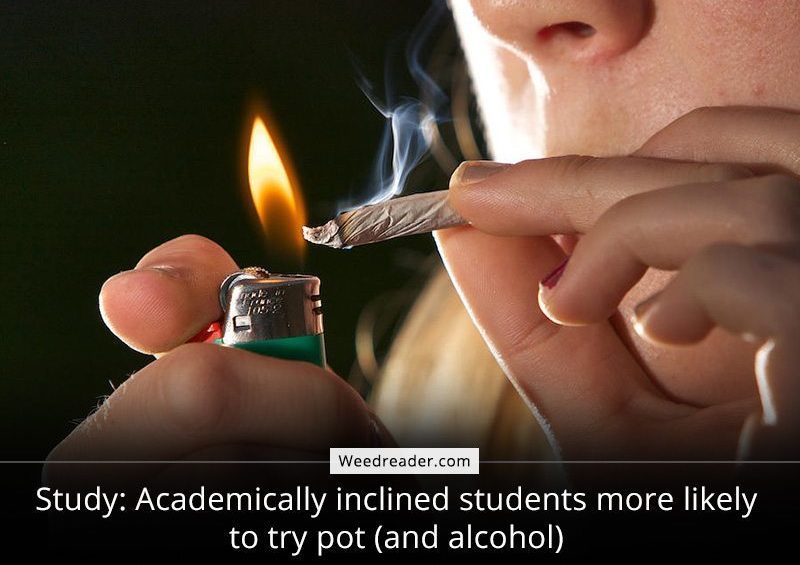
Study: Academically inclined students more likely to try pot (and alcohol)

Smart students tend to experiment more with drugs and alcohol, but James Williams and Gareth Hagger-Johnson, co-authors of a new study, point out some of the reasons behind the phenomenon. The study, published Wednesday in the British Medical Journal Open, found that academically gifted teens are less likely to smoke cigarettes and more likely to drink alcohol and smoke pot compared with those with lower scores.
Wanting to understand more about a recent decrease in the number of teens who were admitting to trying tobacco, alcohol, and cannabis (down 4%, 6% and 9% respectively from the figures in 2004), Williams and Hagger-Johnson surveyed more than 6,000 students from public and private schools across England. They tracked each student’s use of tobacco, alcohol, and cannabis from age 13 or 14 until age 19 or 20, as well as their academic scores.
What they found was that during their early teens, were slightly more likely to say they used cannabis and less likely to use tobacco and alcohol. Later on, those same high-scoring students were more than twice as inclined to drink alcohol but less likely to binge-drink. The highest-scoring pupils were almost twice as likely to use cannabis regularly and 50% more likely to use it occasionally compared with lower-scoring teens.
Williams and Hagger-Johnson drew a few conclusions from their study. One was that cognitive ability indicates an openness to new experiences, which paired with boredom due to a lack of stimulation in class. Another was that smart teens run with older peers who were already into their phase of experimenting with substances. Drinking patterns, they say could be related to the socioeconomic status of their parents, stating that “parental influence, since parents with high cognitive ability and socioeconomic status are known to drink alcohol more regularly.”
Dr. Amir Levine, a psychiatrist and assistant professor at Columbia University Medical Center, finds the results interesting but points out the necessity “to differentiate between substance experimentation and problem drug use.” He adds, “We usually think about youth who are not doing well in school as the ones that are prone to alcohol and drug use.”

m mari

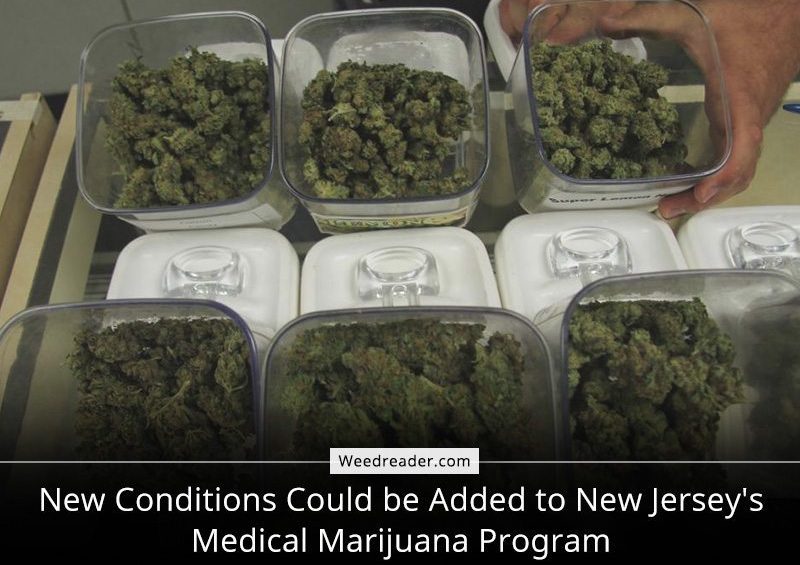
New Conditions Could be Added to New Jersey's Medical Marijuana Program

Medical marijuana may become an option for those in New Jersey who suffer from chronic pain, thanks to some emotional testimony that took place before a Health Department advisory panel at the War Memorial last Wednesday. The measure would expand the standing list of about a dozen ailments that already qualify for treatment using therapeutic cannabis, which includes terminal cancer, MS, and epilepsy.
During the three-hour hearing, more than 20 patients testified after submitting petitions, references to health studies, and even their own doctor’s recommendations. The Health Department says it received 68 requests last year for about 20 new conditions to be considered, including lupus, autism, osteoarthritis, and opioid addiction disorder.
Chairing the panel is a professor of anesthesiology, Alex Bekker, who states, “I feel there is sufficient evidence to add chronic pain and migraines and fibromyalgia, all under the one umbrella of chronic pain.” Bekker feels optimistic about his panel being for the measure and that adding chronic pain to the list will have more benefit than risk. He conceded the drug’s palliative effects, confirming that there is “sufficient evidence. . . .that marijuana can be very helpful” for any chronic pain.
The panel now has 60 days to submit their report that Bekker, followed by a five-month public review session. Once that is through, a final determination from DOH Commissioner Cathleen Bennett will come sometime in October. The New Jersey Medicinal Marijuana Program is now seven years old, but this is the first time that the panel held a public forum to discuss adding new conditions.
On the eight month waiting period, Sen. Joseph Vitale (D-Middlesex), chairman of the Health Committee, says “That’s far too long when evidence from other states is clear on the efficacy of treating (chronic pain from) certain disorders and diseases.”

Reports says Marijuana Will Create More Jobs Than Manufacturing By 2020

If it’s jobs that President Trump wants to conjure up during his time in office, then he should look no further than the cannabis cash crop to create more jobs than manufacturing by 2020.
That number comes from New Frontier Data, an authority in business intelligence for the cannabis industry, projects that the legal marijuana market will create 283,422 jobs over the next 13 years. That’s more than the Bureau of Labor Statistics expects will come from industries like manufacturing, utilities, and even government. In fact, the BLS says that the manufacturing sector will shrink by about 814,000 jobs over the next 17 years, utilities by 47,000, and government by 383,000 positions.
“These numbers confirm that cannabis is a major economic driver and job creation engine for the U.S. economy,” said Giadha Aguirre De Carcer, Founder and CEO of New Frontier Data. “While we see a potential drop in total number of U.S. jobs created in 2017, as reported by Kiplinger, as well as an overall expected drop in GDP growth, the cannabis industry continues to be a positive contributing factor to growth at a time of potential decline. We expect the cannabis industry’s growth to be slowed down to some degree in the next 3 to 5 years, however with a projected total market sales to exceed $24 billion by 2025, and the possibility of almost 300,000 jobs by 2020, it remains a positive economic force in the U.S.”
In 2016, the legal cannabis market was worth an estimated $7.2 billion in 2016, and that number is only growing at a compound rate of 17%, according to projections. Sales will go from $4.7 billion in 2016 to $13.3 billion in 2020, in medical cannabis alone. On the adult-use recreational end, those sales are expected to reach $11.2 billion by 2020.
New Frontier’s projections are based on the markets that are already part of legal initiatives, meaning the 28 states with some form of medical or adult-use marijuana for sale. The numbers do not include any additional states that may pass legalization measures between now and 2020, though the number of revenue and jobs would significantly increase if more states expand their legalized cannabis programs.

wh

Will the White House Crackdown on Cannabis?


White House Press Secretary Sean Spicer just issued an ominous warning to pot smokers in the U.S.
“There is still a federal law that we need to abide by when it comes to recreational marijuana,” he told reporters during a press briefing Thursday. When asked whether the government would take action against recreational marijuana, even in states where it’s legal, he replied, “I think that’s a question for the Department of Justice. I do believe that you’ll see greater enforcement of it.”
In case you don’t know, the DOJ is headed up by the U.S. Attorney General, a man by the name of Jeff Sessions. In an earlier article, Marijuana Policy Under President Trump, I’ve already gone over all the reasons why Sessions is a terrible pick for this job. (Don’t say I didn’t warn you.) But in a nutshell: he’s a racist, who vehemently opposes cannabis use. And now it’s up to him to determine the Fed’s policy on marijuana.
Great.
Spicer also told reporters that, “When you see something like the opioid addiction crisis blossoming in so many states around this country, the last thing we should be doing is encouraging people.”
This just shows Spicer’s complete ignorance of cannabis, opioids, and addiction. It hearkens back to the old “gateway drug” idea, that isn’t backed by any evidence, whatsoever. In fact, what little evidence we do have suggests the opposite.
One study found that opioid overdose deaths fell by an average of 25 percent in states that legalized medical marijuana. According to the DPA (Drug Policy Alliance), two years after recreational pot was legalized, Colorado saw the rate of ALL drug charges — not just pot — decline by 23 percent. Which would seem to indicate that, when marijuana is legally available, people are less likely to turn to dangerous and illegal alternatives.
The truth is that cannabis does not have the same addictive properties as heroin and other opioids. Not to mention that no one has ever died of a marijuana overdose, EVER. And there has never been a single study that shows marijuana use leads to use of other drugs. Not one.
Simply repeating it over and over again doesn’t make it true.
On the bright side, Spicer repeatedly emphasized that medical marijuana use would not be challenged. So the millions of people who depend on cannabis for their health and comfort can breathe a sigh of relief.
The Department of Justice has yet to make any comment regarding Thursday’s press briefing, despite many requests from the press. So all we can do is wonder: with 60 percent of the population in favor of legalization, and several states already legalizing recreational use, does the Trump administration really want to pick this fight?
And if so, is it a battle they can win?
Will state and local law enforcement agents continue to serve their communities, and enforce the will of the people? Or will they fall in line with the Fed, and do the bidding of the authoritarian regime occupying the White House?
Only time will tell.
 

km

Kushmoji is Making Cannabis Emojis that Market and Educate

Emojis are here to make our cannabis stories easier to tell. Kim Kardashian has emojis, Big Freedia has emojis, and even Devo has an emoji, so why shouldn’t cannabis have a whole set of them?
Kushmoji is like regular emoticons, connected to the keyboard of your phone, except that this set is all cannabis-centric. Want some examples? The collection ranges from a simple, green cannabis leaf, to a dab torch, to a woman’s hand holding a lit joint. The difference between Kushmoji and other emoticons—even other so-called cannabis versions—is that the images are clean-cut enough to use like education and marketing tools.
Kushmoji is already calling itself the “official” cannabis emoticon library although it is in its Beta version. But promises positioning with marijuana brands and products to make it more appealing from a marketing standpoint. Got a new product that you want to introduce to the marijuana market? Send it to Kushmoji creator, Ben Tyson and have him turn it into a vector graphic to add to the library. Think of it like a caricature of your item that your target audience gets to learn about by finding it among the other emojis. Like that time you kept using the Man in Business Suit Levitating because it reminded you of the “rude boy” logo found on The Specials’ records, but then you learned that it is supposed to be an exclamation mark. Except that Tyson’s team preempts your queries and embeds information about the product or tool in the actual keyboard, so you always know what you’re using in your picto-narrative.
Interestingly, Kushmoji is not the first to try tackling the cannabis emoji keyboard; they’re just the ones doing it differently. “We looked at the competition,” says Tyson in his latest interview with The Cannabist. “There are some that are better than others but what we found, in general, was that most of the competition was doing the cannabis subculture graphics, you know, the stoned faces or a lit joint. That’s such a small percentage of the demographic of cannabis users and enthusiasts, we thought, ‘Why not turn this into a tool where people can learn about the industry?'”
Look out for the Kushmoji app, launching soon, anywhere you can download apps.

dea

DEA: Marijuana is Not a Gateway Drug

Marijuana has been called a gateway drug for over 80 years.

The battle lines were drawn long before anyone currently driving the gateway debate had assumed power. Political figures have demonized cannabis and those who consume it for almost a century and worked to create a massive industrial prison complex designed to harvest people. Low income and minority people have borne the brunt of the assault.
Americans have been tricked into accepting the most ridiculous claims about cannabis and a whole generation of people have grown up behind bars because of it. Politicians have used slippery speech to sway public opinion and outright changed the law in order to suite their desires for decades. When Reagan and Clinton enacted laws that put more people in jail than the Romans had slaves.
Larry Anslinger didn’t care about how many would suffer without the healing properties of cannabis, he was motivated by an zealous hatred for the plant to create the movie Reefer Madness. President Nixon was motivated by a religious desire to punish people regardless of what his own investigators proved. Reagan had no mercy for people caught in the crossfire when he enacted draconian mandatory punishments for minor drug infractions.gateway

We stand at the dawn of a new era of American drug policy.

Despite an abundance of empirical evidence about the medical benefit of cannabis from reputable medical professionals from the Shafer Commission to Sanjay Gupta, it remains a schedule 1 controlled substance. This classifies weed as having “no medical benefits” and creates massive hurdles for scientists and doctors looking to research cannabis. It also puts it in the same medical category as heroin.
With the rise of Trump and the appointment of Jeff Sessions to Attorney General, the entire industry is bracing for another impact. Part of the collective wince comes from the evasive actions of top officials on the matter through election season. Instead of giving clear messages about how they plan to pursue policy, government officials are as vague as possible about how they plan to pursue policy.
This evasive attitude has made many wary of the how the Trump Administration plans to deal with cannabis. Statements in the past by Jeff Sessions like “Good people don’t smoke marijuana.” and his past issues of discriminatory prosecution during the Civil Rights movement has helped to stir up old debates.

The debate surrounding legalizing marijuana has resurrected the Gateway Theory.

This theory presumes that experimenting with marijuana inevitably results in the use of harder drugs like cocaine, heroin and methamphetamine. Until recently, the DEA website contained dozens of lies and inaccuracies and it begrudgingly changed them only after being threatened with legal action.
Many people don’t know that it is illegal for federal agencies to spread incorrect information. Yet when it comes to cannabis, the Drug Enforcement Administration (DEA) has been doing it for years. In less than a month, a petition from Change.org calling on the DEA by a to stop lying about medical cannabis received 85,000+ signatures.
The petition was started by Americans for Safe Access (ASA), a nonprofit organization working to increase access to medical cannabis. “The DEA has actually admitted that the theories that cannabis use leads to harder drugs (gateway theory), long-term brain damage, psychosis, and other alleged harms, are not based in scientific fact, and yet they keep distributing this false information”, says ASA. “[W]e have found 25 instances of these false claims on their website.”

The petition for updated information was direct and their arguments were air-tight.

The group argued that the document previously known as “The Dangers and Consequences of Marijuana Abuse,” had a few inaccurate claims about cannabis.  They showed how the page was in violation of the Information Quality Act which requires that administrative agencies provide accurate information to the public. The DEA also had to respond to requests for correction of information within 60 days.
A separate petition was filed by the Department of Justice demanding that the DEA immediately update misinformation about cannabis. While neither the DEA nor the DOJ responded to ASA’s request, the document which contained the majority of the inaccurate statements was removed from their website.
But the governement is made up of more people than ever before. There is a lot of room for competing ideologies and goals to play out. A key observation of the Shafer Commission is that many of the risks of drug use are the result of drug policy/enforcement rather than from the drugs themselves.

The “gateway drug” stigma refuses to die.

A prime example of how this stigma presents itself is New York governor Andrew Cuomo. He wants to keep cannabis illegal in New York State because it “leads to other drugs and there’s a lot of truth to proof that that’s true.” He holds this view despite the results of a major study on medical marijuana conducted by the venerable Institute of Medicine, which included an examination of marijuana’s potential to lead to abusing other drugs.
The study found that “There is no conclusive evidence that the drug effects of marijuana are causally linked to the subsequent abuse of other illicit drugs.” Even the DEA has gone on record to say “Little evidence supports the hypothesis that initiation of marijuana use leads to an abuse disorder with other illicit substances,” while refusing to reschedule cannabis in August of 2016.
The continuing stigma prevents meaningful reform of marijuana laws by perpetuating harmful misinformation.  A Rasmussen poll found that a large percentage of Americans believe the gateway argument. Nearly half of voters (46%) believed marijuana use leads to harder drugs. Thirty-seven percent (37%) did not see marijuana as a “gateway” drug.

Patterns in progression of drug use are strikingly regular.

Because it is the most widely used illicit drug, marijuana is predictably the first illicit drug most people come across. Not surprisingly, most users of other illicit drugs used marijuana before the harder stuff. In fact, most adult users begin with alcohol and nicotine long before moving on to cannabis and other illicit drugs.
In 2006, the University of Pittsburgh released a thorough study which researchers spent 12 years putting together. They tracked a group of subjects from adolescence into adulthood and documented the initiation and progression of their drug use. The researchers reported that the gateway theory was not only wrong, but also detrimental to properly understanding and addressing drug abuse.
The myth of the Gateway effect needs to be put to rest once and for all. The more research that is conducted the clearer it becomes that cannabis use does not lead to abuse of other drugs. Some promising research has also shown that cannabis can actually help people kick the other stuff like heroine. As more and more states legalize medical and recreational marijuana, it is more important than ever to put the gateway myth to rest. Thanks for reading.

 

trump

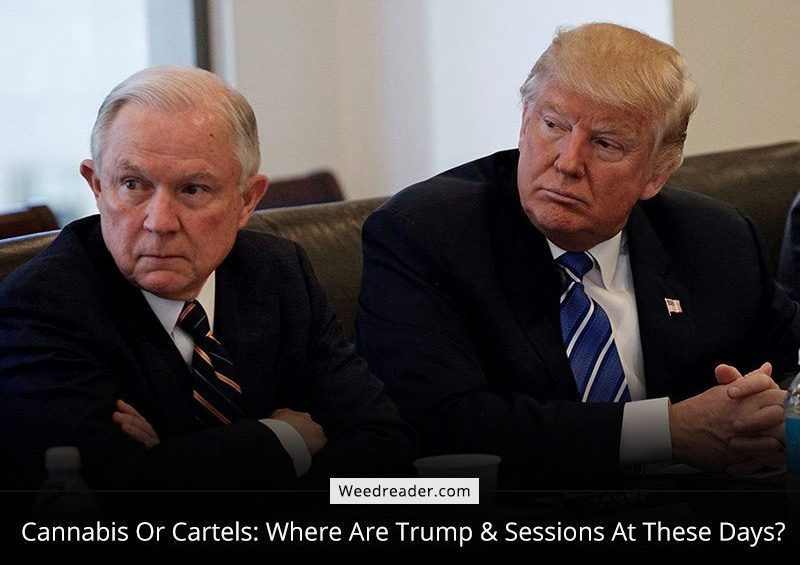
Cannabis or Cartels: Where are Trump and Sessions at these days?

President Trump and Attorney General Jeff Sessions have talked about a lot of things lately, but what they haven’t addressed is the big question of cannabis legalization—what will happen to the states who have legalized and will not-yet-legal states still have a chance to change their current legislation? And, at the very least, will they leave legalization decisions to the individual states?
Rumors of what the new administration want to do are flying. Like the one about Press Secretary Sean Spicer telling a reporter named “Rebecka Brian” that the government is “unlikely” to go after legalized states. After further investigation, MassRoots reported that the information was false. The Joint Blog was the one to publish the piece, but the quote remains unsubstantiated by Spicer. So, what are we to believe amidst all of these fake news, alt facts, and leaks?
Maybe we can trust what Sacramento County Sheriff Scott Jones told Bob Moffitt on Capital Public Radio about his discussion with Jeff Sessions during a law enforcement convention. Jones says, “Regarding the prioritization of federal resources to combat marijuana, he didn’t see the federal government getting involved in marijuana use or low-level state, what are traditionally state and local crimes. But I don’t think he ruled out the possibility of the federal government getting involved in large-scale operations.”
Jones’ words indicate an attitude among the cabinet similar to that of Obama’s laissez-faire approach to state-by-state legalization. Instead, the sheriff says that the DEA will be busy hunting down and persecuting drug trafficking cartels.
The sentiment matches Supreme Court nominee Neil Gorsuch’s desire to end national cannabis prohibition. As well as Trump, who said last week in front of law enforcement officials, “it’s time to stop the drugs from pouring into our country…and by the way, we will do that.”

Mississippi l

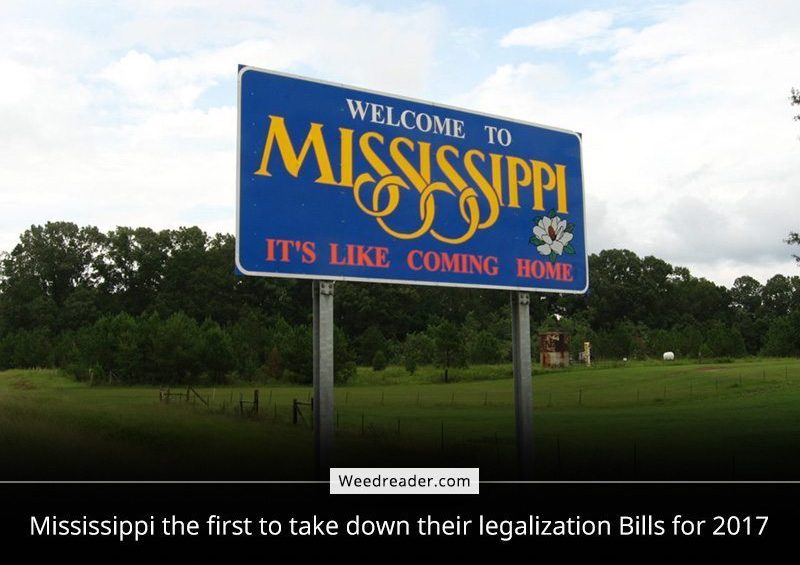
Mississippi the first to take down their legalization Bills for 2017

This year 26 state legislatures are considering bills about cannabis in some form (it was 27, but Mississippi has already stopped two of its medical marijuana bills). Some states are pushing their current legalization measures forward, and others are pulling back on those that were enacted in November. Just last week, Leafly updated their list of 28 states with pending cannabis bills they will be tracking this year because of one state who won’t be passing anything in 2017: Mississippi.
The hospitality state is showing no good will to Senate Bill 2378, which would have allowed physicians to recommend medical cannabis as a treatment for some conditions, and patients to grow their own herb, had a “pretty slim” chance of passing. Senate Bill 2379 would have removed marijuana and hashish from the state list of Schedule 1 controlled substances list, had a “fairly unlikely” chance of passing. Both died, as predicted, on January 31.
Among the Bills most likely to pass are the following:

  • Arizona’s House Bill 2003 to legalize adult use, possession, and sales of up to one ounce of cannabis.
  • All three anti-cannabis Bills in Arkansas, including a ban on smoking of medical cannabis (House Bill 1400), a measure to allow cities and towns to ban medical dispensaries and cultivation sites (House Bill 1391), and a ban on the production and sale of medicated edibles (House Bill 1392).
  • Senate Bill 175 in California, which aims to protect small cannabis businesses by disallowing the use of a county name for any product not produced in that county.
  • Senate Bill 16 of Georgia (which has already passed through the Senate Health and Human Services Committee) aiming to lower the amount of THC in low-THC MMJ from 5% to 3%.
  • Senate Bill 548 in Hawaii will probably soon allow cannabis for adult personal use, possession, and sale. And Senate Bill 16 will decriminalize possession of cannabis up to one ounce.
  • Senate Bill 798 in Maryland could soon reduce the penalties for the use and possession of fewer than 10 grams of cannabis, with a civil penalty of no more than $100.