trump

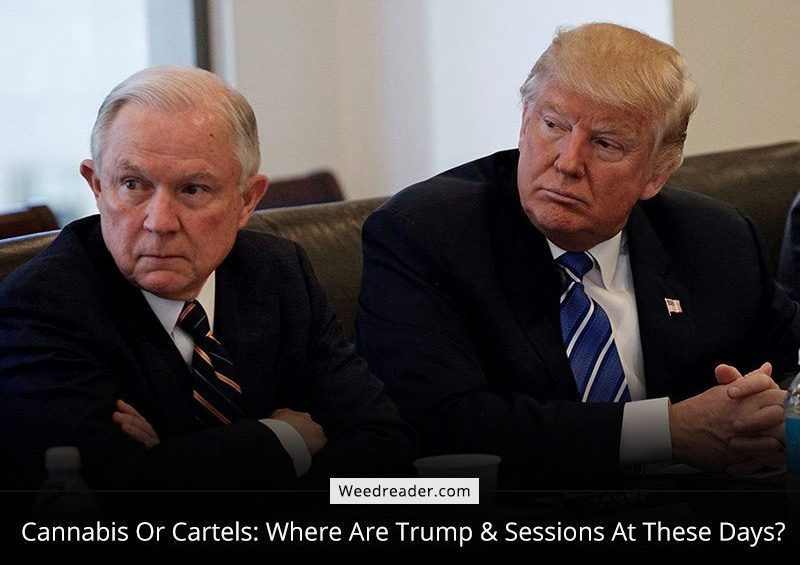
Cannabis or Cartels: Where are Trump and Sessions at these days?

President Trump and Attorney General Jeff Sessions have talked about a lot of things lately, but what they haven’t addressed is the big question of cannabis legalization—what will happen to the states who have legalized and will not-yet-legal states still have a chance to change their current legislation? And, at the very least, will they leave legalization decisions to the individual states?
Rumors of what the new administration want to do are flying. Like the one about Press Secretary Sean Spicer telling a reporter named “Rebecka Brian” that the government is “unlikely” to go after legalized states. After further investigation, MassRoots reported that the information was false. The Joint Blog was the one to publish the piece, but the quote remains unsubstantiated by Spicer. So, what are we to believe amidst all of these fake news, alt facts, and leaks?
Maybe we can trust what Sacramento County Sheriff Scott Jones told Bob Moffitt on Capital Public Radio about his discussion with Jeff Sessions during a law enforcement convention. Jones says, “Regarding the prioritization of federal resources to combat marijuana, he didn’t see the federal government getting involved in marijuana use or low-level state, what are traditionally state and local crimes. But I don’t think he ruled out the possibility of the federal government getting involved in large-scale operations.”
Jones’ words indicate an attitude among the cabinet similar to that of Obama’s laissez-faire approach to state-by-state legalization. Instead, the sheriff says that the DEA will be busy hunting down and persecuting drug trafficking cartels.
The sentiment matches Supreme Court nominee Neil Gorsuch’s desire to end national cannabis prohibition. As well as Trump, who said last week in front of law enforcement officials, “it’s time to stop the drugs from pouring into our country…and by the way, we will do that.”

Mississippi l

Mississippi the first to take down their legalization Bills for 2017

This year 26 state legislatures are considering bills about cannabis in some form (it was 27, but Mississippi has already stopped two of its medical marijuana bills). Some states are pushing their current legalization measures forward, and others are pulling back on those that were enacted in November. Just last week, Leafly updated their list of 28 states with pending cannabis bills they will be tracking this year because of one state who won’t be passing anything in 2017: Mississippi.
The hospitality state is showing no good will to Senate Bill 2378, which would have allowed physicians to recommend medical cannabis as a treatment for some conditions, and patients to grow their own herb, had a “pretty slim” chance of passing. Senate Bill 2379 would have removed marijuana and hashish from the state list of Schedule 1 controlled substances list, had a “fairly unlikely” chance of passing. Both died, as predicted, on January 31.
Among the Bills most likely to pass are the following:

  • Arizona’s House Bill 2003 to legalize adult use, possession, and sales of up to one ounce of cannabis.
  • All three anti-cannabis Bills in Arkansas, including a ban on smoking of medical cannabis (House Bill 1400), a measure to allow cities and towns to ban medical dispensaries and cultivation sites (House Bill 1391), and a ban on the production and sale of medicated edibles (House Bill 1392).
  • Senate Bill 175 in California, which aims to protect small cannabis businesses by disallowing the use of a county name for any product not produced in that county.
  • Senate Bill 16 of Georgia (which has already passed through the Senate Health and Human Services Committee) aiming to lower the amount of THC in low-THC MMJ from 5% to 3%.
  • Senate Bill 548 in Hawaii will probably soon allow cannabis for adult personal use, possession, and sale. And Senate Bill 16 will decriminalize possession of cannabis up to one ounce.
  • Senate Bill 798 in Maryland could soon reduce the penalties for the use and possession of fewer than 10 grams of cannabis, with a civil penalty of no more than $100.
cann history

A History of Medical Cannabis Part 2: Modern Cannabis

In Part 1 we talked about ancient cannabis and how it has been used throughout the ages.

Today we are going to talk about modern cannabis and how it moved from prominence as a medicine to a recreational drug. Yet medical cannabis is not relegated to the ancient past. Modern medicine uses the term marijuana instead of the ancient name: cannabis but it means the same thing.
The original name can be traced back to the Greek physician Pedanius Dioscorides. He was a roman army doctor from around 40-90AD who traveled widely on campaigns throughout the Roman empire. He wrote the medical text that virtually all others were based on for over a thousand years and had a special entry for both male and female cannabis plants. It wasn’t until the 1930’s when the plant became known a marijuana in an effort to re-brand it. But I’m getting ahead of myself.

By 1621, medical marijuana had made its way into the English Mental Health Book.

Cannabis was entered into one of the most popular medicinal textbooks from the era to treat depression. Because of the work of an Irish doctor working for a shipping company during the colonization of the new world, medical cannabis moved to the Americas.
Cannabis treatments were a staple of a professional doctors curriculum up through the industrial revolution.  Before Alaska and Hawaii were states, America had laws on the books that supported medical marijuana in all 48 states. Cannabis was not seen as a recreational drug, it was medicine with little risk of side effects.

But in 1936 all that changed.

Pressure was being placed on the U.S. by the international community to sign the International Treaty on Controlled Substances. While not directly listing cannabis as a controlled substance, the treaty forced all countries that signed to adopt similar drug policies. Propagandists later used the treaty to get cannabis banned across the developed world.
A very popular anti-marijuana campaign burned through the nation. Funded by the government and directed by the talented propagandist Larry Anslinger, “Reefer Madness” was a sensational tale about marijuana. It featured the plant ruining people’s lives through sex, insanity, and horrific acts of violence. Although Reefer Madness was a work of pure fiction,  it was accepted by a whole generation as fact with the tenacity of religious convictions. The influential power of the Reefer Madness propaganda laid the groundwork for Larry Anslinger to get cannabis banned.
Larry Anslinger was a potent propagandist that was able to convince the developed world to outright ban cannabis use, cultivation and distribution. He used a mixed media of propaganda to accomplish this. Anslinger was a master of using media and used the newspapers, radio and television to spread a web of half-truths and outright lies.
After spreading a racially motivated panic with the Reefer Madness propaganda, Anslinger convince the U.S. to pass the Marijuana Tax Act of 1937. Anslinger provided his political masters a new way to target their political opponents voting base. The politically motivated police force acted quickly on the new laws to target the poor.

The Marijuana Tax Stamp Act brought America Modern Cannabis.

On the day the Marijuana Tax Stamp Act was enacted (Oct. 2, 1937) the FBI and Denver Colorado police raided the Lexington Hotel. They arrested a man named Samuel R. Caldwell for selling modern cannabis. He was a 58 year-old unemployed laborer. Three days later, on Oct. 5, 1937 Caldwell became the first person convicted under U.S. federal law of distributing cannabis.
In 1942, cannabis was removed from the U.S. Pharmacopeia. When that happened, cannabis lost the last vestiges of medical legitimacy. Because of the International Treaty on Controlled Substances, most of the other countries in the developed world were forced to enact similar rules.

Over the next decades, criminalization of cannabis continued.

As more and more regulations were heaped on medical practitioners, they became unable to prescribe cannabis. Legal penalties increased massively with the Boggs Act of 1951. It established minimum prison sentences for simple possession of cannabis. Thanks in great part to Anslinger’s work, cannabis was classified as a schedule 1 controlled substance in 1970.
Schedule 1 substances are substances no medical benefit and high risk of abuse. The controlled Substances Act of 1970 Classified Marijuana as a having “No Accepted Medical Use”. After the passing of the Substances Act, medical practitioners were barred from prescribing modern cannabis for any medication, effectively removing the oldest known medicine from a whole generation of healers across the globe.
In 1971, the Shafer Commission was created by the U.S. president to determine the merit of criminalizing cannabis. The Shafer Commission was bi-partisan and overseen by congress. President Nixon himself ordered it to determine “if the personal use of marijuana should be criminalized.” The commission came back with an answer and Nixon ignored it because he didn’t like that they believed there was no reason to scale up action against users.
In 1971 president Nixon chose to aggressively pursue action against cannabis consumers by declaring the War on Drugs. Motivated by personal prejudice political corruption, he saw marijuana as a way to get at his political opponents. He even admitted at the time that his reasons for attacking cannabis users and increasing penalties was motivated by personal directives.

Nixon acknowledged his action was not based on empirical evidence.

He increased criminalization despite the commission he put together telling him officially and unequivocally that cannabis use should not be criminalized. Over the next two years, the Nixon built a force specifically designed to scale up violence against modern cannabis users.
The Department of Drug Enforcement (DEA) was established in 1973 by merging the Bureau of Narcotics and Dangerous Drugs (BNND) and the Office of Drug Abuse Law Enforcement (ODALE) into a single agency. It comes as no surprise that the DEA continues to aggressively pursue cannabis consumers, producers and distributors to this day. They use every tool at their disposal regardless of legality or constitutionality to continue the criminalization of marijuana.
Things continued to go downhill for cannabis in the coming years. It wasn’t until 1976 that Robert Randall (who was afflicted by glaucoma) used the Common Law Doctrine of Necessity (US v. Randall) to defend himself against criminal charges of marijuana cultivation. In 1976, federal Judge James Washington made waves with his ruling. Judge Washington ruled that Randall’s use of modern cannabis constituted a ‘medical necessity’ and the case was thrown out.
Modern cannabis 2

The next milestone for modern cannabis crusaders came in the winter of 1991.

Modern cannabis took a step forward with the passing of medical marijuana reform in California. The first medical marijuana initiative was called Proposition P and was in San Francisco. It passed with an overwhelming 79% of the vote in November of 1991.
Proposition P called on the State of California and the California Medical Association to restore hemp medical to the list of available medicines in California, and to stop penalizing physicians for prescribing hemp for medical purposes. It only effected San Francisco but the cogs of bureaucracy had been activated. It would take another 5 years for legislation to go statewide.
Voters in California passed the first statewide medical marijuana initiative on November 5, 1996. Known as Proposition 215, it permitted patients and their primary caregivers to possess and cultivate marijuana for the treatment of AIDS, cancer, muscle spasms, migraines, and several other disorders. It also protected doctors from state sponsored punishment if they recommended marijuana to their patients.

The wheels of bureaucracy turn slowly.

In September of 1998, the House of Representatives debated a resolution called H.J.Res. 117. They passed H.J.Res 117 at the same time Oregon, Washington and Alaska provided their medical marijuana programs. In H.J.Res. 117, Congress declared support for the existing federal drug approval process.
They decide not to reschedule marijuana despite the overwhelming evidence coming forth that it should be decriminalized. While cannabis is classified as having no medical benefit, the United States Department of Health and Human Services) currently holds a patent on medical cannabis.
Patent No. 6630507 covers the use of cannabinoids for treating a wide range of diseases and was submitted to the patent office in 1999. The Department of Health and Human Services was awarded the patent in 2003. Yet the Department of Health is not the only regulatory agency that has chosen to abandon science, compassion and reason.
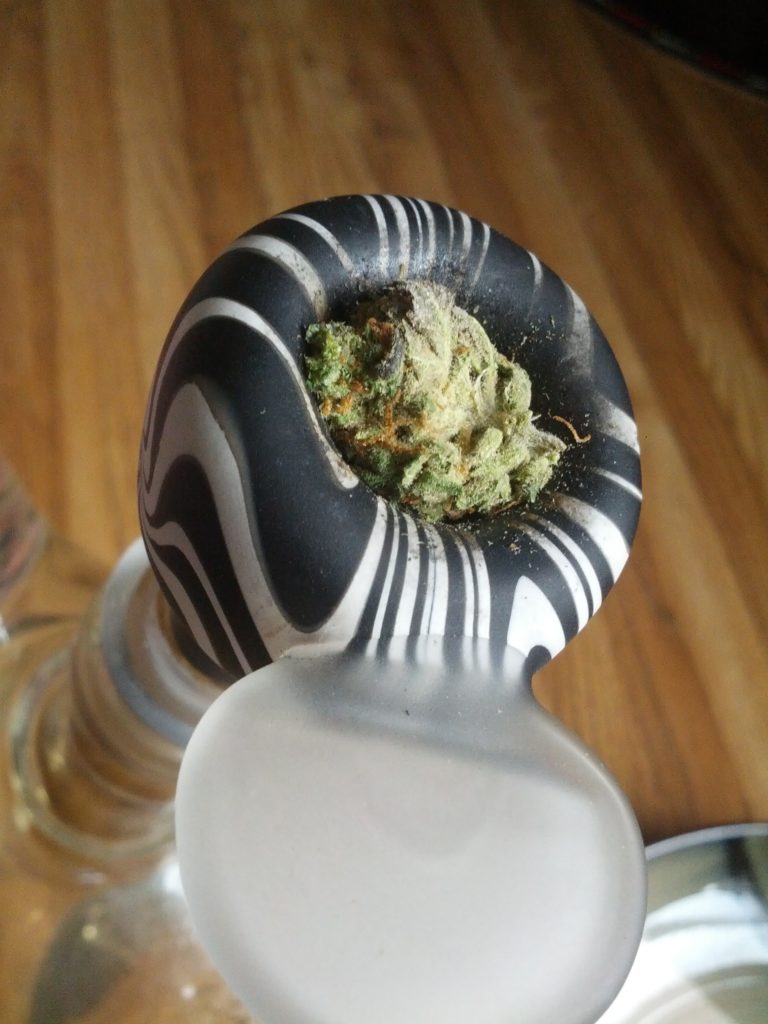
Modern Cannabis

In 2002, the FDA decided how to use modern cannabis in a study.

They decided that shipping 300 pre-rolled joints to patients in metal canisters was the best way to judge modern cannabis. The material was frequently two or more years old upon receipt by patients and a close inspection of the contents of NIDA-supplied cannabis cigarettes revealed them to be a crude mixture of leaf with abundant stem and seeds.
The study concluded that “cannabis smoking, even of a crude, low-grade product, provides effective symptomatic relief of pain, muscle spasms, and intraocular pressure elevations…” and that “clinical cannabis patients are able to reduce or eliminate other prescription medicines and their accompanying side effects.” The FDA report was ignored by those in power and cannabis remained a schedule 1 controlled substance despite the undeniable evidence.
The DEA has still not reclassified cannabis. It remains a holistic herb used throughout time as a medicine that current U.S. legislators are violently opposed to. While international progress has been made with the UK rescheduling cannabis to Class B and the Netherlands also making great strides in medicinal research, the U.S. still struggles to come into the light. Use of scientific reasoning is about to get even harder for the U.S. government as President Trump decides who will take the reigns of power. Yet his choice of Jim O’Neill to head the FDA (who openly supports cannabis legalization) gives modern cannabis hope for the future. Only time will tell. Thanks for reading.
Featured image: shutterstock

weedreader

Marijuana Policy Under President Trump

President Trump. Those are two words I thought would never be uttered together. But much to my dismay, Donald Trump has won the election, and is now on his way to become President of the United States of America.
So what does this mean for the future of the legalization movement, and the War on Drugs?
It’s difficult to say what position Trump himself takes on the issue. He told reporters last year that, “In terms of marijuana and legalization, I think that should be a state issue.”
But how much of what this man says can we really believe? He has proven that he will say anything to please the electorate and/or generate media coverage. And his stance on legal pot has changed quite a bit through the years – at one point he was reportedly even in favor of legalizing all drugs – and he has repeatedly spoken out against recreational pot.
So on the issue of cannabis, like on so many others, Trump is basically a big, fat question mark. There is no telling what he really thinks, or what he will do when he takes office.
Perhaps the best way to determine how the Trump administration will approach drug policy is to take a look at his appointments. Who is he surrounding himself with? Who is he putting in positions of power?
And that’s where it starts to get really ugly.
Trump announced his pick for attorney general this week: senator Jeff Sessions. For those of you who don’t know who he is, the Republican senator from Alabama basically embodies every Hollywood stereotype of a white lawyer from the deep south… He makes racist jokes at work, and refers to black co-workers as “boy.” He called the NAACP a communist organization. He opposes the Voting Rights Act and supports mandatory minimum sentencing for drug offenders.
He admitted to making the following “joke” to his colleagues while serving as prosecutor in Alabama: “I was fine with the Klu Klux Klan until I found out they smoked pot.”
That one statement, I think, sums up who Jeff Sessions is, what he believes, and his attitude toward marijuana (among other things). And if you’re a pot smoker, a person of color, or anyone who cares about civil rights and criminal justice reform, the thought of Sessions assuming the position of America’s top prosecutor should send shivers down your spine.
Fortunately, his appointment does have to be confirmed by the Senate. Unfortunately, the Senate is still in Republican hands. We can only hope that there are enough senators of good conscience, on both sides of the isle, who will be willing to risk “the wrath of Trump” in order to oppose his appointment of a notorious racist to be next U.S. attorney general.
Whether Sessions gets confirmed or not, the fact that he was picked in the first place is troubling enough. It’s a clear sign of which direction the President-Elect plans to take this country during his term: backwards.
At a time when 60% of Americans support recreational marijuana, when 8 states plus D.C. have already voted for it, and no less than 28 states have medical marijuana programs in place, Trump taps a guy whose drug policy is reminiscent of Reagan and Anslinger. Despite the growing consensus that cannabis needs to removed from the list of Schedule 1 drugs, and decriminalized at the federal level, Trump is assembling a cabinet that will do anything but.
It looks like under President Trump, the War on Drugs is alive and well… for the next 4 years at least.
Photo: AP/EVAN VUCCI – APIMAGES

Recreational Marijuana

The Wave Of Recreational Marijuana Hits The East Coast

New Recreational Marijuana States

It wasn’t all bad news on election night, several new states now have access to legal marijuana. Voters in Maine, Massachusetts, California, and Nevada passed recreational marijuana laws. Legal weed is now available to about 20 percent of adults in the United States. Until recently, recreational marijuana has only been available on the west coast and Colorado. However, the wave of recreational marijuana has finally hit the East Coast with states like Maine and Massachusetts. Both states had medical marijuana laws in place prior to this year’s election.

Maine

The vote for recreational marijuana in Maine barely passed with 51% of the vote. 49% were in opposition, the numbers were so close that opponents are pushing for a recount.Opponents only need to collect 100 signatures for the Secretary of State’s office to consider taking another count. Some opponents claim that the vote passed by a fraction of a percentage.
“The margin is razor thin, there are more than 375,000 people in the state of Maine that voted against this,” Newell Auger of No on 1 told WCHS. “It demands a careful, accurate result, and the idea that we are going to push on through when the margin is .005 [percent] is foolhardy.”
However, the latest recount has the law passing 381,060 to 376,658.
“We are talking thousands of votes difference,” countered Yes on 1 campaign manager David Boyer. “I just don’t see them making up that ground. Those votes can flip our way. We are ready to move forward with implementation.”
If the recount doesn’t happen, Maine voters can expect the right to grow, sell, manufacture, and distribute marijuana and it’s products. The state will be implementing a 10 percent tax and local governments can opt to implement local rules on retail sales. Within the next 40 days, adults will be able to carry up to two and a half ounces of pot and grow up to six plants. Maine and Massachusetts are the first two states on the east coast to go the recreational marijuana route. Maine’s state motto is “I’ll lead.” Hopefully the rest of the East coast follows their lead.

Massachusetts

Despite having an anti-pot governor, Massachusetts voters decided to pass a measure called Question 4 which legalized recreational marijuana. Question 4 will tax the use and sale of marijuana similarly to alcohol. So, only adults ages 21 and up can purchase marijuana. Only an ounce is allowed in public but 10 can be possessed at your home.
Don’t get too excited though, retail sales aren’t scheduled to begin until 2018. When retail sales begin, out of staters will also be permitted to carry an ounce at a time. Tourism might rise in the Mile “High” City because few other places on the East Coast offer legal marijuana to visitors. Maine will be Massachusetts only competition in the East.
Local communities are looking forward to the expected boost in tax revenues and jobs created from the booming cannabis industry.
“A century-long mistake has been abolished!” Yes on 4 communications director Jim Borghesani told a crowd of supporters of the ballot question. “Voters chose fact over fear and rational arguments over hysteria.”

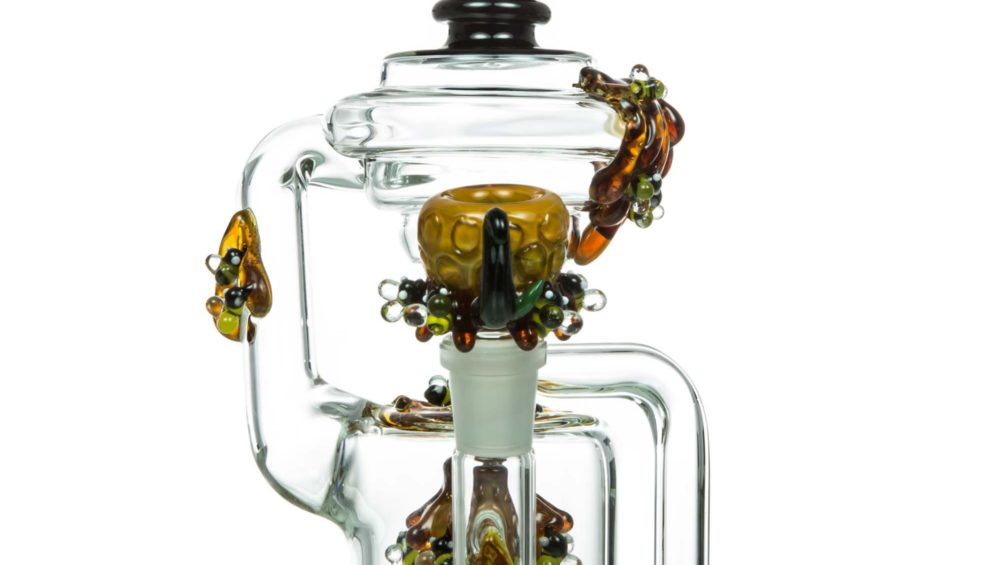
Beehive Recycler Water Pipe

These States Just Passed Medical Marijuana Initiatives

More Legal Weed For Those In Need

The one good thing to come out of this year’s election is all the legal weed. Four different states passed medical marijuana measures on election day. The voters of Arkansas, North Dakota, Florida, and Montana have spoken. They want medical marijuana for their suffering patients and they want to make it accessible. Seven states in total legalized some form of marijuana but we’ll focus on those who really need weed first. States like North Dakota are dipping their toes into the medical marijuana world for the first time. However, Florida, Arkansas and Montana have already had medical marijuana and are looking to improve their mmj laws.

Florida (Amendment 2)

Florida’s medical marijuana measure passed two years ago with 58% of the vote. The Compassionate Medical Cannabis Act allowed certain patients with debilitating conditions access to medical marijuana. However, the act required patients be provided with cannabis that is low in THC. The lack of the main psychoactive ingredient means Florida’s cannabis carried less medicinal effects than the cannabis in other states. On the bright side, patients in Florida will now be allowed to obtain full strength marijuana.
“This is a major tipping point,” said Tom Angell of Florida’s vote. “With Florida’s decision, a majority of states in the U.S. now have laws allowing patients to find relief with medical marijuana, and these protections and programs are no longer concentrated in certain regions of the country like the West and Northeast.”

Montana (I-182)

Montana has had medical marijuana laws for over a decade. In 2011, the laws changed making it more difficult for patients to find a dispensary. It also made it harder for dispensaries to remain open because they could only have 3 patients. Initiative 182 just passed granting Montana medical marijuana patients easier access to their medicine. There is no longer a 3 patient limit so dispensaries will be encouraged to open up and serve the thousands of MT patients in need medicine.

Arkansas (Issue 6)

Arkansas voters decided between two different initiatives. The Arkansas Medical Cannabis Act and the Arkansas Medical Marijuana Amendment. The main difference between the two was in the number of dispensaries allowed. The amendment ended up passing with 53% of the vote and 46% voting against it. The AK Department of Health has been given 120 days to adopt the new rules from the amendment. There will be labeling and testing standards for marijuana distributed to patients. Once the new law is in place there will be 56 qualifying conditions for medical marijuana in AK.

North Dakota (Measure 5)

North Dakota’s medical marijuana measure passed with flying colors. The initiative had about 64% support from state voters. Patients suffering from AIDS/HIV, PTSD, epilepsy, glaucoma, and more will be able to register for medical marijuana in ND now. Possession of 3 ounces is allowed for patients and cultivation of 8 plants is allowed for those who over 40 miles away from a dispensary.
More than half of the United States have access to medical marijuana now. Prior to the election there were 25 states, there are now 28 with some type of medical marijuana law in place. There’s good news for those who don’t necessarily need weed too. A quarter of the nation now has access to recreational marijuana!

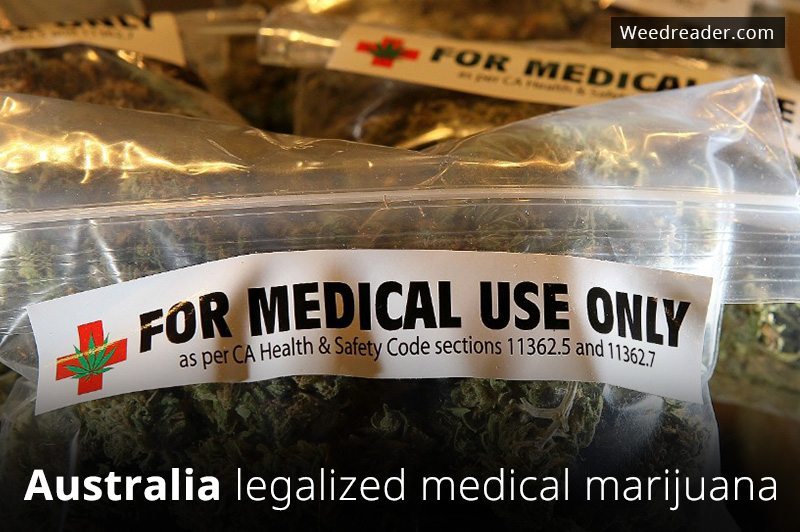
Australia legalized medical marijuana

Australia legalized medical marijuana

Australia legalizes Medical Marijuana

Australia made the bold move this week to legalize medicinal marijuana use for the whole country. The Therapeutics Goods Administration was the one to make the decision. Medicinal marijuana will be legalized but strictly controlled. Parliament passed the measure on Wednesday and the amendments to the Narcotic Drugs Act will allow Australians to legally grow cannabis for medical and scientific purposes for the first time.
“This is a historic day for Australia and the many advocates who have fought long and hard to challenge the stigma around medicinal cannabis products so genuine patients are no longer treated as criminals,” Minister of Health Sussan Ley said in a statement.
“This is the missing piece in a patient’s treatment journey and will now see seamless access to locally-produced medicinal cannabis products from farm to pharmacy,” she said.

The Death of Daniel Haslam

A 25-year-old by the name of Daniel Haslam lost his life to terminal bowel cancer. Before that, his parents were his dope dealers. A seasoned nurse and police officer were giving their son marijuana to ease his chemotherapy symptoms. He suffered from uncontrolled nausea and vomiting after every chemotherapy session.
His parents were desperate to end his suffering and another cancer sufferer recommended pot. After trying cannabis his mother claims his life became “a little more tolerable. A sick young man reluctantly tried a joint and just like that, he felt so much better. He gained an appetite, had his nausea and vomiting addressed and was able to maintain his weight through his ongoing treatment.”
Dan’s final months were made more comfortable because his parents were willing to risk criminalising themselves to ease his pain. Many other people have been prosecuted for doing exactly what Dan’s family did.
Dan’s dying wish, was for others to experience the unique qualities of cannabis when suffering as he did. His mother, Lucy Haslam, started a petition to make medicinal marijuana more accessible to sick and suffering Australians.
It was this story that touched the Australian parliament and got the law passed. Suffering Australians who will benefit from this law change have Dan Haslam to thank. Australian Sen. Richard Di Natale was the one who brought up Haslam’s story to parliament.
“It is incredibly fitting that today we are passing this bill which is one step towards making medicinal cannabis accessible to people like Dan,” Di Natale said.
“Thank you to Lucy for everything you have done. Please know that your family’s grief, pain and suffering has not been in vain and this is a legacy that Dan will leave here in Parliament.”
Lucy Haslam’s main concern with the recent passing of the law is the pricing of medicinal cannabis, as well as the lack of education on the matter.
“My fear is that the industry will become so expensive that patients won’t be able to access a legal supply at an affordable price,” said Haslam. “There’s also a lot of work to do on educating people and doctors, some of who remain a bit uncomfortable about prescribing medical cannabis to patients.”
Australians hope the new laws will benefit those suffering and bring money into the country.
Featured photo credit: Getty images

Marijuana abuse has decreased even though marijuana use increased

Marijuana abuse has decreased even though marijuana use increased

Marijuana abuse has decreased even though marijuana use increased
With marijuana becoming legalized in more states across the US, more people are beginning to use marijuana. Many would assume that this would lead to an increase in marijuana abuse. Opponents of legalization have even used this as an argument against legalization. However, the Center for Disease Control and Prevention has recently released results that reveal marijuana abuse and dependency is at an all-time low over the past decade and a half. The report was released on Thursday by both the Substance Abuse and Mental Health Services Administration and the Center for Disease Control and Prevention.
The report showed 1.6% percent of Americans aged 12 and over were considered to be abusing marijuana or suffering from marijuana dependency in 2014. In 2002 1.8% of Americans aged 12 and over were found to be abusing marijuana or dependent on it.
Another argument made by opponents of marijuana legalization is that teen usage would increase. However the results from the CDC’s reports would beg to differ. The largest decrease in marijuana abuse and dependency was seen in teenagers. 37% less teenagers were abusing marijuana in 2014 than they were in 2002. Young adults also saw an 18% decrease in abuse over the same period. The number of adults aged 26 and older did not see a big change in the number of adults abusing marijuana since 2002. This may be due to a former lack of information and education on marijuana. Marijuana is being introduced to people as medicine and legalization allows for education and regulation, which may lead to a decrease in marijuana abuse.
It’s safe to say the results represent a national sample. The National Survey on Drug Use and Health, a massive annual federal survey of American substance use, received 900,000 responses. Respondents were considered dependent if they claimed to have “health and emotional problems associated with [marijuana] use, unsuccessful attempts to reduce use, tolerance, withdrawal, reducing other activities to use [marijuana], spending a lot of time engaging in activities related to [marijuana] use, or using [marijuana] in greater quantities or for a longer time than intended,” said the CDC.
Respondents were considered to be abusers of marijuana if they reported “problems at work, home, and school; problems with family or friends; physical danger; and trouble with the law because of [marijuana] use.” This could mean a respondent who only smokes once a week and got into trouble with the law could be considered an abuser as well. Despite this, the number of abusers is still going down.
The study found that abuse and dependency when it came to marijuana was rare. Only about 12 percent of people who used marijuana in the past year fit into either of those categories. This number was 16.7 percent in 2002 which is a 30 percent decrease in the 12 year marijuana’s accessibility has increased.
According to the data, marijuana accessibility is helping more than it is hurting the country. Informing people about a drug while regulating it seems to decrease abuse more than full on prohibition. With more evidence on the benefits of legalization we hope to see most if not all of the nine states voting on marijuana legalization this November to go legal and reap the benefits.
image credit: bigstock

Can Legal Marijuana Reduce Drunk Driving Accidents

Can Legal Marijuana Reduce Drunk-Driving Accidents?

Can Legal Marijuana Reduce Drunk-Driving Accidents?
One of the main concerns that opponents of marijuana legalization have is that intoxicated driving will be increased by pot users. There has not been solid evidence supporting the claim that legal marijuana leads to more cases of impaired driving. On the other hand, some states that have already legalized marijuana have found that marijuana legalization did not increase DUIs overall.
We analyze the data from the states of Washington and Colorado to see how legal marijuana has impacted their number of DUI’s.
Washington
Shortly after the recreational marijuana laws were passed, the media was flooded with headlines about marijuana causing more car crashes in Washington. The actual non-click bait news was that more people involved in fatal road crashes tested positive for THC. What many of them failed to mention was that the drug tests seek THC metabolites that can linger in the system days after your last toke. This means that the AAA Foundation for Traffic Safety’s research on drivers involved in fatal crashes does not conclude that marijuana is causing more fatal accidents it might just mean more people are smoking weed. After residents of Washington found out marijuana was going to be legalized marijuana may likely became more acceptable and therefore used more. I’m sure the number of plumbers who smoke marijuana also increased after legalization passed but this just means more people in the state have THC in their system, it doesn’t mean marijuana is causing more fatalities on Washington roads.
When this research was released and spread across the media, dispensaries in Washington had yet to open. In fact, after dispensaries were opened the number of marijuana-involved fatal crashes decreased. The number of drivers who died in Washington from traffic fatalities in 2010 before legalization was 460. In 2014, 2 years after marijuana’s legalization in Washington, there were 462 fatalities. The number only increased by 2 despite the fear-inducting headlines such as Washington Marijuana-Related Traffic Fatalities Double After Pot Legalized.
These articles also fail to mention that many of the drivers involved in marijuana-related fatal crashes were also found with alcohol or other drugs in their system. If the number of drivers who were found to have over a .08 Blood Alcohol Level AND marijuana in their system were omitted then the number of marijuana-related traffic deaths has actually gone down from 2010 to 2014 in Washington.
Colorado
The media on Colorado’s drugged driver fatalities has been the opposite of Washington’s headlines. “Since marijuana legalization, highway fatalities in Colorado are at near-historic lows,” the Washington Post reported. However, shortly after Colorado’s recreational marijuana laws took effect, the fear of stoned drivers spiked. Despite these fears, the number of traffic fatalities from 2012 to 2013 decreased in Colorado. From 2013 to 2014 overall traffic fatalities also dropped.
The research that suggests more access to weed is resulting in safer roads is more concrete than the data claiming stoned drivers are causing an increase in traffic fatalities. However, the data on Colorado’s traffic fatalities decreasing doesn’t necessarily mean that pot use decreased traffic fatalities, but it does confirm that it doesn’t seem to significantly increase it in any states with legal marijuana.

cali Marijuana

Will Cali Say Yes to Retail Marijuana this November?

The decision on whether or not to legalize marijuana in the state of California is right around the corner. In reports going out by the Associated Press, those who live in California will make this decision in November. Alex Padilla is the California Secretary of State. Tuesday Alex announced that the supporters of marijuana legalization in the state of California had gathered more than the sufficient amounts of required signatures. This means that this November the question or not to legalize marijuana will make the ballot and voters will have the chance to show their support for retail marijuana.
Basically, California is looking to legalize the retail marijuana market much in the way that Colorado has. The initiative that is going to make the November ballot will ask voters if they believed individuals aged 21 and up should have the ability to purchase cannabis and cannabis-infused products through licensed retail dispensaries. Another question that is on this initiative is whether or not people will be allowed to grow marijuana for personal recreational consumption in the amount of 6 plants.
Lieutenant Governor Gavin Newsom and the co-founder of Napster Sean Parker are in support of this initiative. For obvious reasons, this initiative would stand to strengthen the state of California in a multitude of ways. Adding as much as an estimated 1 billion dollars or more per year to the state’s revenue would without a doubt help the state of California. Also by decreasing the cost of Public Safety by not wasting valuable and precious resources on attacking harmless and innocent cannabis consumers the state would be able to do things that Colorado has done such as lower the violent crime rate, the fatality rate in auto accidents and teenage consumption of cannabis to name a few.
image credit: bigstock