Trump Cant Reverse Marijuana Legislation

Trump Can't Reverse Marijuana Legislation

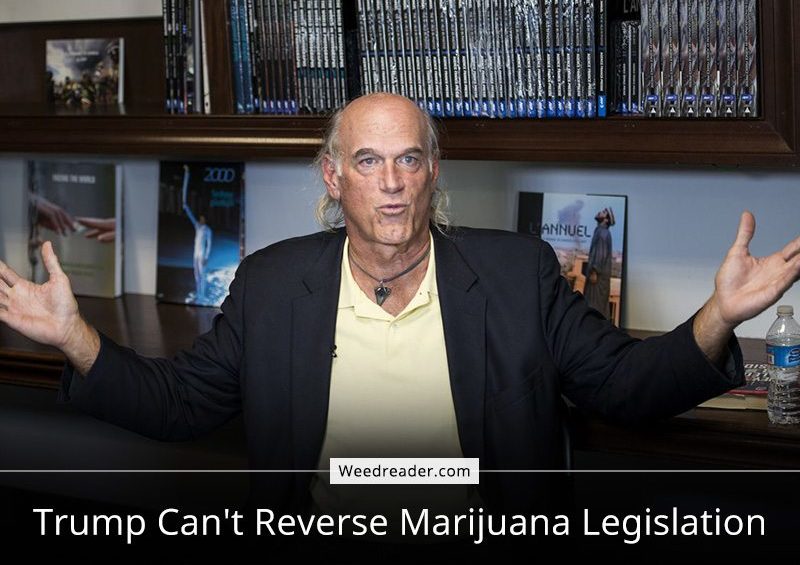
Jesse Ventura is a jack of all trades.

He started his career as a U.S. Navy Underwater Demolition Expert. He eventually became a professional wrestler, actor, author, television host and political commentator. He debuted his political career by running for governor.
As the 38th Governor of Minnesota (from 1999 – 2003) he accomplished several achievements including overseeing Minnesota’s property tax reforms. After his stint as governor, Jesse decided to fight for the legalization of cannabis.
Ventura recently gave a keynote speech at the Cannabis World Congress Business Expo in New York City (CWCBExpo). It is the preeminent trade show for the cannabis industry. Cannabis connoisseurs of all fields joined the party; from marijuana and hemp farmers, to cannabis activists and thousands of like-minded individuals. He said the experience was truly refreshing.

Individuals in the legal cannabis industry form a united front.

Jesse Ventura learned how the united front was working to get the federal government to accept the marijuana industry. “When it comes to economics, let me put the state of marijuana to you in this way: If Trump reverses state law, he’ll be crippling if not bankrupting the states that have legalized marijuana,” Jesse said. According to Jesse, over half of the states have now legalized marijuana (medical, recreational, or both).
As a result, the states are receiving millions of dollars in tax revenue. If Trump reverses state law regarding cannabis, then there will be a country-wide budget crisis. When all the revenue sources are outlawed, where will the money come from?

Jesse explained why reversing marijuana legislation will change the nation.

Jesse gave a great analogy using the auto industry bail-out. He said that about $80 billion of tax payer money was used to bail-out the auto industry. The auto industry gets to pay back their debt over time.
There is not going to be a bail-out when marijuana legislation becomes reversed. It’s like saying that a multi-billion dollar industry will vanish over-night. The domino-like fallout would cause hundreds of thousands of Americans to become unemployed. The resulting economic chaos includes millions of dollars in unpaid mortgages, bankruptcies and tax shortfalls in every state in the Union .
According to a report by New Frontier Data, the marijuana industry is on-track to create a quarter of a million jobs by 2020. The marijuana industry was worth $7.2 billion in 2016 and is compounding at a rate of 17 percent annually. Medical marijuana sales will grow from $4.7 billion to $13.3 billion by 2020. Recreation sales are also booming from $2.6 billion in 2016 to $11.2 billion by 2020.

There is real danger for the financial health of the country.

Jesse reiterates again, “If Trump reverses state law, he’ll be crippling if not bankrupting the states that have legalized marijuana. This action go against the will of the people who voted for legalized marijuana. The action will cause yet another economic collapse.” It’s hard to argue with Jesse’s facts and reasoning.
Colorado currently has a $1.3 billion thriving cannabis industry. And that industry is paying for their student’s scholarships, police stations, libraries, new streets and bridge repair. When the money stops flowing with no replacement, how is Colorado supposed to recover from the loss.
California will earn $1 billion in cannabis tax revenue by 2018. In California, they expect to bring back American farms by growing hemp fields in rural areas that are struggling for a chance to thrive. But reversing marijuana legislation would crush the hopes of reviving American agriculture.
The cannabis industry is an American workforce comprised of American entrepreneurs, employees, and customers. And it’s not practical to expect business owners to outsource labor, production or processing to other countries. So businesses have to find a work-around.

Cannabis business owners will always find a way to thrive.

Due to federal law, American cannabis owners are expected to stay up-to-date on all cannabis related laws and regulations. And cannabis business owners struggle to keep up with the new marijuana legislation while trying to run a business. And they can’t even get a bank loan or find a safe space to store their money.
The community will find a way to succeed, even though marijuana legislation seem to be working against them. If the worst-case scenario happens, Jesse says that American cannabis business owners will go Canada and set up shop there.
Many marijuana refugees could go to Puerto Rico because the IRS Tax Code 280E does not apply. Mexico just legalized medical marijuana, so we can expect many owners to set up shop there too. Cannabis isn’t going to disappear, it’ll just get relocated along with its billions.

Jesse says, “The president doesn’t have the power to overturn votes”.

At the CWCBExpo, Jesse pled with cannabis business owners to not maximize profits to secure a golden parachute when things go south. Jesse said, “That’s not the united front the American cannabis industry is after.” The united front he talks about at the CWCBExpo are thoughtful business owners who’ve seen cannabis legislation change over time. They are also doing all that they can to work with lawmakers and educate citizens to continue that trend.
Jesse says that the cannabis industry is about innovation as much as it is about fighting against oppression. When the American people vote to legalize something, it should become legalized. The government doesn’t have the right to overturn that vote. American industry is about creating a better place for everyone and for future generations to come.
Ventura tried to add an air of calm to the storm that surrounds American government today. Tax money makes a great difference in the communities that generate it. Taxes should go toward schools, roads and libraries and cannabis taxes actually do.
American business owners should not be worried that Trump or any president will revert business regulations. It takes more than sitting at a tiny desk and signing a piece of paper. And it takes effort to erase the best thing going for America right now. But that doesn’t mean he won’t try. Unfortunately, Jesse Ventura doesn’t believe he can succeed.

The University of Maryland Now Offers Marijuana Training

The University of Maryland Now Offers Marijuana Training

Finding someone well-trained in the intricacies of cannabis can be hard.

There is no shortage of people who are interested in weed. But interest doesn’t always translate into skill. Few stoners possess the technical understanding and training needed to provide real medical care with cannabis. The University of Maryland School of Pharmacy is looking to change that by offering certified medical training.
In a growing trend, Baltimore joins a short list of universities and colleges, including the University of Vermont College of Medicine providing cannabis related coursework. These educators seek to capitalize on the growing marijuana industry and introduce educational standards to the industry. Yet even in the midst of assembling coursework, the science and legal standing of pot are evolving.

There is a big push to reform cannabis education.

“We wanted to be there as a resource,” said Magaly Rodriguez de Bittner to the Baltimore Sun. As a pharmacy professor and the executive director of the school’s Center for Innovative Pharmacy Solutions, Magalay is serious about educating cannabis professionals. Her department got the ball rolling and began signing up potential workers for training June 29.
Magalay doesn’t endorse marijuana use but feels that better educated workers are important. “If you’re going to be dispensing,” she said, “let’s make sure your staff in trained in best practices to do it safely and effectively.” The school offers all the coursework online so people already employed full-time in the industry can still participate.
The University of Maryland is also partnering with advocacy groups like Americans for Safe Access to provide the highest quality training. In a highly collaborative effort, advocacy groups are developing the curriculum while the school vets and adjusts it. The certification is part of Marylands new medical marijuana law.

Education is not the same as endorsement.

The school maintains that training doesn’t mean an endorsement of using marijuana. The University of Maryland wants to preserve its standing as a well-regarded institution since its founding in 1841. The university heads also reiterated that medical marijuana is not approved by the U.S. Food and Drug Administration.
Maryland passed its medical marijuana legislation in 2014 but still doesn’t have any working dispensaries. But that didn’t stop them from building the infrastructure needed to support it once developed. The school had an online platform to offer the training and a mission to provide education to health care providers. So even if the science and government regulation has yet to catch up with demand, Magalay is moving forward.

But Maryland isn’t operating in a vacuum.

There are only a handful of universities that support research into medical marijuana. This is partially due to cannabis being a federally restricted, schedule 1 classification substance. The classification (the same as heroin and LSD) prevents medical research in many ways. And has caused several large health systems to ask doctors not to recommend marijuana.
Global names in the fight against cancer like Johns Hopkins still can’t support treatment with cannabis. Even state healthcare providers like LifeBridge Health and Medstar Health ask their doctors to avoid cannabis. They have policies like this because of the political and more importantly, financial repercussions of supporting marijuana.
While Maryland and 28 other states plus the District of Columbia have legalized medical marijuana, it is federally illegal. The Justice Department has a long history of seizing assets, revoking funding and retaliating against supporters of marijuana. Attorney General Jeff Sessions continues a long tradition of prosecutors who feel “Good people don’t smoke marijuana.” And he is willing to do whatever he feels is necessary to keep it illegal.

Maryland is still determined to offer certification.

Doctors are not obligated to get specific training before prescribing cannabis. Growers, processors, dispensaries and laboratories are required to be ‘certified’ according to the Maryland Medical Cannabis Commission executive director Patrick Jameson. Certifications and subsequent inspections intent to focus on safety, security and record keeping.
Businesses must ensure relevant training to a person’s position and different agents have different requirements. A field-hand working in the nursery will need different training and certification than a budtender. According to Jameson, dispensary workers have even more requirements than other marijuana workers listed in the law.
There are a number of certification services available around the state. Most struggle to stand out as more credible than the others. Americans for Safe Access hope the University of Maryland name adds legitimacy to the courses they offer. Having the support of the state university acts like a funnel which perpetually introduces students to the non-profits.

Partnering is a win-win.

Shad Ewart is a professor at Anne Arundel Community College. He teaches a course about the marijuana industry that is credited but isn’t part of the certification yet. He pointed out that both the schools and the non-profits benefit.
Developing a curriculum can take months or even years. University officials simply reviewed the content submitted by the non-profits and made it conform to educational norms. It is a rare example of real-world job skills in the classroom.
Everyone understands that colleges and universities don’t want to jeopardize federal funding they already receive. Current research, student loans and other programs risk defunding because the school waded into the medical marijuana arena.

Every miner needs a shovel.

Ewart said there is a need and demand for certification from students who want to launch their own businesses. But the school can’t offer degrees in cannabis like they do for other fields. Instead of a degree in growing, transporting or selling weed, Ewart guides students to ancillary operations. These include less illicit industries like security, marketing, accounting and retail.
Much like the California ‘gold rush’ of the 1800’s, the modern ‘green rush’ is benefiting ancillary businesses the most. “If the legislation says you must have fencing with video surveillance, well, that’s good for the fencing and video industries,” Ewart said.
When Americans for Safe Access began offering training in 2002, there were only 11 dispensaries in the country. Over the last 15 years, the industry has grown and evolved with many competitors entering the market.

The race is on.

As more states join the green rush, more schools will offer similar programs. Companies like the THC Institute, Cannabis Training Institute and Green Cultured have certified training programs available. Each has a unique perspective and philosophy so finding the right one for you requires a little research.
Courses offered by Americans for Safe Access include instruction about laws and regulations; the latest evidence on uses for medical marijuana; plant and product consistency; pesticides; sanitation; operating procedures; labeling, inventory control and record keeping; and more.
The University of Maryland offers 30-hour certification courses on their website for $450 to $750. People from West Virginia, the District of Columbia and even California have also shown interest in the courses. Only time will tell if this becomes a major trend but I for one hope it does.

Would you attend a college that offers marijuana courses? What would you major in? Let us know in the comments below.

Nevada Debuts Recreational Cannabis

Nevada Debuts Recreational Cannabis

Nevada started recreational sales just in time for the 4th of July.

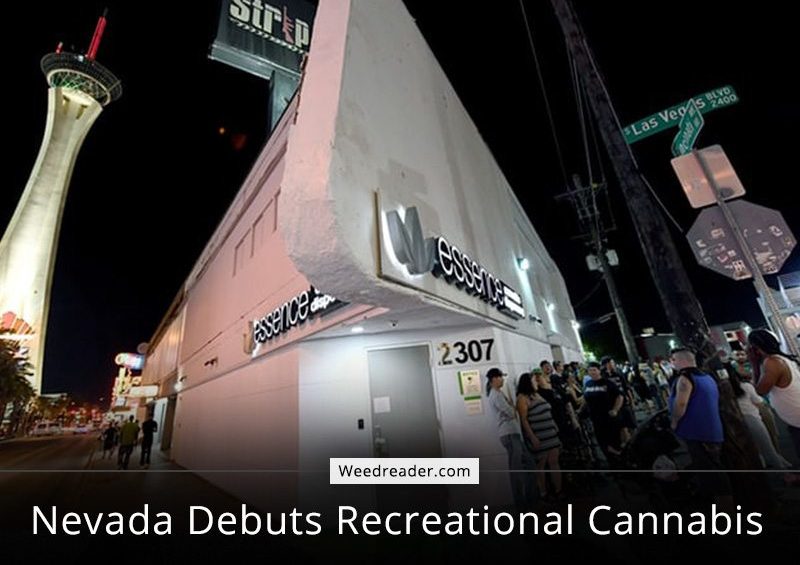
Nevada recreational sales debuted July 1st. Firework, parties, DJ’s and Sen. Tick Segerblom (who is considered Nevada’s hero) were celebrating the recreational kick-off. Sen. Tick has been around the cannabis scene for a while and remembers the hippies of the 60’s in addition to spearheading the cannabis legalization in Nevada.
Segerblom was the first in line buying a bit of weed from Reed dispensary on July 1st. The senator was all smiles. As he looked at the variety of flower available, he said, “When I was doing this back in the 60’s, it didn’t look like this. No seeds, no stems, no sticks. This is pure bud.”
Local Nevada resident, Zach Prekop, said,” Now that it’s legal, it’s more accepted and people can try it out without feeling like they’re doing something wrong. I think it’s going to be another tourist attraction.” Many Las Vegas residents feel the same way and look forward to the increased tourism.

The industry is running into issues spreading awareness about the new changes.

Even with all the hype, many people were not aware that recreational weed is now legal in Vegas. A cabby said on Friday that he expected a lot of people to show up for the July 4th holiday. He also noticed that no one seemed to know they could buy it.
Part of the issue is the lack of available ad space. Nevada law bans cannabis advertising on radio, TV and any other medium where the audience is expected to be under 21 years old. Finding good places to advertise is expensive and limited.
Sen. Segerblom says that cannabis is going to be another feature of Las Vegas. That Las Vegas is the entertainment capital of the world. And they aim to keep it that way with the help of exceptional recreational marijuana.

As of July 1st, recreational weed is legal in Nevada.

All customers need to show legal ID that they are 21 years or older. Out-of-towners are free to purchase as much as anyone else. But that doesn’t mean that it’s a free-for-all. Nevada does have some purchasing and cultivating limits.
Customers may purchase up to 1oz. of cannabis flower per day and/or up to 3.5g of concentrate per day. Nevada will excise a 10% sales tax, but medical patients are exempt from the tax.
Adults may grow up to 6 plants each and a household may grow up to 12 plants in total. Consumption is legal at private homes and on porches or in yards.  Public consumption is still considered illegal and carries civil penalties.
Cannabis is prohibited in casinos, bars, restaurants, parks, concerts and federal property, national forests and federal subsidized housing. The best bet is that if you don’t own it, you shouldn’t consume there. Literally, cannabis consumption is legal only on private property, for now. Oh, and smoking in the car will get people DUI’s.

Where is a traveling stoner to consume?

There are cannabis clubs being put together in Nevada, especially around the Las Vegas strip. These cannabis clubs are to give consumers, mainly tourists, a place to smoke instead of taking it back to their hotel rooms or smoke in the open.
Nevada officials don’t want to see a bunch of cops on the Las Vegas strip creating havoc. Deputy Reno Police Chief Tom Robinson said that previously, officers were told to aggressively enforce cannabis laws. Deputy Chief Robinson said, “Now, we’ve got to change our stance, which isn’t a big deal, it’s just a mindset shift for our personnel.” With police protection and oversight, Las Vegas Cannabis Clubs are set for development by 2019.
A Denver-based entrepreneur started setting up 420 condos on the Las Vegas strip. The interesting thing is that these cannabis-friendly condos are only 420 friendly and not cigarette friendly. Entrepreneurs set up cannabis tours complete with swag bags. They even have coupons and vouchers to use on tours of dispensaries and grow ops.

Nevada is preparing for the next step in their legalization plan.

Nevada is expected to take the lead in national cannabis sales. This is despite the state legalizing cannabis after California and Colorado. While California is the nation’s bread-basket, Nevada is where people go to party, and they know it.
Nevada is set to sell more cannabis that any other state. The reason is because Las Vegas, Nevada brings in 63 million tourists a year. That’s 20 million more than California, Colorado and Washington bring in.
Nancy Whiteman is the co-owner of the Colorado based Wana Brands, they create yummy edible products. Whiteman says, “I don’t think we’ve ever seen anything quite like what Nevada is going to look like just because of the sheer volume of tourism in the state.” Whatever the future holds, Nevada is proving that it can meet its cannabis goals.

sessions

CARERS Act Says No To Sessions

Congress uses CARERS Act to stop Jeff Sessions War on Drugs.

Congress recently introduced the CARERS Act in response to the Attorney General. AG Jeff Sessions recently petitioned congress for additional funds to pursue medical and recreational cannabis users. His deep ties to the prison-industrial-complex have raised concerns. That Session’s attempts to target law-abiding citizens is an attempt to enrich himself at any cost.
Sessions is drowning in the Russia scandal and desperate to impress the first president to demand senators grovel publicly. He also recognizes the current president will likely take no action to stop him from shooting every pothead in the nation. The only real thing stopping Sessions from rolling out the nonexistent FEMA coffins is the funding.
The Attorney General claims that his efforts are an attempt to slow the opioid epidemic that professionals prescribed the nation into. But that seems unlikely given how effective cannabis is at treating opioid addiction. Additional concerns about Sessions long history of racial bias and overt discriminatory behavior drastically weaken his position.

The AG wants to reinvigorate a racial war but congress won’t fund it.Youtube Bong

The long-running War on Drugs has produced drastically unequal outcomes across racial and social lines. One in three men of color between the age of 20 and 29 are currently in the criminal justice system. White populations use drugs as often as anyone else, they are 4 times less likely to be arrested for marijuana.
The effect of the war is targeted violence by the dominant group against smaller groups. Such acts are commonly known as racism. While individuals can claim they were “just following orders”, the denial rings as hollow and delusional. The Nuremburg Trials after WW2 established an international consensus about orders. They are not justification for committing acts of evil and terror.
Yet America is a country constantly at war with itself. It claims to be a free democracy and bastion of capitalism, it is anything but. The united states account for 5% of the global population yet account for over 25% of the world’s prisoners. But Sessions doesn’t believe that enough people are in overcrowded cages.
The Justice Department does a lot of good but there is also plenty of vile behavior that it protects. Black men are legally shot dead by police for following that officer’s orders. Homes get invaded and the residents are killed with surprising regularity. Generations of people grow up only knowing the inside of a cell.

Whole communities are ripped apart emotionally, physically and socially.

And it’s not just time behind bars that is the issue; arrests stay with a person, often for life. And the consequences of a criminal record are most dire for the poor. A conviction disqualifies anyone from many social safety nets. Public housing and student financial aid, employment opportunities, child custody determinations, and immigration status evaporate after a conviction.
These are systems overwhelmingly used by poor and minority populations. And it seems that the Justice Department willfully misunderstands basic facts. Sessions continues to refer to the “historic drug epidemic” in his letter but appears to conflate opioids with cannabis.

Despite his desperate pleas, congress told Sessions no.

A bipartisan group of U.S. senators introduced the bill. It allows state medical marijuana laws to supersede current federal prohibition of marijuana. The bill is called the CARERS Act, which stands for the Compassionate Access, Research Expansion, and Respect States Act.
Rep. Blumenauer said, “The people have been pretty clear that this is something they don’t want the federal government to interfere with.” The legislation allows the different laws legalizing medical marijuana in 30 states, and multiple territories including Washington D.C. to remain.
The CARERS bill submitted through congress but it failed. In 2015, it was the first medical marijuana bill ever introduced into the U.S. Senate. The latest version is better positioned to pass than the original which only had three sponsors. The newest version has six and includes names like Rand Paul, Lisa Murkowski and Al Franken.

Trump is the randomizer on this subject.

While running for president, Trump claimed marijuana laws are a state level issue. He then appointed Jeff Sessions to be his attorney general. Presidential support gives Sessions the daring to ask congress for permission to blow up a functioning portion of the economy.
Sessions sounded like a Hipster Hater when he said, “I believe it would be unwise for Congress to restrict the discretion of the Department to fund particular prosecutions, particularly in the midst of an historic drug epidemic and potentially long-term uptick in violent crime.” Especially after calling the KKK “OK, till I found out they smoked pot”. Sessions continued “The Department must be in a position to use all laws available to combat the transnational drug organizations and dangerous drug traffickers who threaten American lives.”
But the new bill’s proponents argue Sessions’ thinking is flawed. Cannabinoids like cannabidiol (CBD) have been clinically proven to reduce epilepsy and other seizures by up to 45%. Cannabis shows great promise in treating opioid addiction, cancer, mental disorders and many other conditions with minimal side effects.

The bipartisan commission understands the potential consequences.

“I dare him to sit down with families and listen to their stories and then pursue a policy like he’s advocating for now,” Booker says of Sessions’ letter. In addition, allowing states to set their own policies, the CARERS Act would take CBD off the controlled substances list.
The FDA and DEA only recently made CBD a controlled substance. If the decision were reversed, it would allow children to access life-saving medicine. It would be especially impactful in states where medical marijuana isn’t legal.
The bill’s sponsors know it will be difficult to correct the course of the Justice Department. They feel that their bill has the backing it needs to send a message to Sessions. That spending additional time and money pursuing medical marijuana is not OK.

The bill aims to remove current restrictions at Veterans Affairs hospitals.

The legislation removes penalties and procedures currently in place that silence doctors. It would essentially allow doctors to talk about and prescribe pot to their patients. The legislation also allows the nation’s veterans to access legal weed by removing the current restrictions. These policies bar doctors at Veterans Affairs hospitals from prescribing pot to their patients.
But it doesn’t approach the eight states that opted to legalize weed for recreational use. Many of the bill’s proponents promise that those efforts will come later. Washington State should keep an eye out for Sessions and his Hipster Haters. Sessions will eventually find a way around congressional roadblocks.

The full text of the petition can be found at:

https://rohrabacher.house.gov/sites/rohrabacher.house.gov/files/documents/Final%20MMJ%20Letter%20to%20CJS%20Subcommittee.pdf

posses weed

New Jersey Legalizes Weed but Criminalizes Possession

New Jersey will arrest anyone with the smallest possession of weed.

29 U.S. states have legalized medical and/or recreational marijuana. The State of New Jersey recently legalized weed but the criminal justice system still treats everyone like it never happened. New Jersey officials will even arrest people for having a half smoked joint in their possession while in public.
Or having a car freshener hanging in the rear-view mirror. Having a freshener hanging is enough to give police probable cause. Cops use this to search drivers they suspect of having weed.  States like Oregon require drivers to have cannabis out of reach of drivers or have it be in a sealed container. But New Jersey doesn’t want cannabis in the car at all.
Just smelling like weed while walking along the road is enough for cops to frisk a person. In 2014, New Jersey arrested over 25,000 people for possession. Many of the people targeted were tourists but even locals were charged. Residents and tourists beware; New Jersey will charge for possession and let the courts figure out guilt.
Carmine Villani is a criminal defense lawyer in New Jersey. She says that possessing weed (anywhere from 0 to 50 grams) will lead to a disorderly conduct fine. If the cop is in a bad mood, you might get 6 months in jail or a $1,000 fine. If you get caught with it in your car you could lose your license. If you are caught with an already smoked joint, a resonated pipe or left over shake it doesn’t matter. Your life will be ruined. In New Jersey, getting caught with the smallest amount of pot is a life altering affair.

New Jersey will take away professional licenses for those caught with weed.

Carmine also says that people who work with children as a profession could lose their license. They lose the ability to work with children when they are caught with possession of weed. First time offenders have a sliver of hope although.
People caught with 50 grams of marijuana or less have a change of getting a reduced sentence if it is their first time. If defendants pass a urine test and undergo a year of probation they can avoid the fee and jail time. Repeat offenders have no option but pay the fine and/or do the time.

New Jersey Governor Chris Christie is responsible for marijuana enforcement.

Gov. Christie is against cannabis and hates everything about it. He drafted and passed a cannabis bill that only supports the sickest and near dead members of society. Patients with cancer and are close to death got an exemption. They can obtain a medical marijuana card but still face the prospect of arrest and harsh penalties if found in possession. Things get even worse if they have it in their car or are caught with it in public.

The cops don’t require much to ruin a person’s life.

Having paraphernalia is enough for police to arrest and later convict a person. Also, if the cops suspect that the resin they see contains a derivative of cannabis, they use a test called the Duqeunois-Levine Test. If the test drop turns purple, then the substance tested positive for a derivative of cannabis.
The most insane part of all this is that it takes several months for the test to come back. One woman in New Jersey was going to get a job in September, but got arrested in August. She had to wait till March for her case to resolve. People with sticky fingers can also be tested for cannabis derivatives with the Duquenois Test.

New Jersey will not decriminalize cannabis any time soon.

Maybe the governor will decriminalize cannabis because elections are coming up. However, it looks unlikely. If city officials decriminalize marijuana, currently a misdemeanor, the penalty will be relabeled.
For example, instead of a possession charge, having weed in the car will become a driving under the influence charge. But the test cops use for THC doesn’t give accurate results. Having any THC in your system results in a charge. But THC stays in the body for up to a month or more. If a person smoked a jay in the beginning of the month they should wait a month for the substance to leave their system before they can drive again.
New Jersey police currently use outdated field sobriety tests.
The departments methods were designed in the early 70’s. They were also designed to combat alcohol, a very different drug. A person can be high and still can lift a leg or walk a straight line. Because of how easily cannabis users can pass a sobriety test, police have started ambushing people.
Many New Jersey cops park at the PNC Bank Arts Center and bust kids and adults in the parking lot. They’ll arrest people if they think they were smoking a joint or if they are find residue somewhere nearby. Basically, the PNC Bank Arts Center houses the New Jersey police barracks.
Many can’t believe how strict the cops are when it comes to a small amount of weed. But the New Jersey cops don’t care. Gov. Christie has a no non-sense policy when it comes to the possession and use of cannabis. And it will continue to be that way until Gov. Christie is out of office.

ohia weed

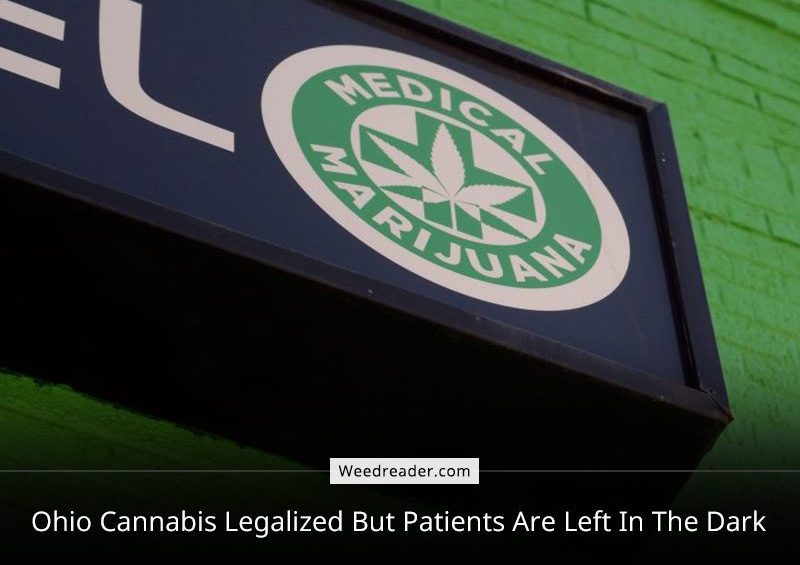
Ohio Cannabis Legalized but Patients are Left in the Dark

Ohio Cannabis Legalized but Patients Still Waiting.

One year after medical marijuana became legalized, patients still can’t buy legal cannabis within the state of Ohio. No licenses are given to cultivators, processors, labs or dispensaries. Doctors cannot become certified to recommend it. Ohio officials say that dispensaries will open by Sept 8th, 2018. That is a long time before anyone sees a single legal joint for sale in Ohio.
In the fall of next year, Ohio plans to license several cannabis facilities. This includes 24 growers, 40 manufacturers of cannabis oils, tinctures, patches and medibles, and 60 dispensaries. They are also going to grant licensing to testing labs but Ohio officials are not sure how many.

The application process will not be cheap in Ohio.

The application process will not be streamlined, and the state fees will not be cheap. Larger cultivators are expected to pay $20,000 for a non-refundable application fee. And another $180,000 license fee if they are approved. The application fee is renewable for $200,000 per year.

Not all Ohio cities are joining the bandwagon.

Ohio allows cities to say whether they want marijuana businesses in their neighborhoods. Over 50 municipalities said no, they don’t want medical dispensaries in their towns. Slowly but surely entrepreneurs are changing the minds of these cities. Normally by showing them the huge potential income they would be losing if they don’t participate in the medical dispensary movement.
In recent months, more than a dozen communities have lifted the ban or let their own bans expire. Cities like Youngstown, Columbus and Johnstown have agreed to allow marijuana businesses to begin cultivation.
Columbus was one of the first cities to allow cannabis cultivation. They soon ran out of qualified cultivation grow space because of the large number of people petitioning for a license. Many cultivators almost lost their grow space when they realized how big the bill was for local licensing. “Even if you’re welcoming, there are other communities who are welcoming now,” Johnstown Village Manager Jim Lenner said.

Too bad ailments can’t take a two-year hiatus.

Ohio lawmakers understand that medical patients can’t wait two years before receiving treatment. That is why they put a few safeguards to help protect them from being prosecuted for possession. If patients have some form of letter or paperwork certifying that they have a qualifying condition, this protects them from prosecution. However, the law doesn’t state where they can legally obtain their weed.
Because Ohio physicians aren’t certified yet, they are reluctant to sign off for potential medical marijuana patients. That hasn’t stopped everyone though. A small percentage (7%) of Ohio doctors are willing to take the risk and help medical cannabis patients with recommendations.

But is simply isn’t enough.

Many patients like Amanda Candow are refraining from purchasing marijuana. Candow has multiple sclerosis and has a doctor’s note. But because of the current state of Ohio laws she doesn’t trust the letter and therefore is too afraid to buy weed.
Candow and others who have debilitating conditions like terminal cancer want to stay on the right side of the law. Even though Ohio cannabis is legal, delays and outrageous fees in the licensing process stop progress.

NevadaRecreationalWeed

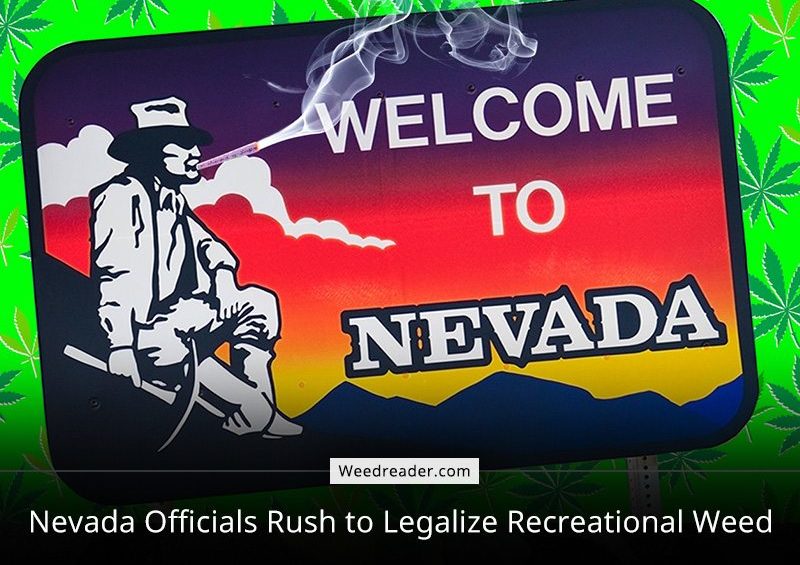
Nevada Officials Rush to Legalize Recreational Weed

Nevada officials are moving too fast.

The tourist season is just around the corner and many are wondering if Nevada officials are moving too fast. Nevada expects tens of millions of dollars in tax revenue from recreational sales. Rafael Lemaitre is the former member of the Obama administration’s Office of National Drug Policy. Lemaitre sees how sloppy implementation of recreation marijuana is going. He says Nevada is moving in a manner like a college student who skipped classes all term and is now cramming for finals.
Supporters are worried that the state won’t be ready to begin recreational sales on July 1st. “We’re not certain we’re going to be able to hit the July 1st date.” says Scot Rutledge. He ran the campaign to legalize cannabis is 2016.
Nevada officials are scrambling to meet the early July 1st due date because the tourist season is just around the corner. Recently there was a hiccup about who could be allowed to distribute cannabis when marijuana dispensaries initially attempted to obtain a recreational distribution license. Carson City Judge James Wilson recently issued a temporary block to only allow the Nevada Alcohol Wholesale Distributors the ability to distribute cannabis products.
Nevada Governor Brian Sandoval (R) spoke with Colorado Governor John Hickenlooper (D) several times about his states experience with the marijuana movement. “We want to learn from the experience of other states,” says Sandoval.

Cannabis Clubs

The issue about where to legally smoke pot outside consumer’s homes is a big deal. Nevada officials worry that consumers will smoke on the Las Vegas strip and smoke pot to their hotel rooms. Causing law enforcement to be called several times a day, all summer. If vacationers want to smoke in public, Nevada officials want to provide a safe-space for them to do it. Police time and energy won’t be spent harassing the Las Vegas strip and hotels all summer long.
Nevada legislators argued over whether to allow pot clubs. According to Nevada attorneys, it doesn’t need to be a state issue on who gets to open cannabis clubs. These safe-spaces to smoke can be more of a local jurisdiction matter. The potential to attract tourists from around the world is too great to not allow cannabis clubs in places like Vegas.

Nevada’s Cannabis Tax Income

The state of Nevada expects to sell $700 million in weed products within the next two years. But they expect their projections to be on the low end of reality. They expect a gold rush scenario similar to what happened in Colorado, Washington and Oregon when they legalized and began selling recreational marijuana

Nevada is hoping to stop the black market for good.

When recreational sales become legalized, Nevada officials are optimistic that the black-market sales of cannabis will stop. And the money from cannabis sales will go pouring into the state instead. However, Nevada officials worry that rushing the process will give Jeff Sessions another excuse to enforce federal control. “The situation with federal enforcement is already tenable as it is. Rushing the process could also give Sessions another excuse to reassert federal control. Which should surprise no one given his track record this far,” Lemaitre said.
Featured Photo Illustration by Elizabeth Brockway/The Daily Beast.

cannahike

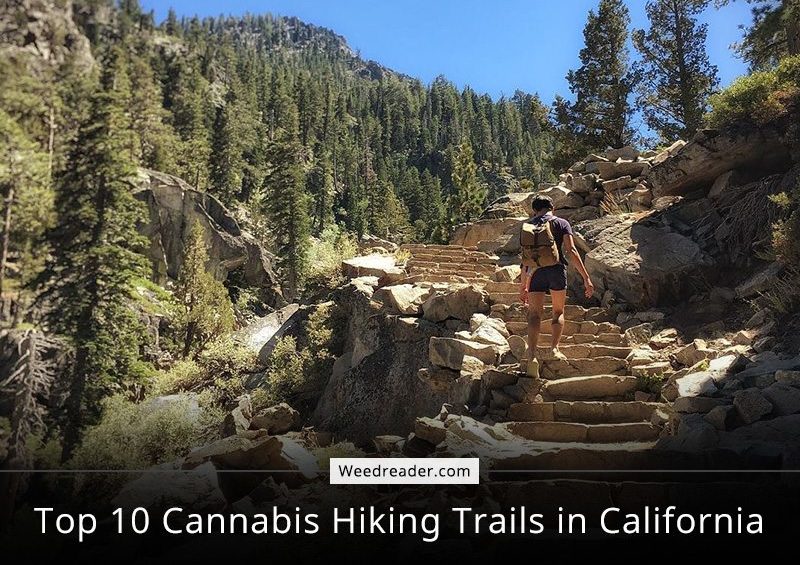
Top 10 Cannabis Hiking Trails in California

Have you ever been on a hike, on weed?

California has a lot to offer to the average consumer. Whether it be climbing a mountain or hiking down a deep valley, there’s a cannabis hiking adventure for everyone. California offers a variety of scenic views and landscapes that will take your breath away.

1: Lassen Peak Trail

Have you ever wanted to get stoned and stand on top of an active volcano? Well, Lassen Peak Trail offers a moderate to hard hike that ends on top of a beautiful and safe volcano. The view is breathtaking and worth the 5-mile hike.

2: Eagle Lake

If a volcano hike seems too much, try an easier walk on Eagle Lake. Smoke-a-bowl and enjoy the beautiful waterfall views and magical woods. The 2-mile trail leads to a mirror-like lake within South Lake Tahoe.

3: Sierra Buttes Fire Lookout

The Sierra Butte Fire Lookout is another great place to get stoned at and enjoy the open fields filled with wildflowers. This trail is easy to moderate because travelers can continue their cannabis hiking through rocky terrain that leads to a 600-foot drop lookout.

4: Cataract Falls

This 2.7 mile trail is moderately difficult to hike, but the trail is filled with the sounds of bubbling streams. Smoke a joint and enjoy natures cooling streams and breathtaking waterfalls.

5: Fern Valley Trail

Looking for the Jurassic Park experience? Well you won’t find dino’s here, but it was the backdrop for Jurassic Park II. This easy to walk 1-mile park is filled with wildlife such as salamanders and centipedes.

6: Salt Point Trail

Salt Point Trail delivers a true Northern California coastal experience. There are wildflowers, colorful sandstone formations and the big beautiful deep blue ocean. Don’t get too blazed, the trail can be a little confusing so it’s best to bring an updated map.

7: Feather Falls

The best time to visit Feather Falls is during mid-spring to early summer. Just after the winter snow has melted the wildflowers are in full bloom. Get blazed and enjoy the shining waterfall and sparkling waters within the 8-mile long hike.

8: Mishe Mokwa Trail

In Malibu, California there are a variety of peaks, but Sandstone is the crown jewel of the area. You’ll also see vibrant green landscapes and a gorgeous ocean backdrop. This moderate difficulty, 6-mile long hike is perfect for couples who want to smoke-a-bowl and enjoy the views together.

9: Mt. Baldy (Mt. San Antonio)

A difficult path for sure, this 10-mile long path is not recommended for beginners. The views are filled with beautiful natural scenery. And for those who want to omit 4-miles from their hike, there is a ski lift available during the summer months.

10: Torrey Pines State Reserve

This amazing trail offers three different points: Red Butte, Yuca Point and Razor Point. These points on the hike provide an incredible view of colorful wildflowers, natural seaside wonders and a few rattlesnakes. Yes, rattlesnakes are also a part of the hike so be careful stoners and don’t pet the snakes.
Featured image: notez_rachapong / Instagram

prop64

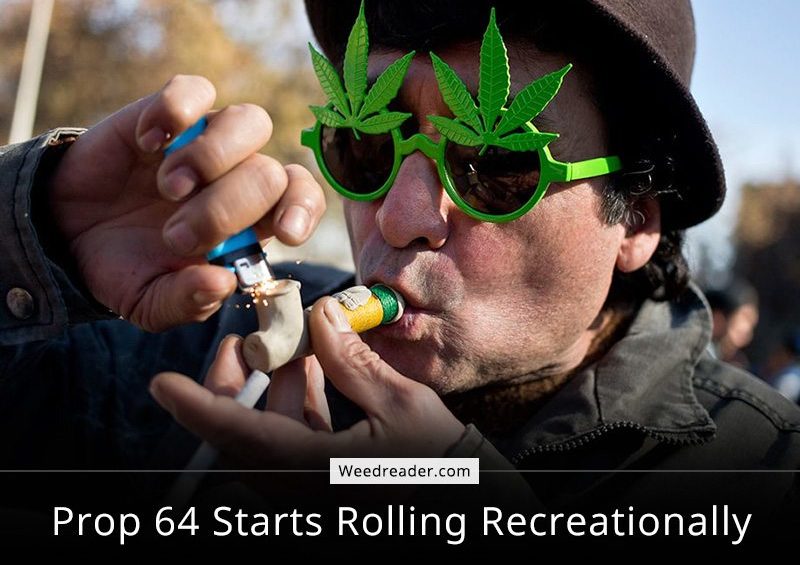
Prop 64 Starts Rolling Recreationally

Prop 64 is getting recreational weed rolling.

Also known as the Adult Use of Marijuana Act (AUMA), Prop 64 passed with a wide, 57-43% margin in November 2016. There were nearly 8 million people who voted to legalize marijuana but there were still close to six million voters who liked the status quo. A big part of the broad support for legal weed may be from the deep history California has with the plant.
Cities like Mendocino, Orange County, Weed, and San Francisco all have a vibrant horticultural culture. They were also some of the heaviest hit by the AIDS epidemic. Reducing suffering for terminally ill patients was enough motivation for California to allow medical marijuana. This is part of the reason so many popular strains come from the sunshine state.
Granddaddy Purps, SFV OG and countless others have become internationally recognized, California based genetics. An entire region of northern California is known as the Emerald Triangle because of how prevalent weed is. But up until now, only medical cannabis has been legal in California. The new bill marks a new chapter in California’s cannabis legalization legacy.

Prop 64 Updates the California laws in a few ways.;oaded bong

The new law makes possession of up to one ounce of sticky icky or eight grams of concentrates legal. Every adult (21 and over) is also allowed to grow up to six plants each. And prior offenders can file to have their records changed to reflect the new standard. But they don’t stop there.
California has a prison population issue from the harsh mandatory minimums that the War on Drugs brought about. Prop 64 reduces penalties for most cannabis related crimes (like cultivation, transport and sale) from felonies to misdemeanors. But repeat or violent offenders can expect to get some of that prison guard love that made Alcatraz such an attractive destination.
Part of how they distinguish the happy hippie from the dangerous drug dealer is if they have a license. The plan is to have a full regulatory system in place for commercial/personal cultivation and sales by January 2018. Like other states, they will pay for the regulations (and then some) through taxes and fees.

What kind of taxes are we talking about?

Glad you asked! Prop 64 establishes a flat production tax of $9.25/ oz. of flower to start. That means that small operations will earn orders of magnitude less profit than their industrial counterparts. This helps attract investment but also puts huge financial pressure on small and even medium sized operations.
Another tax concession was a new tax on both medical and recreational sales. The state decided to implement a new 15% excise tax for retail sales. This new tax is scheduled to take effect in January of 2018 for both medical and recreational users. To make up for the new tax, California gave resident medical patients with ID an exemption. They don’t have to pay the current 7.25% sales tax. They made the exemption effective immediately which shows how much they care about their medical patients.
Industrial hemp also got some love with the bill. Effective Jan 2017, farmers have been allowed by the state to grow hemp in their fields. Hemp genetics are mostly comprised of several extremely low THC strains of cannabis. This means it can often be high in the non-psychoactive compound CBD. The decision of the DEA to make CBD a schedule 1 drug (and thereby prevent most hemp production) made this inclusion especially important.

Legalization means regulation, not anarchy.Say What

A lot of people confuse the word legalized with the word unregulated. Legalization means that every penny needs to be accounted for and every dot needs to be crossed because someone is watching. You can’t just roll up to a dispensary with a bag full of chronic and expect to walk away with a check. You can expect to get a night stick massage and a new pair of linked bracelets.
Illegal sale, transport, manufacture, cultivation or possession with intent to sell are all big no-no’s. You also can’s smoke or consume in any “public place”, on school grounds or have an open container while driving. Even having a spliff tucked into your beanie while mountain biking down a trail is can get you a DUI or misdemeanor.
If minors are caught in possession, they no longer have to fear imprisonment though. They will get to spend plenty of time in drug education and community service as long as weed is all they get hit for. But if anyone happens to be a three-time offender, they get special treatment that may be more in line with the federal guidelines.

Oh, and none of this applies of federal property.prop 64 no-no zone

The entire state of California (and the entire West Coast from Canada to Mexico to be honest) has started legalizing recreational cannabis. But federal law still Trumps state law most of the time. Anywhere that is considered federal property  is exempt from the new laws. This includes places like the post office, courthouses, parks and military posts. Get caught with weed there and it’s in federal prosecutors hands.
While individual states have taken measures to reduce penalties for cannabis consumption, they still maintain that is a federally illegal Schedule One substance. In any special cases that prosecutors feel justified in, they can choose to pursue federal charges and penalties. And with the new edict from Attorney General Jeff Sessions, federal prosecutors were ordered to seek the most severe punishments possible.
Federal charges are normally only brought forward in large cases where commercial distribution is suspected. This is normally in the hundreds of plants so small growers feel a modicum of safety. But recent political upheavals have shown that America is dominated by increasingly authoritarian and obnoxiously ignorant ideologies. This bill is a step in the right direction and gives Californian’s the opportunity to treat each other with compassion. But as great as this step is, don’t expect it to stop the federal ban hammer on its own. With all the documentation required to get a license, there will be no escape if Attorney General Sessions has his way.

cannmem

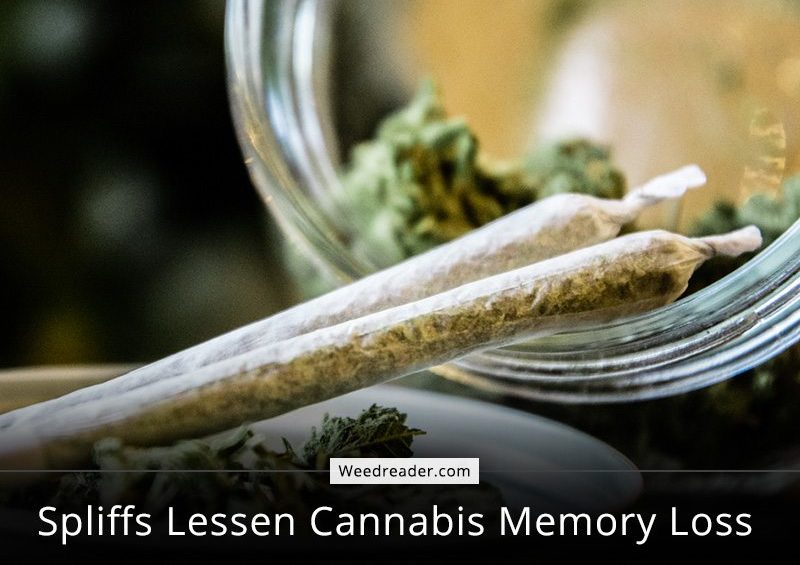
Spliffs Lessen Cannabis Memory Loss

Tobacco rolled with marijuana helps lessen memory loss.

Spliffs are a mixture of pot and tobacco that are rolled up in a fashion that is similar to a joint. Some spliffs have more tobacco than weed, and other spliffs have more weed than tobacco. It usually depends on what the user would prefer.
A common rumor is that spliffs increase the high of weed, but researchers found that is simply not true. Researchers discovered that spliffs are not healthy to inhale because tobacco is loaded with carcinogens that are dangerous to people’s health. However, the upside to the discovery is that nicotine helps lessen the effects of memory loss that is generally associated with smoking cannabis.
According to the new study published in Psychological Medicine, spliffs lessen the memory killing effects of cannabis. “There’s a persistent myth that adding tobacco to cannabis will make you more stoned. But we found that actually it does nothing to improve the subject experience.” said Chandni Hindocha.
Chandi is a clinical psychologist and the study’s lead author. Chandi’s research team discovered that spliff smokers undergo a placebo effect which makes them think they are getting higher, when they really are not.

How Chandi’s study was conducted.

Chandi’s researchers looked at 24 adults who have smoked tobacco and marijuana. The requirements for the study was that the 24 adults were not addicted to cannabis or tobacco. But they did need to know how to smoke both substances. During the study, the 24 subjects smoked either cannabis and tobacco, cannabis and placebo, tobacco and a placebo, and all placebos.
Chandi’s team measured the subject’s vitals such as heart rate and blood pressure. And researchers asked the subjects several questions about their psychoactive experiences. Chandi’s researchers also required the subjects to recite literary passages. The subjects read passages at different times during testing and then were asked to recite them, this was done to test their memory.

What researchers discovered.

Chandi’s researchers discovered that when subjects only smoked pot, they had the most memory loss. However, spliff smokers showed better concentration abilities than when they smoked only marijuana. As a result, Chandi’s team are saying that the nicotine in a spliff helped stabilize memory capabilities.

Spliffs are not healthy.

During the study, Chandi’s team saw that the cannabis-tobacco mix resulted in higher heart rates for all the participants. The study revealed that spliffs are worse for cardiac health than regular joints due to the toxic gases found when burning tobacco. Tobacco is dangerous because the nicotine found within causes addiction, and tar and toxic gases cause cancer along with other health problems.
The carcinogens in tobacco cause chronic lung disease such as emphysema and bronchitis. As well as heart disease, pregnancy-related issues and other serious problems. Therefore, smoking a spliff may be better for your memory than using straight marijuana. But tobacco is responsible for over 480,00 deaths per year in the U.S. The cause of death related to weed is still zero.