chris tucker friday

20 Great Movies to Watch While High

 
There’s no better way to spend an evening at home than to gather with the ones you love and watch a great movie… and being high just makes it that much better!
I’ve compiled a list of my favorite films to watch while under the influence, in no particular order. Some are classics, some you may never have heard of. There’s a little something here for everyone—some will make you stop and think, some will make you laugh out loud, and some of them might just blow your mind.
So grab some snacks, sit back, light up and enjoy…
1. The Big Lebowski

Have you ever been mistaken for someone else? In this classic, the Dude is mistaken for someone who owes the mob money. In the process of clearing his name, the mob ends up destroying the Dudes rug.
Hilarity ensues as he tries to get his rug fixed. Jeff Bridges and John Goldman are amazing as they deliver legendary one liners flawlessly and give their take on some of the cannabis world’s most common archetypes.
2. Pineapple Express

Dale Denton (Seth Rogan) is a process server that witnesses his dealers boss murder a guy. He flees the scene and turns to the only person he can; his weed dealer Saul Silver (James Franco). The bad guys figure out who they are because of the brand new and super rare weed.
Weed is the main focus of this comedy that can tackle surprisingly serious issues in a light-hearted way. These stoners can’t seem to get ahead and always seem to get themselves into more trouble. This one tugs at the feels.
3. Eternal Sunshine of the Spotless Mind

Ever wish you could just forget about someone in your past? In this drama, Joel Barish (Jim Carey) struggles to find out who his dream girl is. He ends up going through a mind opening experience where he rediscovered the beauty of an imperfect life.
This introspective mindbender will take you for a ride to places you may have never explored. Science still doesn’t have all the answers to how the brain works and this will get you really thinking.
4. Altered States

This imaginative and intelligent look at psychedelics is a real masterpiece. At times surreal and at others downright silly, somehow the campy nature of it adds to the overall feeling. While amazing high, even sober types will have something to say about this one.
5. Monty Python’s Life of Brian

We follow Brian (Graham Chapman), a somewhat unlucky man living during the birth of Christianity, literally. Brian spends his whole life getting mistaken for the messiah, but it isn’t as awesome as it may sound. But he won’t let the ridiculousness of life stop him or get him down.
We could only include one entry from this distinguished group and it was tough. We opted for this gem for how relevant it is to issues around the globe. Monty Python take their signature British style of humor and confront the difference between what people believe and what people actually experienced at the beginning of the first millennia.
6. Life is Beautiful

What happens when an idyllic life is interrupted by the holocaust? This Italian film follows Guido, a Jewish book keeper with a beautiful family. But Guido’s world is turned upside down when Nazi’s take over and send people to the camps. Somehow, surrounded by death and hopelessness, he is able to find the beauty in life.
7. 3 Idiots

We have all been in a situation where you have nothing to lose. We just haven’t all had the guts to do what we wanted to. Some people never get out of that stage but not this trio. This Bollywood tale follows three college friends as they attempt to settle an old bet and recall the trouble they got into at school. Perfect for rolling up a fatty and laughing your ass off.
8. Half Baked

Thurgood Jenkins (Dave Chappelle) just got a job as a custodian at a lab where they test copious amounts of weed. Unfortunately, his roommate ends up in jail standing murder charges. So it is up to Thurgood to use weed to get his friend out of jail. He just has to be careful that his new girlfriend Mary Jane Potman (Rachel True) doesn’t find out he smokes weed or she will dump him.
Half Baked is filled with interesting information (like horses can be diabetic) and some of the best examples of what black market dealers have to deal with (both with their clients and with their competition). It will take some creative thinking and some stellar weed for these stoners to get their friend out of jail before it’s too late.
9. Yellow Submarine

Have you ever felt high just being near someone? This movie inspired by and based on the Beatles legendary album takes you on one far out ride. The Beatles accompany Captain Fred in his Yellow Submarine and take us along for the acid induced trip. The story takes place in Pepperland where the Beatles use their melodies to free the land from the music hating Blue Meanies. Definitely best watched under the influence of something.
10. Animal House

This is the college movie that inspired everything from the American Pie series and beyond. The Dean of a 1962 college is determined to expel a fraternity made of the schools rejects and party animals. Unfortunately for him, there are rules.
You get everything from John Blutarski (John Belushi) downing a real fifth of whiskey in a single go to helping Chip Diller (Kevin Bacon) become a household name. This movie was responsible or at least marked a whole generation of actors and comedians rise to fame.
11. The Holy Mountain

The Holy Mountain is filled with Christian imagery and a mysterious and otherworldly experiences. Everything is more than it seems and goes as deep as you would like. Able to be viewed in several ways, this film seems to morph and adjust to represent whatever is going on in your life. The best part is that it is able to poke fun at religions and materialists alike.
12. Pan’s Labyrinth

This dark psychological thriller explores imagination and reality by introducing us to Ofilia in the falangist Spain of 1944. She meets a faun who tells her that she is a princess. But to prove herself a true heir and meet the King, she must complete three tasks.
The world of Pan’s Labyrinth is dark and unforgiving. Danger lurks just out of sight but is always present. The twisted and sometimes contradictory nature of life is explored in a fantastical setting and amazing visualization.
13. Fear and Loathing in Las Vegas

We can’t stop and talk about this for too long, it’s bat country! This film is the adaptation of a book written by one of the most unique journalists ever; Hunter S. Thompson. Seriously, look this guy up, he is a bad ass.
This movie explores the depths that someone can steep to when they binge on drugs in the desert. Raul Duke (Johnny Depp) and his lawyer (Benicio Del Toro) take a trip to Las Vegas to cover a motorcycle race. Since the trip is paid for and they have plenty of time to kill, why not try out every drug known to man? What follows is every use-related reason why it’s a bad idea.
14. Natural Born Killers

Probably most notable for being the movie that inspired the Columbine school massacre, this prison break movie shows that some people are just good at being bad guys. NBK is a startling look at what people are capable of when they have nothing left to lose.
Quentin Terantino has a reputation for delivering blood soaked masterpieces where the world feels real and the characters exist within it. The villains have depth and reason for their actions and the stellar acting pushes it over the edge. And the “good guys” are shown as real people, reacting to the crazy situations they find themselves in instead of some impossible paragon of virtue.
15. Groundhog Day

Have you ever wished you could go back and have another chance at something? How about a whole day? In this romantic comedy, Phil (Bill Murray) is a reporter who has to cover the groundhog celebrations around Punxsutawney. But when Phil wakes up the next morning, it’s still groundhog day.
Phil slowly realizes that he is in a time loop, endlessly repeating the same day. It isn’t until he learns some hard but important lessons about what he can and can’t change that he has a chance to live for tomorrow.
16. Kung Fu Hustle

A comedic take on a part of film history known for low budgets and serious dialogue. If you are into Kung Fu classics, you will get more of the nuanced Easter eggs and pop culture references. There is beautiful music, great martial arts choreography, virtuous heroes, devious villains and plenty of interesting side characters.
This movie pokes fun at many of the ideas that have come to dominate martial arts movies. But, that doesn’t mean it sacrifices on story. The film world is populated with all sorts of people from all walks of life. Even the most intellectually challenged characters are endearing and multidimensional.
17. Dead Man

This is the story of William Blake. A traveler of the extreme western American frontiers during the late 19th century. Lost and badly wounded, he encounters a Native American named Nobody. This movie explores how society and circumstance can conspire to transform even the gentlest and kindest of souls into hardened killers. It holds up a mirror and asks us if we would do any different.
18. Pi

Pi is a mathematical constant. It includes every sequence possible which means that it holds every answer to every question possible. When a math genius creates a computer that can decode the secrets of the universe, powerful people find out and want it for themselves. Shot in grainy and gritty black and white, it sets the mood perfectly for the conflict between cabalists and Wall Street attempting to control everything.
19. A Scanner Darkly

Do you trust the government? In this visually striking film, a future cop ends up dealing with the dark side of a new illicit drug. As the drug takes hold, the distinction between fantasy and reality begin to blur.
This film asks us a question. What makes you, you? Is it memories, perception or a slurry of chemical reactions? The answer may not be as clear as we once thought it was.
20. 2001: A Space Odyssey

What happens when computers get to control things instead of man? In this visionary movie that came out during the 1960’s, we explore the consequences of alien and artificial intelligence.
When mankind discovers an alien artifact on the moon, we send our best to go investigate the mystery of who placed it. But when the next stage of evolution is up for grabs, machines prove that they want it just as much.
What are some of your favorite movies to watch while high? Tell us in the comments below!

hungry person

Why Does Weed Give You the Munchies?

One of marijuana’s most famous effects, apart from mild euphoria, is that inevitably it has you cleaning out your fridge and cupboards, or running to the nearest store for smacks. The tremendous surge in appetite that cannabis gives us, commonly known as “the munchies,” is actually one of it’s most important medicinal properties. For people on chemo, or struggling with eating disorders, it can literally be a life-saver.
But why is it that smoking weed makes you so hungry?
You probably know that the effects of marijuana are primarily caused by molecules called cannabinoids, especially tetrahydrocannabidol, or THC. These molecules interact with naturally occurring receptors in the brain called the endocannabinoid system, which helps regulate mood, memory, sensitivity to pain, and—you guessed it—appetite.
Smoking marijuana stimulates appetite in multiple ways. A study done last year at the University of Bordeaux found that THC affects the olfactory bulb of lab mice, making them more sensitive to odors.  it would seem that smoking pot makes us smell and taste food more intensely, which would naturally tend to make us eat more. But this doesn’t fully explain the intense, ravenous, and seemingly insatiable hunger cannabis can induce.
Back in 2005, a team from the London Medical School published a study showing that cannabinoids stimulate appetite by activating the hypothalamus, and interacting with a compound called ghrelin which acts as a regulator of appetite and metabolism. A study released earlier this year delves even deeper into the mystery…
An international team of scientists led by Tamas Horvath found that cannabis effectively “flips a switch” in the hypothalamus, specifically a cluster of neurons called the POMC. Normally, these POMC neurons are responsible for signaling when we are full, and shutting down the appetite. But when we are high that effect is reversed, and these neurons, when activated, actually stimulate hunger.
Hence the bottomless pit in your stomach that can’t be filled.
Even this is probably just a part of the picture. The chemical cocktail found in the cannabis plant is extremely complex, and the effects that it has on the human brain and body even more so. But one thing is certain: cannabis does stimulate the appetite, especially in those who haven’t built up a tolerance. In fact, it does it so well that no other medication can even compare, and even the radically anti-pot pharmaceutical industry had no choice but to embrace it. The synthetic THC known as Marinol is the go-to appetite booster for chemo patients and others who are wasting away due to loss of appetite.
But why should we pay Big Pharma to synthesize something that we could all grow in our own backyard?
Whether you are a medical patient who needs to restore your lost appetite, or a casual smoker who just wants to take dinner up another notch, cannabis will do the trick. So grab some snacks, light up, and enjoy.
photo from abcnews.com

Is the U.S. Finally Changing Marijuana Policy

Is the U.S. Finally Changing Marijuana Policy?

sanjay gupta_legalize
Since the Controlled Substances Act of 1970, cannabis has been classified by the U.S. government as a Schedule 1 narcotic. Which means that it is considered a dangerous and highly addictive substance with no known medical use. In recent years, scientific studies have repeatedly found that cannabis does indeed have powerful medicinal qualities, casting doubt upon that dubious Schedule 1 classification.
But Uncle Sam has always made a point of ignoring that evidence… until now.
The National Institute on Drug Abuse recently updated their official position on medical marijuana to say:

“The FDA has not recognized or approved the marijuana plant as a medicine. However, scientific study of the chemicals in marijuana, called cannabinoids, has led to two FDA-approved medications that contain cannabinoid chemicals in pill form. Continued research may lead to more medications.”

An article by Mike Adams, which was published on many major cannabis sites, goes so far as to say that the government admits that pot kills cancer. While I can find no evidence of that, it is a promising sign that the NIDA is using such pro-cannabis language on their official website.
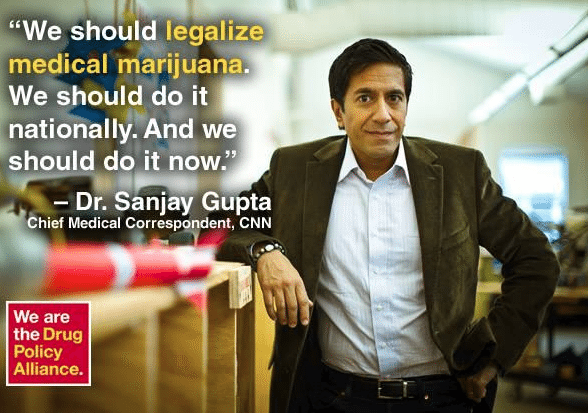
The President has also voiced his support for medical marijuana. In an interview with Dr. Sanjay Gupta, Obama was quoted as saying, “I think carefully prescribed medical use of marijuana may in fact be appropriate, and we should follow the science as opposed to the ideology on this issue.” He also expressed his support for decriminalization, saying, “The more we treat drug abuse from a public health model, and not just from an incarceration model, the better off we’re going to be.”
Well, if we put aside the fanatical War on Drugs ideology and follow the science, I don’t see how we can possibly justify continued prohibition. There are countless research and case studies which demonstrate the healing properties of marijuana. Dr. Gupta, who has become one of the biggest champions of the medical marijuana cause, tracked down many of these cases in his documentary series WEED:

Marijuana is beneficial in treating chronic pain, glaucoma, epilepsy, nausea, appetite disorders, anxiety, depression, OCD, PTSD, addiction, insomnia, and even cancer. This is not speculation—it’s proven by science, and by real people whose lives have actually been saved by cannabis.
A bill has been introduced in the U.S. Congress called the CARERS Act (which stands for Compassionate Action, Research Expansion, and Respect States) that would re-classify marijuana as a Schedule II substance, and open the doors for more research, medical use, transport across state lines, and hopefully help solve the current banking problem faced the cannabis industry. The bill is currently being considered by a Judiciary Committee, and if passed it would mark a new age in United States drug policy—one determined by reason, not by fear.
Subscribe to Weed Reader to stay informed on this issue. Make sure you are registered to vote in your district, and contact your Senators and Congressmen! Let ’em know that you support the CARERS Act, and encourage them to do the same.
Together, we can change U.S. marijuana policy, and make sure that this natural, herbal medicine is available to all those who need it.
 

ben jerrys releases new snack

Ben & Jerry's Releases New Snack for Stoners

Rumors have been swirling that Ben & Jerry’s ice cream is working on a new cannabis-infused product, and they have just announced that they are indeed releasing a new frozen treat… sans cannabis.
The new BRRR-ito is obviously marketed to pot smokers, however. The product is being rolled out on April 20th, sort of the unofficial “National Day of Weed.” The commercial plays upon some (rather degrading) marijuana stereotypes, depicting a crowd of droopy-eyed, brain dead stoners staring at a screen. But I must say that the BRRR-ito itself (which as you might guess is basically ice cream and chocolate wrapped up like a burrito in a waffle cone shell) does look delicious. Check it out here:
 

In an interview with Huff Post Live, founders Ben Cohen and Jerry Greenfield addressed the rumors of a THC-infused treat. They definitely spoke out in favor of legalization, and even seemed keen on the idea of cannabis edibles. But the decision is not up to them. The company has to answer to a board of directors, and prove that the potential profit of a weed-laced ice cream would be greater than the risks – especially when major banks and financial institutions are refusing to do business with cannabis companies.
Still, the new BRRR-ito, and the ad campaign surrounding it, shows that big name companies have their eye on the cannabis market. They can read the writing on the wall: legalization is here to stay, and there is nowhere to go but up.
Who knows what mega brand will jump on the bandwagon next, or what new pot oriented products are yet to be unveiled? But please, no more dumb stoner stereotypes! Cannabis users are more sophisticated than that, and smart companies would do well to recognize that.


weeds

10 Countries That Smoke the Most Weed

Have you ever wondered where on Earth people smoke the most weed? Me too. Unfortunately, that kind of information tends to be vague and somewhat fuzzy. With cannabis illegal practically everywhere around the world, the production, sales and consumption of pot is driven underground to the black market.
However, there are many organizations dedicated to keeping track of drug traffic, the largest and most respected being the United Nations Office on Drugs and Crime. Every year they publish the World Drug Report, which uses surveys and law enforcement data to estimate the percentage of the population in different countries which use drugs. This list draws on data from the UNODC to determine the total number of cannabis users in each country (not the highest use per capita, as you’ll see in other lists). This gives us a better picture of how much weed is actually smoked in any given country.
Without further ado, I give you the 10 countries that smoke the most weed:
 
10. Canada

photo by Gorgo, via wikipedia

Canada is a land of wide open spaces, natural beauty – and liberal marijuana laws. The government issues licenses for medical and industrial use, and often “looks the other way” on recreational use, especially in the province of British Columbia. Of 36 million citizens, the World Drug Report found that 12.6% were marijuana smokers, enough for Canada to squeak in at #10 on our list with 4.5 million cannabis smokers.
 
9. Spain
toledo
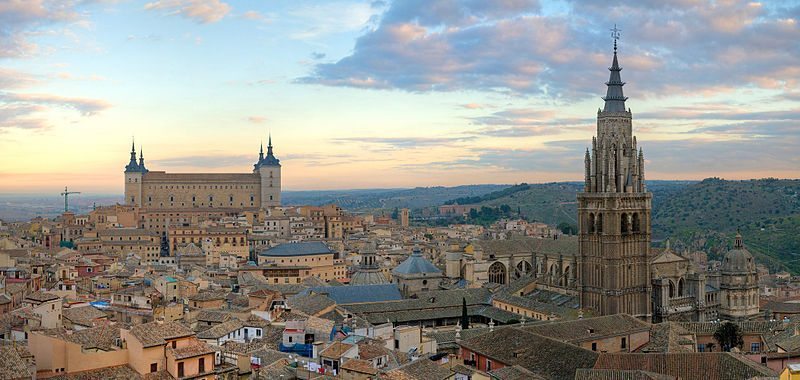
photo of Toledo skyline by David Iliff, from wikipedia

Spain is one of the leading examples of drug policy reform, pursuing a model of decriminalization and treatment instead of punishment and imprisonment. It is legal to grow and consume cannabis in your home or in private clubs, and smoking in public only results in a fine and seizure. According to the report, 10.6% of Spaniards use cannabis; but some sources put the figure as high as 25%. With a population of 46 million people, even using the more conservative estimate means that there are 4.8 million smokers in Spain – more than enough to make the list.
 
8. Egypt
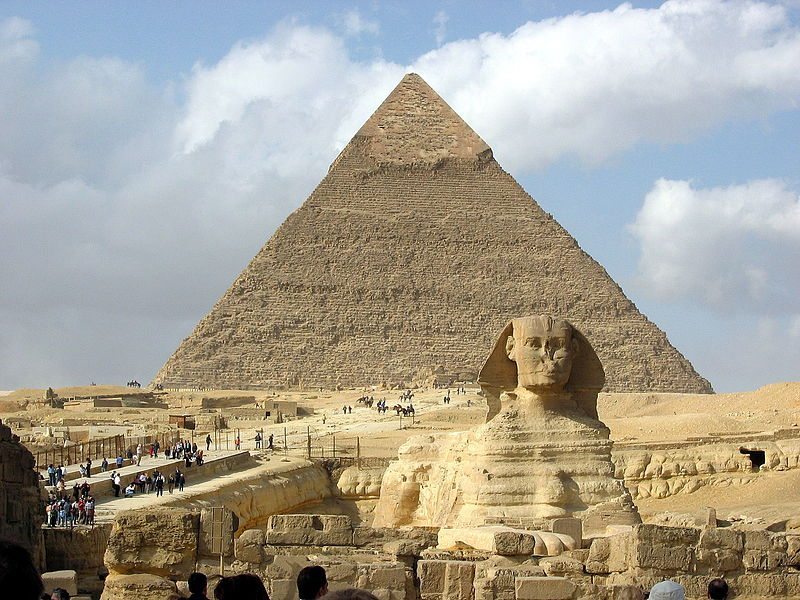
photo from wikipedia

Egypt is famous for being home to one of the oldest civilizations on Earth, and the site of such ancient wonders as the Sphinx and the pyramids at Giza. Ancient Egyptians used cannabis medicinally, religiously and recreationally, but it was outlawed in 1925 under the Geneva Convention on Narcotic Control. However, marijuana use is still widespread, and very much a part of the culture. The report found that only 6.2% of Egyptians are cannabis users, but with a total population of 88 million, that is more than 5.4 million smokers; #8 in the world.
 
7. France
photo by Nicolas Holftermeyer, from wikipedia

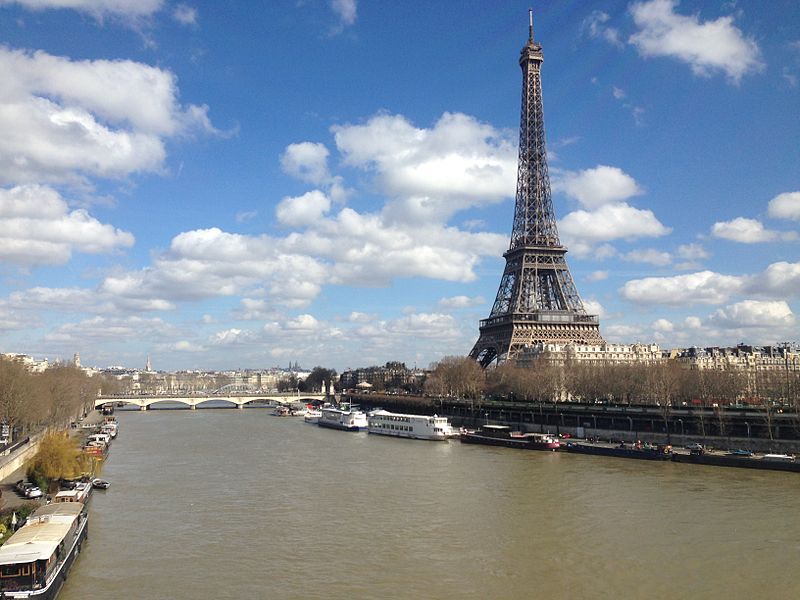
France is not known for being lenient with drug offenders. Getting caught smoking on the streets of Paris could get you up to a year in jail. Despite facing these harsh penalties, however, 8.6% percent of French people admit to using cannabis. With a population of 66 million, that calculates to 5.6 million pot smokers in France, making it one of the top consuming countries in Europe, and #7 in the world.
 
6. Ghana
photo from wikipedia

Somewhat surprisingly, the tiny African nation of Ghana is one of the world’s top consumers of cannabis. Despite marijuana technically being illegal there, it seems that smoking pot has become increasingly commonplace, especially among young people. With a population of only 27 million, Ghana is the smallest nation on our list. But with an incredible 21.5% of the population, or 5.8 million people, admitting to cannabis use, Ghana is the sixth biggest consumer of marijuana in the world.
 
5. Pakistan
photo of the Wazir Khan Mosque by Shaguftakarim, via wikipedia

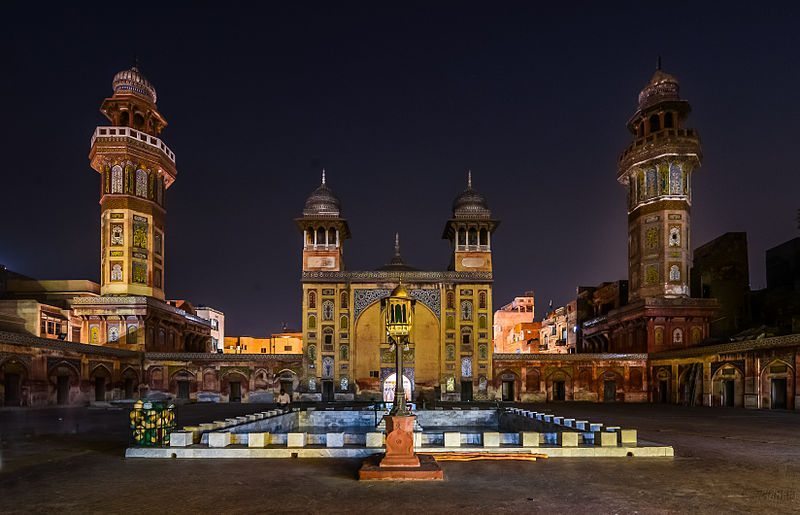
Pakistan has a long history of cannabis and hashish use. It is used openly by Hindus and Sufis for religious purposes, and is sometimes smoked during communal gatherings. Although technically illegal, marijuana is somewhat tolerated, and the laws are seldom enforced. According to the report, only 3.9% of Pakistanis consume cannabis. But, as the fifth most populous nation on Earth, home to 196 million people, that still translates to 7.6 million pot smokers, making Pakistan #5 on our list.
 
4. Italy
photo by David Iliff, via wikipedia

Italy is the birthplace of linguine, Lamborghini and Leonardo da Vinci. This lovely Mediterranean nation is also Europe’s largest consumer of cannabis. Marijuana is illegal there, although possession of small amounts of pot has been somewhat decriminalized – you can be fined, and have your license suspended, but you can’t be sent to jail. Regardless of the legal status, 14.6% of Italians smoke weed, out of a population of 61 million. That’s 8.9 million admitted cannabis users, #4 in the world.
 
3. Nigeria
photo by Riki, via wikipedia

Nigeria is the largest nation in Africa, in terms of both population and economy – so, no surprise that it is the largest consumer of cannabis on the the continent. Marijuana is illegal, but it’s use is still very widespread. Of 174 million people, 14.3% of them are cannabis users. Which means that there are 24.8 million pot smokers in this West African nation, making Nigeria the third largest consumer of weed in the world.
 
2. India
photo by Muhammed Mahdi Karim, via wikipedia

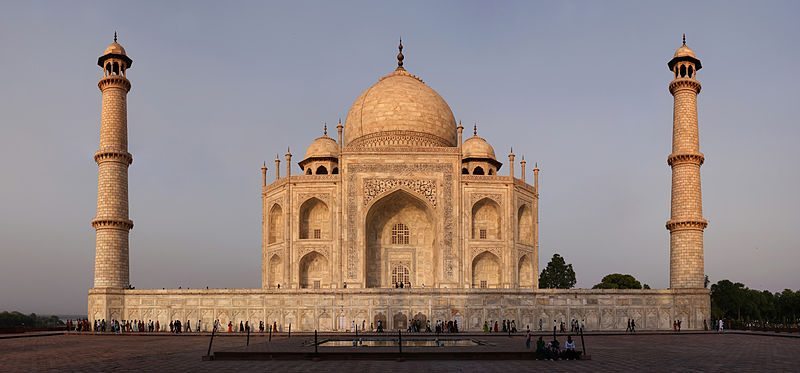
Cannabis has been a part of Indian life and culture for thousands of years, a fixture in certain religious rituals and festivals. The British government began to impose restrictions and regulations on hemp and marijuana in the late 19th century, which only intensified with the rise of international drug treaties. Today pot is technically illegal, but is actually sold and consumed openly in some states, especially in the form of bhang. Though a mere 3.2% of the population uses marijuana, India is home to 1.2 billion people. That equates to 38.4 million cannabis users, meaning the second most populous nation on Earth is also the second biggest consumer of ganja.
 
1. U.S.A.
photo by Matt Wade, via wikipedia

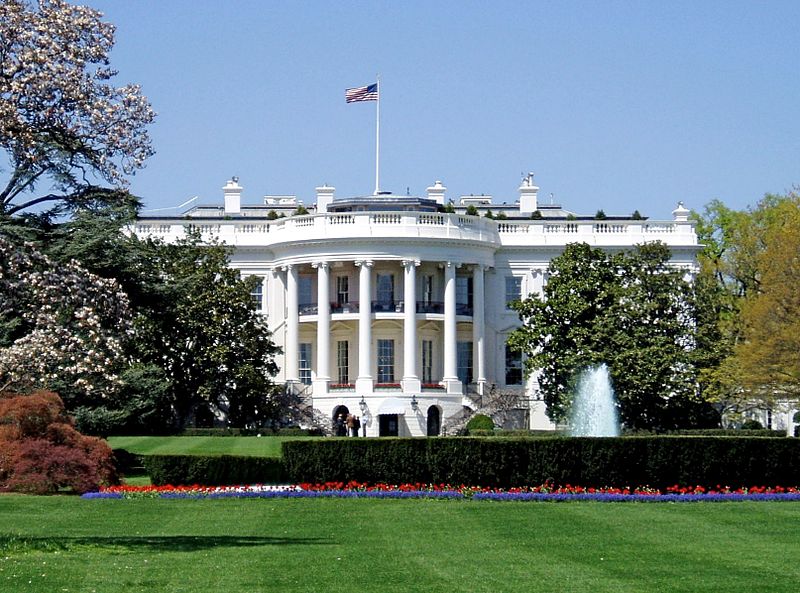
The U.S. is currently undergoing a sea change in marijuana policy. The latest scientific research shows the tremendous medicinal potential of cannabis, and the latest polls indicate that a majority of Americans are in favor of legalization. Medical marijuana is legal in more than 20 states, and recreational use is legal in four states, the District of Columbia, and the cities of Portland and South Portland in Maine. 13.7% of Americans admit to using cannabis, and out of a population of 320 million, that’s 43.8 million smokers. Which means that when it comes to smoking weed, nobody does it more than the U.S. of A.
 

pot 13

Missouri Man Serving Life Sentence For Pot Might Be Paroled

 
On March 11th, the House Corrections Committee voted 11-1 to forward Missouri HB 978, a bill that would grant parole to inmates serving life sentences for non-violent marijuana offences. The bill was introduced in response to extensive campaigning on behalf of Jeff Mizanskey, a 61 year old grandfather who has spent more than 20 years behind bars for possession of marijuana.
Mizanskey was arrested in Sedalia MO in 1993, for being present during a drug deal gone wrong. Atilano Quintana, a known drug dealer being investigated by U.S. Customs, was picking up a hundred pounds of pot from New Mexico, and he brought Jeff along as his driver. His sources – Jose Reyes and Jorge Ibaudo – were to meet him at a local motel with the goods, but they were pulled over by highway patrol on the way into town. Cops found the drugs, and they arranged a set up to catch the buyer, Quintana, in the act. Mizanskey was just a “bonus,” in the wrong place at the wrong time.
The delivery guys were rewarded for their cooperation: Reyes served a year in county jail, Ibaudo was released without charges. Quintana, the intended buyer, and known drug dealer, served ten years.
Mizanskey was sentenced to life in prison, without possibility of parole.
Jeff is a victim of the “prior and persistent offenders” statute, which set a three-strikes-you’re-out policy for Missouri drug offenders. Only that statute was found to be cruel and ineffective, and has since been repealed (effective 1/1/2017). But the revision isn’t retroactive, and Mizanskey is still behind bars, and out of appeals. His only chance at going home to his family is for the governor to grant him clemency, or for Missouri lawmakers to pass HB 978.
If you’d like to support the #freejeffmizanksey movement, add your signature to the petition here.
 

FCOC

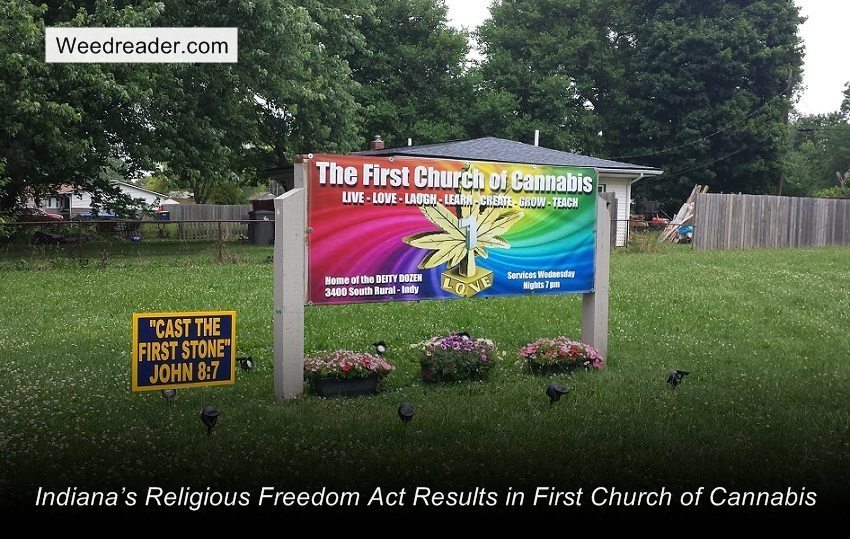
Indiana's Religious Freedom Act Results in First Church of Cannabis

Indiana signed a new bill into law last week, the Religious Freedom Restoration Act (RFRA). This controversial law was intended to protect business owners who object to serving the LGBT community on religious grounds. But it has already begun to have some unforeseen consequences…
The same day the bill was signed into law, Indianapolis businessman Bill Levin filed paperwork to start a new church called The First Church of Cannabis, Inc. The application was approved the next day.
In just six days, The First Church of Cannabis has already reached 11,000 likes on Facebook, where Bill greets his flock every morning with a message of love and encouragement, and announces the times of the communal “prayer puffs.” They have also raised more than $3,000 toward construction of their first temple – which they plan to build out of hempcrete. Members of the church are known as “cannataerians,” and will be asked for a monthly donation of $4.20.
The church doctrine lists marijuana as it’s official sacrament, and Levin (who humorously refers to himself as the “Grand Poohba and Minister of Love”) told the Washington Post that the church plans to grow hemp, although it will not be buying or selling marijuana. He also said that his new religion does not have any traditional notions of sin or guilt, and will not use any conventional holy books, but instead will teach the contents of Jack Herer’s cannabis classic, “The Emperor Wears No Clothes.”
Besides advocating for cannabis, the church also plans to offer addiction counseling, and to teach and demonstrate a proper way of life, showing love and compassion to all. Toward that end the church has established the “Deity Dozen,” a modern 12 commandments for living a good life. Number one on the list is (and I quote) “Don’t be an asshole.” The Deity Dozen also encourages members to laugh often and be positive, to grow their own food, “Don’t be a troll on the internet,” and of course, smoke cannabis.
Both medical and recreational cannabis are currently illegal under Indiana state law, but the RFRA defends a person’s right to practice their religion without being prohibited by law. Bill Levin and his cannataerians are putting Indiana’s new law to the test by claiming the right to get high as a religious freedom, a religious right.
According to RFRA, the state cannot impinge upon a citizens religious rights unless it can demonstrate a “compelling interest” in doing so. Furthermore, they must prove that it is the “least burdensome” way of achieving said interest. The pressure is now put upon the state of Indiana to prove a compelling interest in keeping people from smoking pot as a religious practice and aid to worship.
Can they prove that marijuana is a dangerous and addictive gateway drug that corrupts our youth and undermines the social order? Or did they just inadvertently give Indiana pot smokers a religious “Get Out of Jail Free” card?
Stay tuned to find out.
image via: cannaterian.org

acoustic guitar 407214 1280

Why Does Weed Make Music Sound Better?

Marijuana played a big role in my coming of age, and coming into my own in terms of my beliefs, my identity, my taste in art and music. In my early youth I was happy to listen to whatever my friends were listening to (which in America, in the 90’s, was mostly punk rock, grunge, alternative, etc), to talk like them and dress like them. I just wanted to fit in, to belong, to be a part of the crowd.
But when I was around 16, something shifted. I was no longer content to buy the same clothes and CDs as other kids. My music was no longer a social statement about which clique I was in. I was listening for the pure pleasure of it. I no longer cared what others thought or what they liked. I had started to form my own idea about what was cool.
It’s no coincidence that this was around the same time I discovered pot. Suddenly I had this pharmacological portal to another dimension where I was free to think outside the box; a way to relax and let go of my crippling teen angst, and appreciate the depth and beauty of the world; an altered state of mind where food tasted better, novels and poems came to life, movies and plays became profoundly moving, and music could carry me away to a state of timeless rapture and bliss.
I spent countless hours stoned, alone in the dark within headphones on, listening to entire albums on repeat, seeking out artists and genres I’d never heard before, exploring new worlds of sound and emotion. I’m sure that most of you can relate.
Cannabis does, undoubtedly, make music sound better, as anyone who’s tried it, ever, will attest. But we know very little about how or why marijuana effects the way we hear music. Because of the lingering federal ban on cannabis, research studies have thus far been limited to mice and other animals, or surveys and interviews of volunteers, with little or no control over dosage, set and setting.
What we can glean, from the scientific evidence thus far accumulated, is that THC and other molecules in the plant are similar to naturally occurring chemicals in our brains. They interact with our endocannabinoid system, lighting up certain regions which are associated with mood, memory, appetite and metabolism, and our responses to pain and stress.
The effects of cannabis can vary wildly based on the particular strain consumed, the manner of consumption, the set and setting in which it is used, and the expectations, mood, mindset and biochemistry of the individual user. But generally speaking, marijuana is a pain reliever, stress reducer, and mood enhancer, which makes us feel relaxed, happy, dreamy, thoughtful, etc. This is, of course, the ideal state of mind in which to appreciate music or any kind of art.
Cannabis changes the way the brain distinguishes between relevant and irrelevant stimuli, and screens or filters sense data accordingly. Marijuana suppresses that filtering process, so that when high we are subjected to a fuller range of sensory input, instead of the narrow spectrum deemed important by our subconscious mind.
Cannabis also suppresses the short term memory, altering the way we experience time. We stop analyzing the moments that have just passed by, and anticipating what is yet to be. We find ourselves more fully immersed in the present moment, savoring and appreciating each sensual detail as it unfolds, feeling like time has slowed down or even stopped.
Normally, in our sober, everyday waking state of consciousness, besides all our constant internal chatter (worrying, planning, going over and over things, random thoughts), there is also a lot of unconscious screening and processing going on, all of which affects what we hear, notice and remember. It affects how we hear music, and how we experience the world around us.
When we’re stoned, we aren’t caught up in cognitive analysis. We aren’t filtering out “irrelevant” sounds. We aren’t obsessing over the stressors of daily life. Rather, we’re fully in the moment, in a state of rapt attention; surrendered to the music, hanging on each and every note, and the spaces between them, moved by subtle variations of tone and tempo, and the emotions that they convey.
The truth is that we don’t completely understand why cannabis makes us feel the way we do, or why it makes music sound so damn good. With the changing legal landscape surrounding marijuana, we are bound to see some fascinating studies being done in the near future, that will reveal a great deal. But we will probably never understand it completely, anymore than we fully understand the brain, or human consciousness. The bottom line is that it works. So why ask why?
Just sit back and relax, put on some good tunes, light up… and enjoy.

cannabis 400832 1280

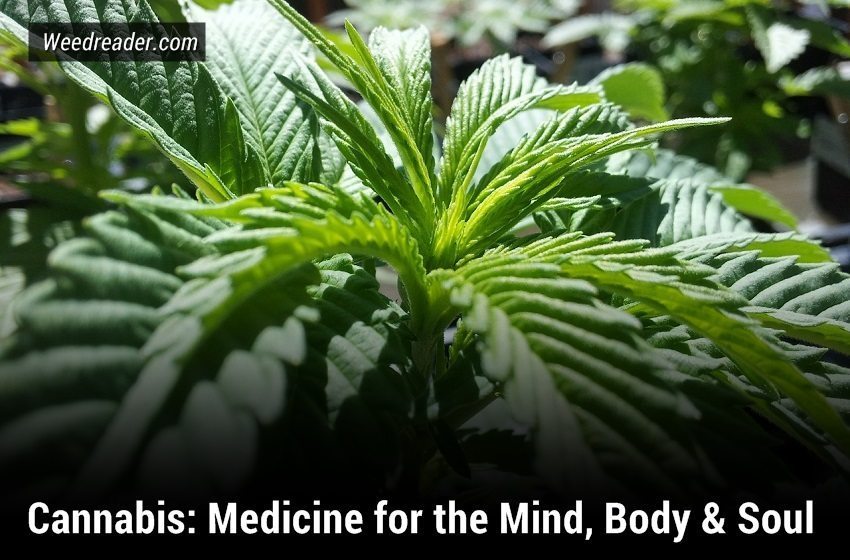
Cannabis: Medicine for the Mind, Body and Soul

Cannabis has been cultivated and consumed by humans for thousands of years. It is one of the most powerful and versatile medicines in history, and has been used to treat everything from depression and anxiety, to cancer and malaria. And yet, at the time of this writing, it is still classified as a Schedule 1 narcotic by the U.S. government, and prohibited and demonized by most nations on earth.
In this article, I’d like to explore the many uses of cannabis as a medicine, not just for physical ailments, but a holistic medicine for the mind, body and soul. I’d like to help dispel the fear and the lies that have surrounded marijuana for more than a hundred years, and to help spread knowledge, understanding and acceptance of this miraculous plant, and the ways that it can contribute to our health and well-being, as individuals and as a society.
Good For the Body
According to legend, the Chinese emperor Shen-Nung penned what might have been the first encyclopedia of medicine around 2700 B.C. It listed hundreds of plants and minerals, along with their known medicinal uses. Among them was cannabis sativa, which was known as “Ma” in ancient China, and used to treat rheumatism, gout, malaria, constipation, stomach and intestinal problems, nutrient deficiencies, and cold symptoms. It was applied to ulcers and sores.
More than four thousand years later, we area still using marijuana to treat bodily illness, and we continue to discover new medicinal uses. Today, marijuana is prescribed as a treatment for glaucoma, epilepsy, inflammation, insomnia and tremors. It is used to relieve chronic pain and stress. It is the most effective way to suppress nausea and vomiting, and stimulate appetite, and it has saved the lives of patients with anorexia, or unable to eat due to cancer treatments and auto-immune disorders.
There is also a growing body of evidence that cannabis has powerful cancer fighting properties. At least twenty studies have been done which concluded that THC and cannabidiol can slow the growth of tumors, encourage apoptosis, and effectively treat many kinds of cancer, including brain, breast and lung cancer, leukemia and lymphoma. These claims have yet to be acknowledged by the medical mainstream, which is funded and largely controlled by profit-driven corporate interests.
A Joint A Day Keeps the Psychiatrist Away
Marijuana has long been associated with schizophrenia and mental illness, not because of scientific evidence, but mainly due to a propaganda campaign that dates back to “public service announcements” circulated by the Federal Bureau of Narcotics in the 1930s, and the hilariously awful film Reefer Madness.
The reality is that no causal link has ever been established between pot and mental illness. Surveys show that mentally ill people tend to use cannabis (and other drugs) more than the general population, but this can largely be explained as an attempt to self-medicate.
What the latest research actually suggests is that marijuana may in fact help treat depression, anxiety, bi-polar, PTSD, OCD, ADD, even addiction to opiates and other drugs, and all that with far less harmful side effects than the commonly prescribed psychiatric drugs. These studies are being proven in practice by people like Dr. Frank Lucido and Dr. Jeremy Spiegel, who are bravely blazing the trail by prescribing cannabis to their own patients.
And then of course you have millions of people around the world, myself included, who have found through our own informal experiments that smoking cannabis relieves boredom, depression and stress, and induces tranquility and happiness. I think I speak for all of us, when I say that we need no research studies, no doctors or scientists, to tell us what we already know firsthand.
Balm For The Soul
As long ago as 2000 B.C., the people of India had discovered the intoxicating properties of cannabis, and were using it as part of their religious worship, to induce visionary states. They would smoke buds or hashish (known as charas) in clay pipes (called chillums) or use it to prepare a bhang, a drink made with milk and spices.
Cannabis was also used as a sacrament by ancient Persians and Egyptians, by the nomadic Scythians and the old Germanic tribes of Europe. The methods and practices differ from culture to culture, but the common theme is this: the marijuana high induces a state of mind in which we are more sensitive to unseen, spiritual forces. It enables the mystic to shift from the ordinary, ego-centric state of consciousness, to a state more in tune with the infinite, and more receptive to inspiration, be it artistic or Divine.
Pot is still used that way today, despite local and international prohibition, most famously by the Rastafari movement in Jamaica, but also by modern fringe churches like the Santo Daime, the Church of the Universe, and the Way of Infinite Harmony. Not to mention millions around the world, myself included, who don’t belong to any of these churches, but who in the privacy of our own homes, or in the timeless temple of the great outdoors, continue to use marijuana as an aid to meditation and finding peace of mind.
Cannabis has played a key role in human culture, religion, medicine and industry from the very beginning. For thousands of years, it was used peacefully to make rope, paper and cloth, to heal the sick, to relax the mind and nourish the soul. Marijuana prohibition is a recent phenomenon, driven by fear and funded by corporate interests, in an effort to enforce the current social and economic order. But not for much longer!
Legalization is at hand. Cannabis is being rediscovered as a cure for many ills, both mental and physical, and being restored to it’s rightful place as a revered sacrament and doorway to the Divine, helping individuals to find and feel a sense of meaning and connection that is so needed in this day and age.
It’s about time.

marijuana1

I Believe In Cannabis

I believe in cannabis.
I believe that it’s medicinal properties far outweigh those scant few risks that haven’t yet been debunked by scientific research. I believe that, whatever negative side effects there may be from smoking weed, they are far less harmful than those of the pills you see advertised on television every 15 minutes. And I believe that more and more medical applications will be discovered with time.
I believe that cannabis prohibition has done more harm than cannabis itself. Making marijuana illegal creates a black market for a plant which could be grown in anyone’s garden, making it possible for hustlers and gangs to profit from what should be freely available for all. It turns peaceful, law abiding people into “criminals,” who are then harassed and persecuted, handcuffed and thrown in jail. Every day, innocent people have their careers and their finances destroyed, their families torn apart, and their lives turned upside down, just for kicking back and smoking a little grass.
I believe that the urge to get high is normal and natural, felt by all people, and indulged in a variety of different ways. Some people drink beer to feel good, others prefer wine or coffee. Some people go jogging or rock climbing; others go out dancing, or eat a pint of ice cream. Everyone has something that they do to relax and make themselves feel better, whether it’s yoga or television, prayer or rock music, sex or shopping.
I believe that most people who condemn marijuana haven’t even tried it, and are merely afraid of what they don’t understand. Those same folks all probably have their own way of “taking the edge off,” which is likely more harmful and addictive than cannabis, just not against the law.
But I am not afraid to try anything: cigarettes and booze, drugs and pills, yoga and chanting, prayer and meditation, music and dancing, fasting and feasting… I’ve done it all. I have found that compared to many of the “approved” substances – like alcohol, tobacco and anti-depressants – cannabis is a relatively harmless way to catch a buzz. It may not be as healthy as a good work out, or a good fuck, for that matter, but it makes them both more fun. And it’s certainly a lot better for you than compulsive eating or shopping, or zoning out in front of the TV.
Getting high helps me to be a healthy, sane and active member of society. Smoking this herb makes me feel more alive. It makes music sound better, and food taste better, and the tedious routines of everyday life just a little bit more exciting. It helps me to appreciate art and poetry, and the beauty of nature. It energizes my mind and body, and inspires me to think for myself, to ask deep questions, and ponder the wonder and mystery of existence. It stimulates my creativity, and makes my writing more lively and interesting.
I believe that smoking a joint while taking a walk outside is absolutely one of the best and most pleasant things a person can do, anytime, night or day, rain or shine. Your worries and stress just melt away, replaced by a joyous, innocent curiosity about all the little things we tend to overlook. It awakens a sense of awe and gratitude, a sense of connection to and harmony with the natural world.
I believe that the “cannabis state of mind” can contribute to our happiness and well-being, as individuals and as a society. I believe it can inspire great works of art, therapeutic personal insights, and brilliant technical innovations in all fields of human endeavor (both Bill Gates and Steve Jobs were pot smokers). I believe that being high shows us the benefits of slowing down and “taking it easy,” and that it can help us find contentment and meaning in a world out of balance.
I believe in cannabis.
I believe that the philosophical ramblings of stoners everywhere (myself included) are worth reading and contemplating. There really might be whole universes within the atoms of our fingernails. The world is much more strange and intricate, more amazing and beautiful than we realize – and I believe that cannabis can help us to see and appreciate it more fully.