weed butter 01 01

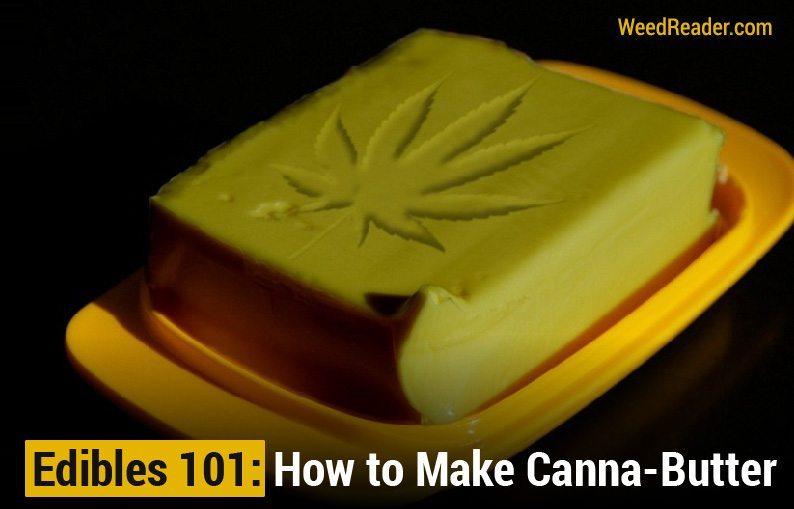
Edibles 101: How to Make Canna-Butter

Edibles (food containing psychoactive cannabinoids) are a delicious, easy, and portable method of consuming cannabis, and beg to be shared with many. The best party favor, incredibly effective for those bothered by smoking, the greatest afternoon nap you’ve ever had — edibles have the potential to satisfy anyone’s weed needs.

The ~*secret ingredient*~ in edibles is what’s generally referred to as ‘canna-butter.’ It’s made by heating cannabis together with any vegetable oil, nut butter, or dairy/non-dairy butter — anything with a high fat content for THC molecules to bond with. I choose the animal-friendly option of coconut oil, or a dairy-free alternative like Earth Balance™.

How you intend to use your ‘canna-butter’ should influence which fat you use. For baking, go for a fat with neutral flavor (like coconut). If you like more savory, I’d suggest olive oil or peanut butter, something you could add a spoonful of to pasta or a smoothie when you’re feeling frisky.

What You Need

  • butter or oil (peanut butter, cacao butter, canola, etc.)
  • 1/8 or 1/4 oz of cannabis (you don’t need to sacrifice an entire ounce, honestly, even when using low/mid-grade quality! The trick is making sure the THC has been activated enough through gentle heat. I often use saved-up ‘already vaped bud,’ or ‘AVB’, to cut time and use every last bit.)
  • sauce pan
  • whisk or rubber spatula
  • jar or tupperware for storage

Directions

  1. Grind or finely chop your cannabis. If you’re using fresh, it would be wise to toast it first. Set your oven or toaster oven to its lowest temperature and toast the weed in a little tinfoil packet until it’s dry/crumbly. (side note: Your place is going to smell HEAVENLY, but dank — if that’s a concern, turn on an extractor fan or open a window.)
  2. In the saucepan over medium heat, melt your oil or butter. Once melted, add the cannabis. The ratio of fat-to-pot should be about 2:1. You’ll want to keep the mixture simmering throughout, as boiling may burn the weed. Stirring occasionally, you should be able to see your butter turn a rich hemp green.
  3. Many will say to simmer for at least an hour, but I’ve found 20-25 minutes to be plenty of time, and plenty effective. Ultimately, it’s up to you. So, whether it’s after 20 mins or 3 hours, remove the mixture from heat and set aside to cool for a bit.
  4. Strain the mixture through a nut/cheesecloth into your chosen container. (Save the detritus to use in edibles if you don’t mind grittiness.) You can freeze your canna-butter, which I’d especially recommend if you’ve used dairy, and it should last a few months. Oils will do fine in or out of the fridge, just store it air-tight and in a dark place.

Use canna-butter in your favorite recipes as the butter/oil substitute, usually in a 1:1 ratio. If you’re not fussed with making a whole batch of cookies, spread some on toast! Either way, enjoy, be safe, and know that when ingesting edibles the effects may be stronger and last longer than what you’d find with smoking or vaping, so plan accordingly!

Image credit: nwcana.

weed quotes

20 Greatest Cannabis Quotes

It’s no secret that some of the most brilliant and successful people in the world smoke cannabis, and speak out in support of marijuana legalization. And I’m not just talking about actors and rock stars, either — but doctors and scientists, philosophers and presidents, and leaders from many different fields of human endeavor.
I could have easily stretched this list out to 100 more, but I wanted to share with you the best of the best, my personal favorites. Here are (IMHO) the 20 greatest cannabis quotes of all time:

1. Willie Nelson, country musician and cannabis activist:

“I think people need to be educated to the fact that marijuana is not a drug. Marijuana is an herb and a flower. God put it here. If He put it here and He wants it to grow, what gives the government the right to say that God is wrong?”

2. Bob Marley, reggae musician and Rastafarian:
When-you-smoke-the-herb-it-reveals-you-to-yourself

“When you smoke the herb, it reveals you to yourself.”

3. Sebastian Marincolo, philosopher and author of High: Insights on Marijuana:

“The legalization of marijuana is not a dangerous experiment – prohibition is the experiment, and it has failed dramatically, with millions of victims all around the world.”

4. Carl Sagan, scientist, astronomer and author of Cosmos:

“The illegality of cannabis is outrageous, an impediment to full utilization of a drug which helps produce the serenity and insight, sensitivity and fellowship so desperately needed in this increasingly mad and dangerous world.”

5. Terence McKenna, philosopher, psychonaut and author of True Hallucinations:

“If the words “life, liberty and the pursuit of happiness” don’t include the right to experiment with your own consciousness, then the Declaration of Independence isn’t worth the hemp it was written on.”

6. Joe Rogan, actor, comedian, MMA fighter:

“People say you can abuse marijuana. Well shit, you can abuse cheeseburgers too, you know? You don’t go around closing Burger King because you can abuse something.”

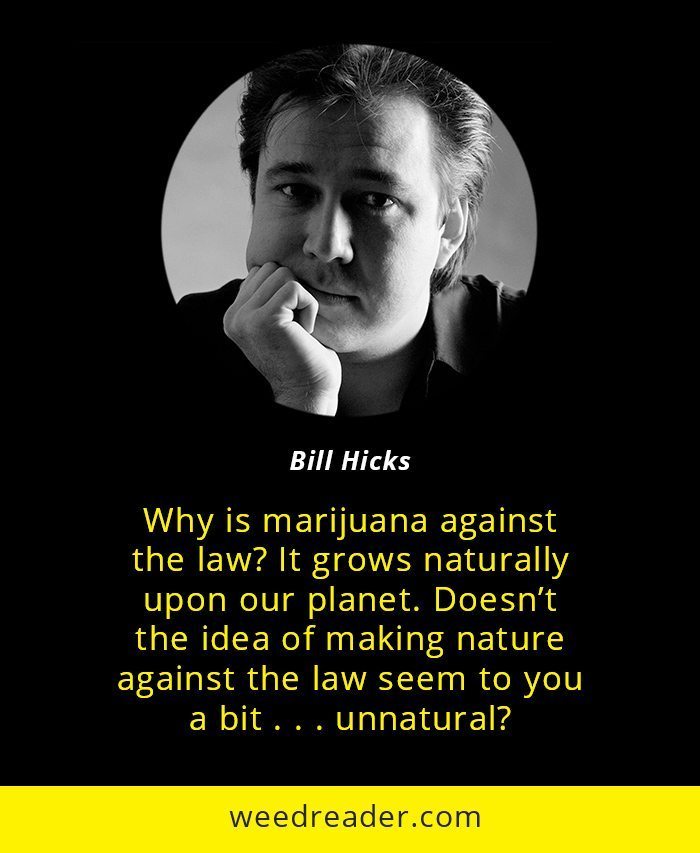
7. Bill Hicks, comedian and cultural commentator:
quote

“Why is marijuana against the law? It grows naturally upon our planet. Doesn’t the idea of making nature against the law seem to you a bit . . . unnatural?”

8. Hunter S. Thompson, gonzo-journalist, author of Fear and Loathing in Las Vegas:

“I have always loved marijuana. It has been a source of joy and comfort to me for many years. And I still think of it as a basic staple of life, along with beer and ice and grapefruits -and millions of Americans agree with me.”

9. Jack Herer, cannabis activist and author of The Emperor Wears No Clothes:

“If you substitute marijuana for tobacco and alcohol, you’ll add eight to 24 years to your life.”

10. Thomas Jefferson, founding father and 3rd President of the United States:

“Some of my finest hours have been spent on my back veranda, smoking hemp and observing as far as my eye can see.”

11. Sebastian Marincolo:

“Marijuana enhances our mind in a way that enables us to take a different perspective from ‘high up’, to see and evaluate our own lives and the lives of others in a privileged way. Maybe this euphoric and elevating feeling of the ability to step outside the box and to look at life’s patterns from this high perspective is the inspiration behind the slang term ‘high’ itself.”

12. Abraham Lincoln, 16th President of the United States:

“Prohibition… goes beyond the bounds of reason in that it attempts to control mans’ appetite through legislation and makes a crime out of things that are not even crimes… A prohibition law strikes a blow at the very principles upon which our Government was founded.”

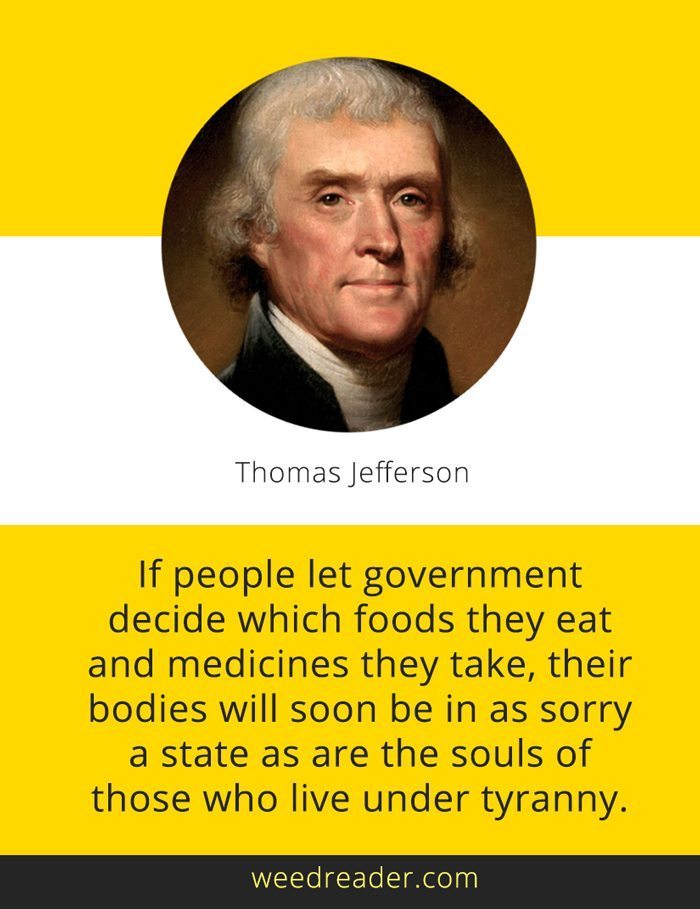
13. Thomas Jefferson:
quote22

“If people let government decide which foods they eat and medicines they take, their bodies will soon be in as sorry a state as are the souls of those who live under tyranny.”

14. William F. Buckley Jr, author and conservative commentator:

“The anti-marijuana campaign is a cancerous tissue of lies, undermining law enforcement, aggravating the drug problem, depriving the sick of needed help and suckering well-intentioned conservatives and countless frightened parents.”

15. Bill Hicks:

“They lie about marijuana. Tell you pot-smoking makes you unmotivated. Lie! When you’re high, you can do everything you normally do just as well — you just realize that it’s not worth the fucking effort. There is a difference.”

16. Mark Haskell Smith, author of Heart of Dankness:

“The fact that, in the United States, there are people serving ten-year prison terms for growing marijuana plants in their backyards while Wall Street racketeers, who have defrauded millions of people and destroyed the global economy, walk free is a kind of bizarre hypocrisy that boggles my mind.”

17. Francis Young, former DEA Chief Administrative Law Judge:

“Estimates suggest that from 20 to 50 million Americans routinely, albeit illegally, smoke marijuana without the benefit of direct medical supervision. Yet, despite this long history of use and the extraordinarily high numbers of social smokers, there are simply no credible reports to suggest that consuming marijuana has caused a single death. By contrast, aspirin, a commonly used, over-the-counter medicine, causes hundreds of deaths each year.”

18. Jack Herer:

“The only dead bodies from marijuana are in the prisons and at the hands of the police.”

19. Willie Nelson:
wr

“The biggest killer on the planet is stress, and I still think the best medicine is and always has been cannabis.”

20. Steve Martin, actor and comedian:

“I used to smoke marijuana. But I’ll tell you something: I would only smoke it in the late evening. Oh, occasionally the early evening, but usually the late evening – or the mid-evening. Just the early evening, mid-evening and late evening. Occasionally, early afternoon, early mid-afternoon, or perhaps the late-mid-afternoon. Oh, sometimes the early-mid-late-early morning… But never at dusk.”

There you have it, hope you enjoyed! What are your favorite cannabis quotes? If you’ve got some good ones that aren’t on this list, leave ’em in the comments below.

songs

20 Great Songs to Smoke To

Music is one of those things that makes life worth living… and lighting up some sweet, skunky herb just makes it even better. A little weed can make even the worst song sound decent — and it can make a really good song sound downright amazing.
I know why you’re here. You’re in the mood to get high, kick back, and listen to some tunes… but you’ve listened to all your albums a hundred times. Radio is shit. And you’ve worn out all your favorite Pandora stations. You need some inspiration, fresh ideas, new material. You need some new songs to smoke to!
I got you.
I’ve put together this eclectic list of tracks, any of which would make the perfect soundtrack to your next smoke out. Unlike most other lists, these songs aren’t necessarily about smoking weed — they’re just excellent to listen to while you do. They’re pulled from all different genres, from jazz to country, hip-hip to stoner rock, so there should be a little something for everyone.
Some are classics, some are fairly obscure. Some are funky and upbeat, others mellow. Some are funny, some are heavy. Some feature brilliant, mind-blowing lyrics. Others are lush instrumental or electronic soundscapes; sonic oceans in which to immerse yourself, close your eyes, and drift away…
All of them are masterpieces in their own right. If you find even one song on this list that you haven’t heard — and really listened to — before, then do yourself a favor…
Get out your headphones and your best sticky-icky. Dim the lights, light up, breathe deep, and enjoy 🙂
 
1. Tame Impala — “Let It Happen”

Haunting vocals and a smooth beat. This is a great song to help get the bowls loaded. It even has just enough pep to keep things going after you surrender to the soundscape.
2. The Glitch Mob — “Starve the Ego, Feed the Soul”

Harkening back to the easy listening of the flower children, this is smooth electronic. Just enough variation to keep your mind right and has those floaty vibes that just make you want to dance.
3. Marian Hill – “Got It”

With a slow but strong baseline, Marian shows off her smoky and sultry voice. This track will wind its way into your brain like the THC coursing through your body. This is what I imagine a bong would say if it could talk.
4. Mos Def — “Sunshine”

This will hit you right in the feels. This song feels like a memorial of times past and will make any stoner  look for the sunshine.
5. Jimi Hendrix — “May This Be Love?”

The perfect pairing with a bong and some good indica. Jimi is a music legend and this is one of his best works. You can just feel the pressures of life roll off your back as this tune plays.
6. Return to Forever — “Earth Juice”

Coming straight out of the 70’s and full of electronic and synth sounds. This instrumental is perfect to have playing in the background while smoking with a friend. Good for keeping the conversation flowing.
7. Herbie Hancock — “Bubbles”

Sometimes you just want to snuggle up with your lover and roast a bowl before getting down on some hot love making. This is the perfect song to set a romantic mood.
8. Outkast — “Elevators (Me & You)”

Does weed make you slow down? This song feels like some good indica rolling over you. Solid lyrics and an R&B feel celebrating smoking weed and overcoming difficulty with the family.
9. Kendrick Lamar (ft. Gunplay) — “Cartoons & Cereal”

Don’t let the name fool you, this is an adult song. Hard hitting and dark at times, this is solid and intelligent rap. Kendrick brings the fire and smokes the competition with this one.
10. Stephen Marley — “Inna Di Red”

We all know Bob but have you heard his son? The legend lives on with this Marley masterpiece. This is Rasta as it should be.
11. The Beatles — “It’s All Too Much”

What stoner playlist would be complete without at least one entry from the Fab Four? This lighthearted track is one of the best for lighting up to. Lighthearted and full of cannabis references, it shows why they have remained so popular.
12. Band of Horses — “Blue Beard”

Slow and dreamy, this is perfect for curling up with a bowl and watch the snow fall. Great for reminiscing with old friends. It swells over you like a tide, gentle but insistent.
13. Afroman — “Because I got High”

We have all had work we know needs done but decided to put it off for later. Most of the time, our inner conscience (or outer repercussions) gets the better of us and we make it happen. Afroman accurately describes the results of following our inner slacker.
14. Sturgill Simpson — “Turtles All the Way Down”

This country tune is just right for relaxing and enjoying a sweet smoke after a hard day or dealing with haters. Those times when our patience is tested, we need this song mixed with a fat sack and a fresh pipe. Sit back, light up and embrace the sweet release.
15. Chet Atkins & Mark Knopfler — “Cosmic Square Dance”

This mostly instrumental soundscape is great with the lights off. Sit back and enjoy the cosmic trip through your mind as this energetic country tune plays. The rhythm is great for timing hits as well.
16. TAUK — “Mindshift”

This is electronica mixed with lounge music. Has a touch of jazz, techno and lots of soul. Just let that haunting guitar roll over you as the synth massages your eardrums.
17. The Mars Volta — Roulette Dares (The Haunt of)

Sometimes you just want to rage with a splif in hand. This punk song is just the right thing when the world seems overwhelming. Sometimes the best things in life are messy.
18. Down — “Nothing In Return”

This song really nails the hard rock vibe. The slow vocals offset the heavy bass and screaming guitar nicely. Just slow enough to be haunting but fast enough to be threatening. This song broods itself to greatness.
19. KOAN Sound — “Lost in Thought”

Sometimes you need to simply center yourself. This cosmic soundscape takes you through the universe at light speed. The slow rolling tones and keyboard/piano element combine to deliver track to really let your mind soar to new places.
20. John Coltrane — “In A Sentimental Mood”

We are going to finish this off with a nice jazz song. This tune carries all the glamour and mystery of a 1920’s speak easy. The smoky sax and lilting piano pair perfectly with a dab rig and some live resin. Life is short my friends, enjoy the good things.

cannabis 490

Indian Tribes Legalize Pot

 
U.S. states aren’t the only ones leading the way in marijuana reform; in recent months, several Native American tribes have also taken steps to legalize pot.
It started late last year with a memorandum from the Department of Justice. Sent in response to questions from a tribe in Washington state (where of course, weed is legal), the memo essentially said that Uncle Sam would not enforce marijuana laws on sovereign tribal land — giving them the same freedom the states have to set their own drug policy.
While the message might have been intended for tribes whose surrounding states had already legalized weed, it also has implications for more than 500 other federally recognized tribes. Dozens of tribes from across the country attended forums and expressed an interest in marijuana as a possible source of medicine and revenue.
A tribe in South Dakota was among the first to test the waters. On June 11th, the Flandreaux Santee Sioux Indians voted to legalize marijuana on their lands. They have plans to start a sizable grow operation and even an Amsterdam-style pot lounge, which could be up and running by the end of the year.
But then on July 8th, the DEA raided tribal lands in California, seizing 100 lbs. of pot and thousands of plants. The land was owned by the Pit River tribe, who had set up dozens of greenhouses right alongside CA highway 395, in plain view of passing traffic.
The grow-op was supposedly approved by the tribal council back in February, although that is now in dispute. Feuding among tribal leadership raises questions about the legality of the operation, and even seems to be a major cause of the raid — it was a member of the tribe who informed the Fed and triggered the whole chain of events. But whatever the reason for the raid, it has caused a great deal of fear and uncertainty in many other tribes who had also been considering legalization.
Nevertheless, in August the Menominee Indian tribe of Wisconsin voted in favor of recreational and medicinal pot use in their territory. The tribal council is now in the planning and researching stage, exploring the logistics, potential revenue and other benefits for the tribe. Other Wisconsin area tribes are also considering legalization, including the Red Cliff and Sakoagan tribes, which have passed similar referendums.
What happens to these few brave tribes who accept the risks of being the first to legalize pot, will largely determine how many follow in their footsteps. As the July raid clearly demonstrates, a memorandum is not a law. And until the U.S. government reforms it’s drug policy, there is still the looming possibility of raids, arrests, prosecution and imprisonment.
And for the tribes, the loss of much-needed federal funds.

cannabis 6143

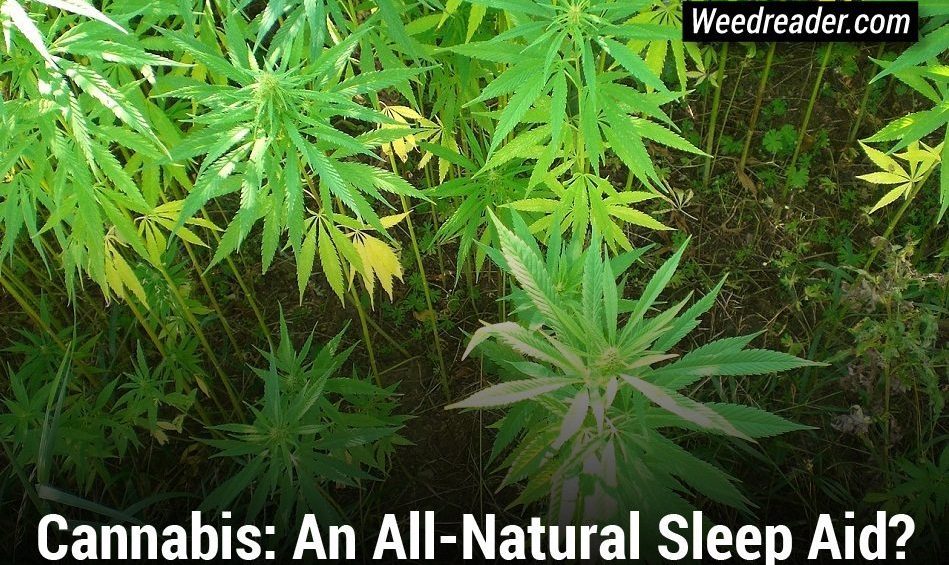
Cannabis: An All-Natural Sleep Aid?

It’s widely known that smoking weed can help reduce anxiety and stress, and generally help you relax and mellow out. So it makes sense that many people smoke before going to bed as a kind of “self-prescribed” sleep aid, and claim that it helps them to fall asleep faster and stay asleep longer.
However, those same people often have a difficult time sleeping without it. It takes them longer to fall asleep, and when they do they report having unusually intense and vivid dreams — even nightmares which are hyper-realistic and highly disturbing. Naturally, this can make it hard to stop smoking for whatever reason.
Then you’ve got other people who claim that marijuana makes them hyper, and causes their mind to race a mile-a-minute. Obviously, these folks wouldn’t dream of smoking pot at bedtime.
That’s the problem with a substance as chemically complex as cannabis. There are more than 80 naturally occurring cannabinoids in the plant, all of which could potentially have psychoactive effects. And each one of those compounds will affect each person differently, depending on their biochemistry.
The problem is made that much worse by the decades long ban on marijuana research, which has prevented us from properly studying cannabis and it’s medicinal properties, and gathering accurate data on how it affects different groups of people. We are forced to rely too heavily on anecdotal evidence, the “word on the street.”
The questions remain. Can marijuana really help you sleep? How does it affect your dreams and your sleep cycle? Can it be used as a safe and effective, all-natural sleep aid?
Let’s take a look…

Stoned Sleep Studies

Most of what we know about how cannabis affects the sleep cycle dates back to a 1973 study done on a group of insomniacs. The patients were given different doses of THC, from 10 – 30 mg, which were found to “significantly decrease the time it takes to fall asleep.” They also demonstrated some improvement in their ability to sleep through the night without waking up periodically.
The study also noted a “hangover effect,” which I for one am personally familiar with. (Sure, I may sleep soundly if I get high late at night; but in the morning I feel like I’ve been run over by a truck. I’m tired and sore, and can barely drag myself out of bed.)
The greater the dosage, the worse the hangover, the study found. So like most things in life, moderation is key. Smoking too much before bedtime can make you feel terrible the next morning, and even make it more difficult to fall asleep (or eliminate the urge and desire to fall asleep).
There have also been some more recent studies on the effects of synthetic THC on those suffering from sleep apnea. This research is in the early stages, but preliminary results are promising.

Stages of the Sleep Cycle

In addition to helping users to fall asleep faster, cannabis is also shown to alter their sleep cycle in interesting ways. For one thing, it seems to lengthen the amount of time that people spend in deep, “slow wave sleep.” This is thought to be the most important phase of sleep, during which much of the body’s rejuvenation and restoration takes place.
Secondly, marijuana reduces the amount of time spent in REM (“rapid eye movement”) sleep, which is the phase in which dreaming happens. This explains why many pot smokers can’t ever remember their dreams — they aren’t spending enough time in REM sleep to actually have an active dream life.
It also causes the “REM rebound” effect I mentioned earlier, where a smoker who quits experiences a sudden surge of intense and powerful dreams for several nights, or sometimes weeks.
Truthfully, there’s still a lot we don’t understand about the nature of sleep, what happens during the different stages, and why it’s so important; much less how the influence of cannabis on our sleep cycle might affect our mental and physical health in the long run.

Do the Benefits Outweigh the Risks?

Given the pros and cons, is marijuana really a good choice for those struggling with insomnia or other sleep disorders? To arrive at a fair answer to that question, let’s consider for a moment some of the most commonly prescribed alternatives — and the side effects associated with them.
(It’s worth mentioning here that trouble sleeping is usually just a sign of bigger problems, like depression or chronic anxiety — and cannabis may also help to treat these underlying issues.)
Some of the most common drugs prescribed as sleep aids are powerful “sedative hypnotics.” Examples include Ambien, Lunesta, Sonata, and sometimes Xanax, Klonopin, Ativan or Librium. These prescription pills are all potentially addictive or habit-forming, and in extreme cases have caused such effects as:

  • amnesia
  • hallucinations
  • sleep walking and sleep driving (wtf?!)
  • depression
  • abnormal behavior, sometimes violent
  • suicidal thoughts and actions

That’s some pretty heavy stuff. I mean, pot may suppress my dreams and make me feel kinda lousy in the morning, but it’s sure not gonna send me sleep-driving down the freeway at 70 mph. Or make me want to kill myself.
Okay, okay — so those are the most extreme cases; very rare. Fair enough. But even the most common side effects aren’t things I would wish on anybody. For instance:

  • drowsiness
  • dizzyness, loss of balance
  • trouble focusing or paying attention
  • memory loss
  • headache
  • heartburn
  • diarrhea
  • constipation
  • loss of appetite
  • tingling or burning in hands, legs and feet
  • uncontrollable tremors

When we consider the safety and effectiveness of marijuana as a medicine, we need to keep things in perspective… No, we don’t fully understand how pot affects the brain, or affects our sleep. But it’s a natural, herbal medicine that people have been smoking since the dawn of time. And the alternatives are dangerous synthetic chemicals that are known to cause serious harm, psychosis and even death.
For me at least, it’s an easy choice to make.

It’s All About the Strain

It’s also worth mentioning, as you probably already know, that there are some major differences in the way different kinds of bud affect you. It’s instructive (although really over-simplified) to differentiate between the two main strains of cannabis, namely indicas and sativas.
Indicas are shorter, bushier plants that are typically higher in THC. It’s commonly held (but not scientifically verified) that the indica high is more calming and relaxing, and the effects are felt primarily in the body.
Sativas plants are taller and ganglier, and tend to be higher in cannabidiol (CBD). The sativa high is generally much more energizing and cerebral (a mental, or “head high”).
It should be noted that after decades of careful cultivation and hybridization, there is now a dizzying variety of different strains, which combine the characteristics of both indicas and sativas in different ways. So there is really more of a colorful spectrum, as opposed to distinct categories.
The point is, that anyone wishing to use cannabis as a sleep aid is better off choosing an indica dominant strain, with a mellow, body high, instead of an uplifting and disorienting sativa strain.

Your Body, Your Choice

In the end, no one else can tell you how marijuana will affect you. Each person’s experience is unique, so you have to make an informed decision, and see for yourself how cannabis makes you feel, and what medicinal and psychological effects it has on you.
I think Dr. John Cline said it best:

“Cannabis is an exceedingly complex drug preparation, and its effects depend on the variety of the plant, the composition of the chemicals in any given sample, the route of administration, the setting in which it is used and the psychological state of the user.”

jeff mizanskey family1

UPDATE: Jeff Mizanskey Going Home!

 
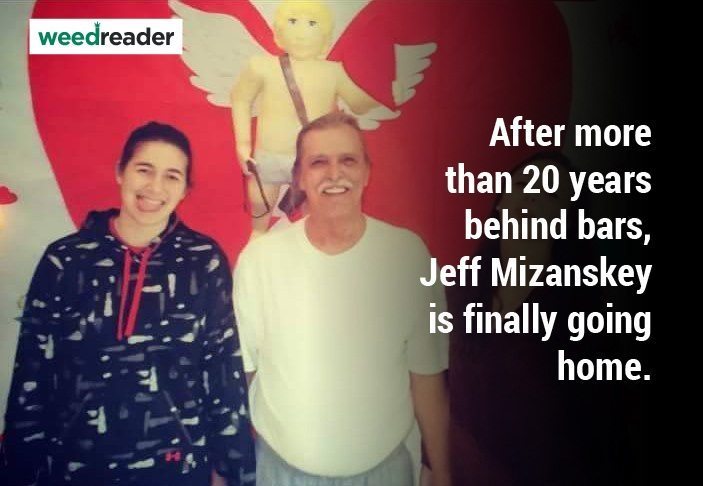
After more than 20 years behind bars, Jeff Mizanskey is finally going home.
The 62 year old grandfather has been in prison since 1993, when he was arrested at the scene of a pot deal gone bad. He was neither the seller nor the buyer, just “guilty by association.” But because of prior convictions, and Missouri’s “3 strikes you’re out” policy toward drug offenders, Mizanskey was sentenced to life without parole.
In 2011, the “3 strikes” rule was repealed. I guess lawmakers finally came to their senses, and realized what they had done was cruel and inhumane. Too bad for Jeff, that revision was not retroactive — meaning that it didn’t apply to those who had already been convicted and sentenced.
His story went mainstream in 2013, and pro-cannabis activists from across the nation joined in the #freejeffmizanskey campaign. An online petition calling for clemency from Missouri governor Jay Nixon gathered nearly 400,000 signatures. The governor responded by commuting Jeff’s sentence back in May, making him eligible for parole. He went before the parole board on August 7th.
His parole was granted.
He’s scheduled to be released on September 1st. Jeff is going home to his family. Finally.
Obviously, this is a momentous occasion for the Mizanskeys and their supporters, and for the whole cannabis movement. And we should celebrate, of course! But as we rejoice for Jeff and his family, and bask in the glow of a major victory, let’s not lose sight of the big picture…
There are still more than 2 million people behind bars in America — the largest prison population on the planet. And 17% of people in state run prisons are incarcerated for drug offenses; in federal prisons, nearly half (48%). There are still thousands of people serving life sentences for non-violent drug offenses, including more than a dozen who, just like Jeff, are serving life sentences for pot.
There were more than 1.5 million drug-related arrests in 2012, and 42% of them were for possession of marijuana.
That means that more than 650,000 people were handcuffed and caged just for getting high. Our nation’s correctional facilities are overcrowded and underfunded — or being run for profit by private corporations with government contracts… which is so tragically flawed it ought to be a crime.
And yet every year, thousands more are locked up for possession of a plant. A medicine.
That’s not even counting the number of people who get fired from their jobs, or lose custody of their children, because of a failed drug test. It is no exaggeration to say that millions of people have suffered because of pot prohibition, and the criminalization of one of Nature’s most powerful herbal remedies.
When will we finally stand up and say enough is enough?
As we celebrate Jeff Mizanskey’s release, and the happy ending (at last!) to his story, let’s also remember the lessons there are to be learned, and the work there is still left to do.

1. We must continue to campaign for retroactive decriminalization, so that all those currently serving time for pot possession can have their sentences overturned, and be sent home.

2. In the states where weed is made legal, recreationally or medicinally, we need laws on the books to protect cannabis users from being fired over drug test results.

3. Ultimately, we must not stop until we see reform of federal drug laws, and a re-classification of marijuana from a Schedule 1 narcotic to a legal and regulated substance. Because no one should be in jail over a plant.

Congratulations to Jeff and his family! We wish you nothing but the best. But let’s remember that the struggle isn’t over. We’ve got to continue to be involved, and let our voices be heard in the media, through petitions, and most importantly through the ballot box.
Let’s keep on fighting the good fight until all the victims of the Drug War are sent home, and all people are free to use cannabis as Mother Nature intended.
 

us

My Uncle Sam’s a Pot Farmer

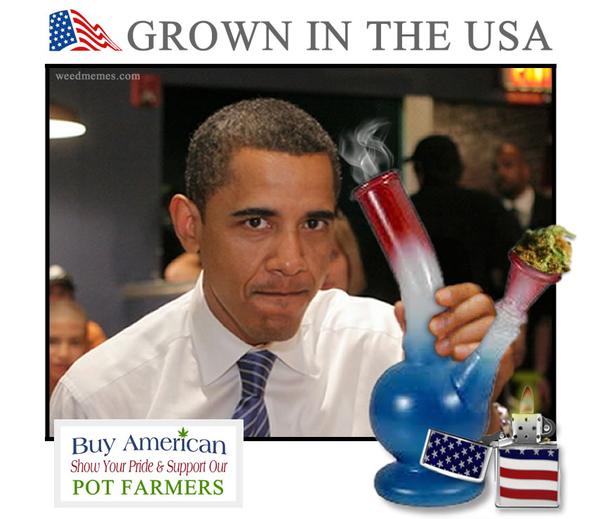
image by weedmemes.com

Did you know that Uncle Sam grows weed?
Yep!
At the University of Mississippi in Oxford MS, under armed guards, high tech digital surveillance and dozens of locked doors and gates a government funded program is set to produce 650 kilos of pot this year.
Numbers like this can mean little until put into perspective. So, if you were to put a gram of reefer into a rolling paper and twist it up, you’d have a healthy looking joint. How many of those would 650 keys make?
650,000 doobies. That’s a lot of research.
The program, under the direction of Mahmoud ElSohly, has been in operation since 1968. It is charged with growing quality controlled marijuana for ‘research purposes.’
The question is, why is OUR government spending OUR tax dollars to provide those 650,000 joints to researchers?
Franklin Roosevelt once admitted that; “the real truth of the matter is, as you and I know, that a financial element in the larger centers has owned the Government ever since the days of Andrew Jackson.”
Big Business.
Business is afraid that if weed is not prohibited it would result in Business not ‘earning’ profits on a scale that they think they should.
Does this surprise you? It shouldn’t.
Together the pharmaceutical industry reported profits of $300 billion last year.
And the health care industry, another $1.7 trillion. The end result?
Physician and medication error along with adverse effects from drugs and surgery accounts for over 200,000 deaths per year in the US. Which makes the healthcare system the third leading cause of death in the US. Only cancer and heart disease are more deadly.
What did they researched to attain those noteworthy stats?
Money has been making the world go ‘round for a long time now. It’s time for a change.

What to do about it?

Quit supporting it. And start voicing your objections.
While this was written from a North American point of view, experience in other cultures suggest that governments get by with what they do because it’s tolerated. If the majority of people want government supervision OUT of their personal lives then nonviolent civil disobedience can help make change happen.
Begin to take responsibility for yourself. Ask yourself why it is necessary that YOU become the one of every four that will die from cancer this year. Then go searching for answers. You find what you look for.
Finding the answer is only the beginning. Information must be acted upon. Even if it makes life awkward.
Life became awkward for Rosa Parks. But because she had tied feet on the day a police officer ordered her to give her bus seat to a white person, the world is now a better place.
The Gallup Poll reports that 58% of Americans favor legalizing weed. The flame of change is now in our favor and we have the opportunity to turn it into a raging wildfire. All we need do is act.
It is time to get big business out of government. And government out of our personal lives.

Where to start?

Reform. Sign every petition you can that supports legalizing weed.

The Marijuana Policy Project, the National Organization for the Reform of Marijuana Laws and the Coalition for Cannabis Policy Reform are three groups to research and support. They need funding. Help if you can.

In 2011 a documentary film entitled “Breaking the Taboo” was released to a worldwide audience via YouTube. The focus of the film is the global effects of the war on drugs. Here are more than a few statistics, taken from the documentary, to piss you off.
Since Nixon declared war on drugs in 1971 $2.5 trillion of your tax dollars have been spent on that ‘war’. Over 44 million Americans have been arrested. And according to Human Rights Watch 60,000 persons, in Mexico alone, have died as a direct result of this ‘war’.
The US has the largest prison population in the world – 2.3 million Americans are behind bars. 500,000 for drug related crimes.
If global drug commerce where a political entity it would have one of the top 20 economies in the world with an estimated yearly net income of $320 billion. Yes that was billion.
If drugs that are now illegal were taxed at a rate similar to tobacco and alcohol they would generate an estimated $46 billion in tax dollars.
Legalizing drugs would save the US an estimated $41 billion a year in costs associated with enforcing current laws.
Are you black or hispanic? If so, you should be pissed. These 2 groups use illegal drugs at about the same percentage rate as whites but are between 2 and 5 times more likely to be arrested, convicted and imprisoned.
In a December 2012 feature article on CNN titled “War on drugs a trillion-dollar failure”, Richard Branson asked;
“How would our society, our communities and daily lives improve if we took the money we use running a police and prison state and put it into education and health? Treating drugs as a health issue could save billions, improve public health and help us better control violence and crime in our communities. Hundreds of thousands of people have died from overdoses and drug-related diseases, including HIV and hepatitis C, because they didn’t have access to cost-effective, life-saving solutions.”
(CNN)
Not to mention the hypocrisy of the US government engaging in activities that are prohibited for its citizens. For profit.
Sobering facts. And a travesty of civil and human rights.
Our interconnectedness as a society of over 7 billion people adds to the complexity of arriving at reasonable and effective solutions to this issue. Creativity and a new commitment to humanity over business is needed. And the role of government as ‘babysitter’ and ‘moral advisor’ must be rethought.
Archeologists tell us that weed (cannabis) has been used recreationally since 3000 BC. There are now over 7 billion of us. Weed is not a threat to human existence.
I urge you to live life to the best of your ability. And allow others the same right. Treat others as you yourself would like to be treated. And leave society better for your having passed this way.
Strive for the decriminalization of all adult activity that harms no other.
Starting with weed.

pot saved my life wr

Pot Saved My Life

 
The Controlled Substances Act of 1970 classified marijuana as a Schedule 1 drug, which is defined by three criteria:
1.    A substance with high potential for abuse.
2.    A substance with no accepted medical value.
3.    A substance unsafe to use – even under medical supervision.
But the public perception of marijuana has shifted drastically over the years. In a 1969 Gallup opinion poll, only 12 percent of Americans were in favor of legalizing cannabis. Today, that number is closer to 58 percent, while a whopping 80 percent support it’s medicinal use.
For the first time since cannabis prohibition began, a clear majority of people believe in legalization. But for most of us, it’s just an opinion. We may feel strongly about it, or we may not.
Let me introduce you to some folks who do feel strongly about it. Very strongly, indeed.
Joy Williams is a 50 year old woman from Gladstone, MI who believes she owes her life to marijuana. A few years ago she weighed more than 400 pounds, and she was taking 42 prescription pills per day to manage her pain, anxiety and COPD. The drugs were slowly killing her – her liver and kidneys were failing, and her energy was non-existent. She spent nearly all day lying in bed.
In October of 2012, she replaced her prescriptions with medical marijuana, as part of an complete lifestyle overhaul (she also switched to a vegan diet). Since then she has lost 270 pounds. Her liver and kidneys are functioning normally. She is cured of COPD.
Most importantly, she is able to play with  her grand daughter, and enjoy her life and her time with her family.
And then there’s Jim Gilliam. In March of 2009, Jim published an open letter to President Obama on the Huffington Post, entitled “Pot Saved My Life, Mr. President.” Written in response to the President’s comments about marijuana policy, the letter describes Gilliam’s battle with cancer and radiation treatments, which left his lungs so scarred that he had to undergo a double lung transplant.
In the process, he nearly wasted away. His doctor diagnosed his weight loss as life-threatening, and wrote him a prescription for Marinol (a synthetic form of THC). Marinol enabled Jim to put on weight and get out of the danger zone. He concludes his letter by saying:

“Pot saved my life. It’s a miracle drug, even the crappy, non-organic kind made in a lab.”

Greg Scott of Ft. Lauderdale, FL was diagnosed with AIDS in 1987, at a time when there was nothing that doctors could do for him. He turned to marijuana to manage his symptoms and strengthen his appetite, and credits cannabis with keeping him alive long enough to benefit from more modern medical treatments. As he testified before a Florida commission:

“Because I smoked pot, I lived.”

If you live in or near Los Angeles, CA then you have probably heard the story of Bill Rosendahl, the city councilman who was the first elected official to openly use pot while in office. Bill first used medical cannabis to help relieve the stinging pain of neuropathy in his feet. He continued to use it when late stage cancer began affecting the nerves in his back, causing debilitating pain. But with the help of marijuana, Rosendahl is sleeping through the night, sitting and walking without pain, and feeling more like his old self again.
Oh, yeah – and his cancer has gone into remission. He gives credit to cannabis, saying in an interview with Huff Post Live:

“Medical marijuana saved my life.”

Mr. Rosendahl isn’t the only one who has found pot to be an effective anti-cancer agent. There’s also Mike Cutler of the UK, a 63 year old grandfather who was diagnosed with liver cancer in 2009. He received a transplant, only to find out that cancer had attacked his new liver, too. Doctors told him there was nothing else they could do. He turned to cannabis oil, and his symptoms disappeared. In May of this year, doctors told him the cancer cells had also disappeared.
Rick Simpson was diagnosed with skin cancer in 2003. He applied cannabis oil bandages to his skin spots and they cleared up in just days. He was so convinced by his own experience that he became something of a crusader, doing everything he can to spread the word about hemp oil and make it available to those in need – even to the point of facing criminal charges.
Dennis Hill is a biochemist who used cannabis butter and hemp oil to successfully treat malignant tumors. Dusty Frank used it to cure his prostate cancer. VICE magazine did a story about “Brave Mykayla” Comstock whose parents are treating her leukemia with cannabis oil. Dr. William Courtney told Huff Post Live about  an 8 month old infant whose inoperable brain tumor was drastically reduced by hemp oil – administered via pacifier.
I may not know the name of the baby Dr. Courtney is referring to, I do know the name Jayden David. 8 year old Jayden has a very rare form of epilepsy known as Dravet syndrome, which is unresponsive to all forms of “conventional” treatment. But two years ago he found relief from his debilitating seizures through CBD-rich hemp oil, and is now living a normal and active life.
Jayden’s case is very similar to that of Charlotte Figi, who suffers from the same condition. Her case was in the national spotlight last year, after being referenced by Dr. Sanjay Gupta in his public statement coming out in favor of medical marijuana. Cannabis oil has also helped kids with autism and muscular dystrophy, like Joey Hester-Perez, and also Smith-Magenis Syndrome, like Colin Ulrick.
These are lives saved by pot. These are children who are alive and healthy because of cannabis, and it’s incredible medicinal properties – which we are only beginning to explore and understand. These are men and women of all ages, who have been healed and found new hope, new strength and new life through marijuana.
Everyone has an opinion about marijuana, and most of us are in favor. But for these people and their families, it’s not just an opinion. It’s a conviction. Cannabis is not a Schedule 1 drug – it’s a medicine.
Pot saves lives. It saved their lives. And it can save thousands more, if we just give it a chance.

wr post

UPDATE: Jeff Mizanskey Up For Parole

 
In a previous article, we told the story of Jeff Mizanskey, a 61 year old man from Sedalia, MO serving a life sentence for possession of marijuana. Jeff was a victim of the “three strikes” laws and their harsh mandatory minimum sentences, and has been behind bars since his third arrest in 1993.
That’s more than 20 years in prison. For pot.
But a breakthrough came for Jeff and his family yesterday, when Missouri governor Jay Nixon commuted his sentence, making him eligible for parole. By all accounts, Mizanskey has been a model prisoner, and his application  for parole is expected to be approved. The hearing could be scheduled as soon as August.
Jeff has become something of a poster boy for legalization activists. The commutation of his sentence should be taken as a very encouraging sign that the times are changing, and that cannabis laws are changing with them.
Even in the conservative American Midwest.
Nixon also granted clemency to five other non-violent drug offenders: Michael Derrington (who was also convicted of pot possession), Bill Holt, Nicole Lowe, Doris Atchison, and Earl Wolf.

roger williams1

The Healing Church Smokes Weed at Roger Williams National Monument

Yesterday, on May 17th 2015, a group of five people gathered for a religious ceremony at the Roger Williams National Monument in Providence, Rhode Island. Such a small crowd might have gone unnoticed and unreported, but for the fact that they were members of The Healing Church — and they were smoking weed.
The setting is most appropriate: Roger Williams was an early settler and Protestant Reformer who founded the town of Providence in 1636, after he was exiled from Salem, Massachusetts for preaching unpopular doctrines. Those ideas that were so demonized are sacred to us now, such as the separation of church and state, the abolition of slavery, and the rights of Native Americans. The monument that bears his name also enshrines the values of universal human rights and religious freedom.
So it’s only fitting that The Healing Church would choose it as a place of worship.
The religious ceremony was led by Anne Armstrong, ordained minister since 2002. She led the group in prayer, which included smoking marijuana and annointing members foreheads with cannabis oil. It didn’t take long for park officials to take notice, and soon enough a park ranger came to inquire. They told the church members that they could not violate the Controlled Substances Act on park grounds. Armstrong presented her ordination papers, as well as a permit that she had acquired to hold a church service of 100 people in the park on May 23rd, 2015. Park officials tried telling her that the group needed a permit for their gathering yesterday, but Armstrong defended the groups right to assemble, to pray, and to use cannabis as a religious sacrament, citing a 2010 free speech ruling (Boardley v. U.S. Dept. of Interior) that upholds the right of small groups to gather and express themselves in public parks.
The group then proceeded to smoke and pray for another hour, with being disturbed. On their way out of the park, they were questioned by the police, and that encounter was recorded and posted to YouTube:

As you can see, there were no fines, citations or tickets issued (personal use is decriminalized in Rhode Island; possession of less than an ounce warrants no arrests or jail time). It was a peaceful end to a peaceful gathering, and it sets a major precedent in the move toward cannabis legalization and decriminalization.
It may not seem like a big deal at first glance, but it is. A group of citizens were able to smoke pot on government property and walk away unmolested. Constitutional rights—freedom of speech, freedom of assembly, and freedom of religion—triumphed over the federal ban on cannabis and controlled substances. That’s pretty big.
It clearly shows that there is indeed a seismic shift going on in the way the public, the government, and even law enforcement approaches marijuana. If it can happen in Providence, it could happen anywhere.
Cannabis smoking could be coming soon to a park near you 😉
statue of Roger Williams, photo from wikipedia