









Most people think of weed as green but purple strains are becoming more common. Purple is the color of kings and you’ll sure feel like one after getting your first bag of purp. Granddaddy purple or GDP is the “granddaddy” of purple strains. GDP flowers are often deep shades of purple which contrast the abundance of white kief crystals. In the past, the only purple weed you could find was grown in cold outdoor conditions. Now, purple weed can be grown in normal environmental conditions.
Marijuana flowers have water-soluble pigment molecules that affect the color of weed. According to Sensi Seeds:
“Anthocyanins are a group of around 400 water-soluble pigment molecules that due to their structure and biosynthesis are classed as flavonoids, and appear red, purple or blue according to their pH (in acidic pH levels they appear more red, in neutral conditions purple, and in alkaline more blue). Flavonoids are generally yellow in appearance, hence their name, which is etymologically derived from the Latin for “yellow”, flavus, and does not indicate any association with flavour. In fact, flavonoids are usually extremely bitter, and are generally associated with pigmentation.”
Growers may have noticed that many cannabis plants change colour towards the end of the flowering cycle. Even if that color isn’t purple. This is because Anthocyanins only begin to alter the appearance during the final stages of growth.
To make buds more purple, growers should increase the amount of time the plant spends in the dark towards the final stages. The deprivation of light will give the cannabis plant the signal to stop producing chlorophyll, which is an essential part of photosynthesis and vegetative growth. This allows the plant to focus its energies on producing flowers. The absence of chlorophyll makes the purple, blue, and red hues of anthocyanins more vivid. Colors like gold and orange also appear during the latter stages of flowering. If yellowing occurs during earlier stages it is a sign of disease of deficiency.
Not exactly. Anthocyanins have been found to be powerful antioxidants with analgesic, anti-inflammatory and neuroprotective properties. These molecules can also bind to CB1 and CB2 receptors which means they might have other medicinal benefits.
Similar to cannabis plants, oranges with high levels of anthocyanins become blood oranges. Blood oranges depend on the cold for this color change to occur as well. In both cannabis and blood oranges, cold temperature leads to an increase in Anthocyanin levels. It is still not known why cannabis and other plants produce large amounts of anthocyanin when exposed to cold or stressful conditions. Further research on anthocyanin production would need to be conducted.
So if you’re smoking on purple weed, make sure the purple didn’t come from an improper grow. If it looks purple but smells tastes and feels like green weed you should be good. If you’ve got access to a dispensary and want to try purple weed ask for strains like Granddaddy purple, purple haze, or purple kush.
image credit: dwellgreen
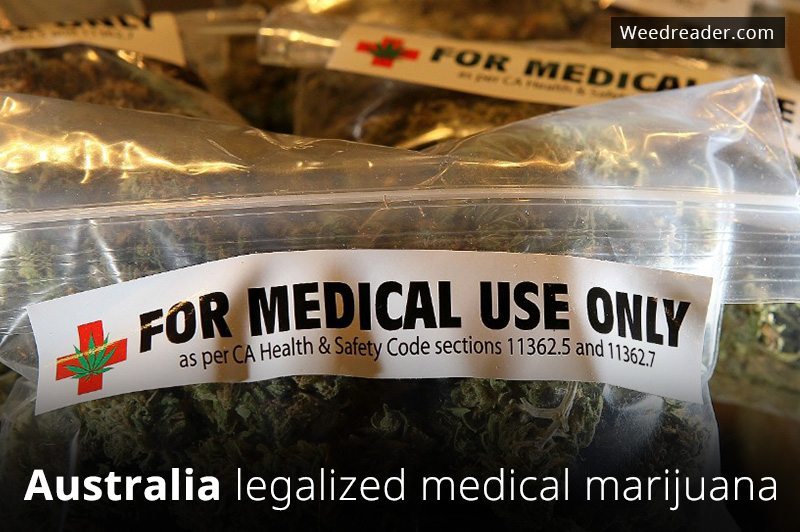
Australia made the bold move this week to legalize medicinal marijuana use for the whole country. The Therapeutics Goods Administration was the one to make the decision. Medicinal marijuana will be legalized but strictly controlled. Parliament passed the measure on Wednesday and the amendments to the Narcotic Drugs Act will allow Australians to legally grow cannabis for medical and scientific purposes for the first time.
“This is a historic day for Australia and the many advocates who have fought long and hard to challenge the stigma around medicinal cannabis products so genuine patients are no longer treated as criminals,” Minister of Health Sussan Ley said in a statement.
“This is the missing piece in a patient’s treatment journey and will now see seamless access to locally-produced medicinal cannabis products from farm to pharmacy,” she said.
A 25-year-old by the name of Daniel Haslam lost his life to terminal bowel cancer. Before that, his parents were his dope dealers. A seasoned nurse and police officer were giving their son marijuana to ease his chemotherapy symptoms. He suffered from uncontrolled nausea and vomiting after every chemotherapy session.
His parents were desperate to end his suffering and another cancer sufferer recommended pot. After trying cannabis his mother claims his life became “a little more tolerable. A sick young man reluctantly tried a joint and just like that, he felt so much better. He gained an appetite, had his nausea and vomiting addressed and was able to maintain his weight through his ongoing treatment.”
Dan’s final months were made more comfortable because his parents were willing to risk criminalising themselves to ease his pain. Many other people have been prosecuted for doing exactly what Dan’s family did.
Dan’s dying wish, was for others to experience the unique qualities of cannabis when suffering as he did. His mother, Lucy Haslam, started a petition to make medicinal marijuana more accessible to sick and suffering Australians.
It was this story that touched the Australian parliament and got the law passed. Suffering Australians who will benefit from this law change have Dan Haslam to thank. Australian Sen. Richard Di Natale was the one who brought up Haslam’s story to parliament.
“It is incredibly fitting that today we are passing this bill which is one step towards making medicinal cannabis accessible to people like Dan,” Di Natale said.
“Thank you to Lucy for everything you have done. Please know that your family’s grief, pain and suffering has not been in vain and this is a legacy that Dan will leave here in Parliament.”
Lucy Haslam’s main concern with the recent passing of the law is the pricing of medicinal cannabis, as well as the lack of education on the matter.
“My fear is that the industry will become so expensive that patients won’t be able to access a legal supply at an affordable price,” said Haslam. “There’s also a lot of work to do on educating people and doctors, some of who remain a bit uncomfortable about prescribing medical cannabis to patients.”
Australians hope the new laws will benefit those suffering and bring money into the country.
Featured photo credit: Getty images
If you’ve ever browsed through the cannabis catalogs of places like Leafly and Canna Seeds, you’ve probably been amazed at the sheer number and variety of cannabis strains out there. If you are new to the game, it can be quite confusing and overwhelming. So let’s start with the basics.
You’ll notice that different strains are described as either sativa, indica or hybrid. But what does that mean, exactly?
Well, cannabis is a genus, or family of plants, which includes 3 different species: cannabis sativa, cannabis indica, and cannabis ruderalis (which grows wild in parts of Russia, contains little THC, and is rarely cultivated for recreational or medical use). So sativa and indica are actually two separate species of pot, which originated in different places, and have their own unique qualities and effects.
Take a look at this awesome infographic which breaks down the difference between the two main branches of the cannabis family tree.

I know that’s a lot to take in. To sum it all up:
However, after ages of cannabis cultivation, selective breeding and cross pollination, there are very few remaining strains which are purely sativa or indica. Most of the weed on the market today are hybrids, created from both sativa and indica stock, and combining both of their effects in different ways and degrees.
A strain like GDP (Granddaddy Purple), for instance, is a hybrid with mostly indica characteristics. It’s often classified as an indica, but is technically an indica-dominant hybrid. Whereas a strain like Trainwreck is also a hybrid, but it’s extremely sativa-dominant, so it’s characteristics are completely different. While GDP typically leaves you all relaxed and mellow, Trainwreck hits you with a head high that will pick you up and bliss you out.
Then you have strains like White Widow or Blue Dream, which are more balanced hybrids, combining the “couch lock” full body relaxation of an indica with the famous sativa head high and euphoria, in equal measure.
Keep in mind that these are merely general tendencies, NOT absolute truths. There are many factors that determine the qualities of any given strain, and how it will affect you — not the least of which is your own body chemistry. Besides THC and CBD, there are many other cannabinoids and chemical compounds (like terpenes) which influence the scent, taste and effects of different cannabis strains.
Each strain totally unique, and will vary from grower to grower — even batch to batch! And of course, each user is unique as well. Just because a strain affects most users in a certain way, doesn’t guarantee that it will do the same to you. But if you use this information as a guideline, it can help you navigate the dizzying variety of cannabis strains available today.
And if you’re wondering where to start, then go check out our list of the 15 most popular cannabis strains!


Stop arresting stoners and go arrest real criminals.
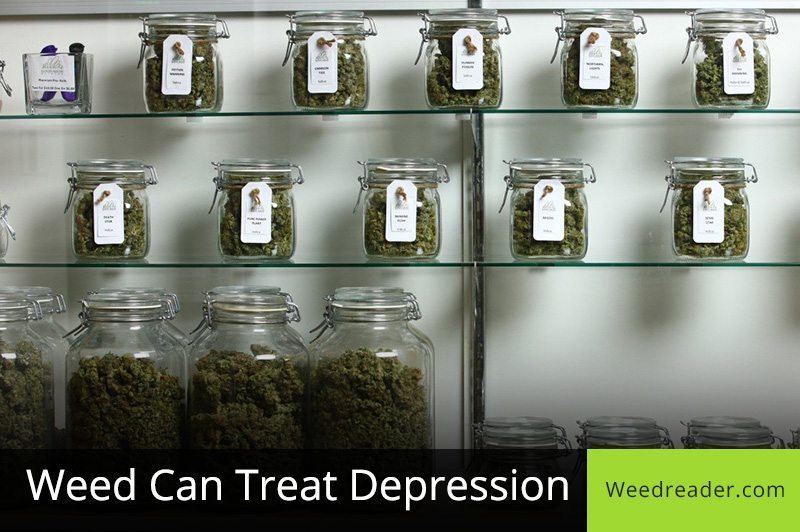
According to the Anxiety and Depression Association of America, depression affects more than 15 million American adults per year. The number of studies on antidepressants causing birth defects, suicide attempts, and death are increasing over the years. There have been over 150 studies on antidepressant induced side effects. Fortunately, there are studies showing marijuana can combat depression without the harmful side effects.
“A lot of people report using cannabis effectively to treat depression,” says Zachary Walsh, assistant professor of psychology at the University of British Columbia who helps run the research lab focused on marijuana and mental health.
Cannabis was used to treat depression and many other ailments hundreds to thousands of years ago. There is evidence of medical cannabis being used in India, China, the Middle East, Southeast Asia, South Africa, and South America several centuries ago.
Nowadays, people are using marijuana in place of antidepressants like Prozac. The common side effects of Prozac are diarrhea, dyspepsia, nausea, nervousness, insomnia, weakness, anxiety, drowsiness, tremor, headache, xerostomia, decreased libido, anorexia, and decreased appetite. When users overdose the side effects get even worse.
On the other hand, the most common side effects from marijuana are harmless and even enjoyable. The most harmful side effect that the majority of cannabis users experience is cottonmouth. Short term memory impairment can be an issue if you’ve got tasks at hand. Additionally, it seems the memory impairment is only severe in adolescent cannabis users. A 2011 study suggests adolescent usage may even have a lasting impact on memory.
The use of marijuana to treat depression is not for everyone. However, a recent study found cannabis to be effective in treating depression.
First, those suffering from depression have a decrease in endocannabinoid production. Smoking or ingesting marijuana leads to an increase in endocannabinoid production.
“Using compounds derived from cannabis — marijuana — to restore normal endocannabinoid function could potentially help stabilize moods and ease depression,” said lead researcher Dr. Samir Haj-Dahmane in a university press release.
However, there is research suggesting regular to heavy cannabis smokers are at a higher risk for developing depression. Dr. Daniel K. Hall-Flavin claims “it doesn’t appear that marijuana directly causes depression.”
“It’s likely that the genetic, environmental or other factors that trigger depression also lead to marijuana use. Some people with depression may use marijuana as a way to detach from depressive symptoms. Heavy users may appear depressed as a result of the dulling effects of the drug on feelings and emotions,” he adds.
Marijuana can be effective in treating depression but the strain you use and your dosage matter. Strains that are commonly linked with euphoria and uplifting feelings are the best for those dealing with depression. Some common strains that are known for their feelings of euphoria include: Blue Dream, Sour Diesel, and Girl Scout Cookies. If you’re using marijuana to treat your depression you should consult with your doctor and they’ll start you off with low dosages.
Find out the right dose to keep your mood uplifted and just remember marijuana does not directly cause depression. It’s more likely that the same factors that lead to depression lead one to try pot.
Photo by Matthew Staver/ The Washington Post


