medi 1

Pennsylvania Approves Eight Colleges for Medical Research

Pennsylvania makes history
Pennsylvania is on track to be the first state to license a number of universities to begin scientific studies of marijuana. Just three months after legalizing medical marijuana, the state is taking action to provide peer-reviewed research on the topic. So far, eight universities have research permits in hand.
Governor Tom Wolf announced permit holders.  They include the University of Pittsburgh School of Medicine, the Perelman School of Medicine at the University of Pennsylvania along with the Lewis Katz School of Medicine at Temple University, the Drexel University College of Medicine, Lake Erie College of Osteopathic Medicine, Penn State College of Medicine, Philadelphia College of Osteopathic Medicine and Sidney Kimmel Medical College at Thomas Jefferson University.
During the press conference, the governor stated, “Today, medical research is so limited by the federal government that only a few doctors can even have access to medical marijuana,” He continued by saying, “Pennsylvania’s premiere medical schools will be able to help shape the future of treatment for patients who are in desperate need not just here, but across the country.” His remarks come after decades of federally enforced policies that limit and all but prevent medical research into marijuana.
Pennsylvania breaks with tradition
Marijuana has a long history in America. Most of that history includes federally managed and funded programs refusing to even look at cannabis medically. Medical and educational institutions are often denied research requests by regulatory and drug enforcement agencies. This makes it all but impossible to find valuable medical insights.
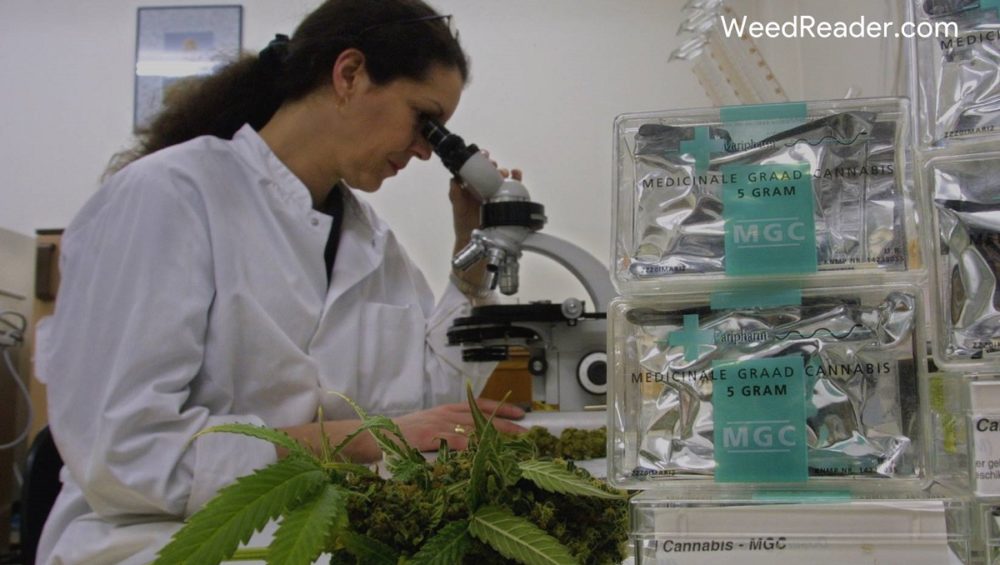
On top of that, the few instances where research is allowed are hampered by inferior product. So far, studies only have product from the University of Mississippi. Unfortunately, the ganja is notorious for being the lowest quality product possible.
Breaking with this long-standing tradition, Pennsylvania is allowing each university to fund and source product from state licensed medical producers. In addition, the researchers get to work directly with the states patients and products. Officials at Pitt stated “It is important to note that Pennsylvania is the first and only state in the country to institute such a program, and we believe that the research that will be conducted by the School of Medicine in collaboration with [University of Pennsylvania Medical Center] will be of great importance in determining the safety, efficacy and effectiveness of medical cannabis products in treating specific diseases,”
Researchers must act fast
There are no official start dates for kicking off the research yet. But state law requires the cannabis studies to begin within six months of obtaining a license. Officials involved with the program hope that their research will lead to groundbreaking advances in our understanding of cannabis.
Because the new research is mandated to use only state qualified and licensed individuals, the pressure is on to find enough support. Pennsylvania patients with one of 21 qualified medical conditions can apply for a card and over 37,000 have already registered to participate in the medical marijuana program.
In addition to patients and providers, the research also requires medical professionals. But according to the health department, over 1,000 physicians are already registered. More than 600 of them are also certified as practitioners.
Feds Study Effect Of MMJ On Opioid Use

Feds Study Effect of MMJ on Opioid Use

 What would you do with access to MMJ and $3.8 million dollars?opioid treatment

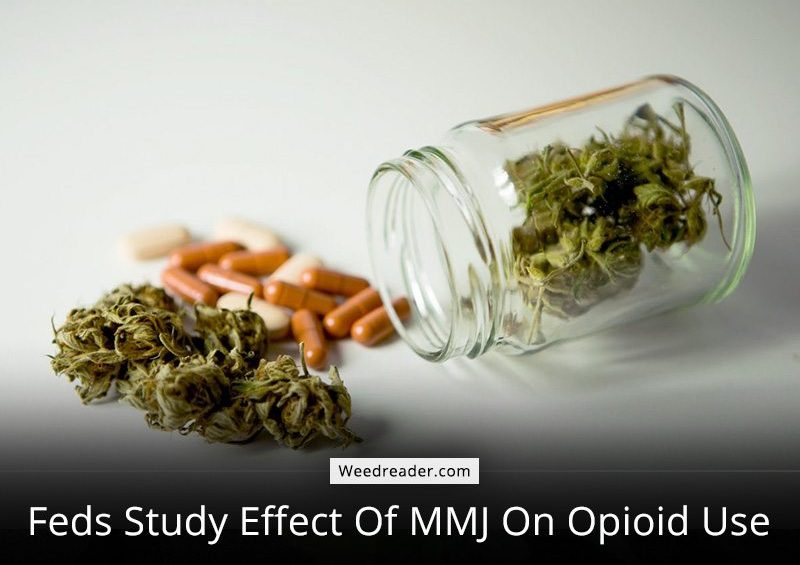
Researchers at Albert Einstein College of Medicine and Montefiore Health Systems get to find out if medical marijuana reduce opioid dependence. Researchers were granted the sum to fund the first in a new round of long-term studies. While past studies have tested cannabis in pain management in HIV and cancer patients, this has a different focus.
This study will officially investigate the effectiveness of medical marijuana in treating opioid addiction. Investigators explained their reasons in a media release by the associate chief of general internal medicine Chinazo Cunningham. She claims “There is a lack of information about the impact of medical marijuana on opioid use in those with chronic pain,” and “We hope this study will fill in the gaps and provide doctors and patients with some much needed guidance.”
There are many people who claim cannabis helps opioid users with chronic pain step down their use to safer levels. A minority of users also report that they can completely eliminate their opioid dependence with cannabis. The hope is that patients can remove their dependence entirely but only studies like this can prove it to be true or false.

The study focus on adults with HIV, chronic pain, and it uses real MMJ.opioid treatment

Study participants include 250 HIV- positive and negative adults with chronic pain. Subjects are also required to have a doctors recommendation for medical marijuana. This is the fist study of its kind to use state approved dispensaries to provide the cannabis.
Federal contractors in Mississippi normally provide “research grade” cannabis that has a THC content below 10%. Stored improperly by design and seemingly produced by putting a whole plant in a food processer, almost any dispensary would reject it. This cannabis is known as NIDA weed and these researchers decided they didn’t want it in their study.
Instead of using federally obtained NIDA cannabis like past studies, this one will use cannabis from New York dispensaries. This cannabis is produced and processed by master growers, passes laboratory testing, and has THC content between about 15% and 30%.

Up until now, evidence is mostly anecdotal.

Many people have moving personal stories but they fail to prove anything. We can’t forget the ‘placebo effect’ or projection when listening to a single person tell their story. This study offers 250 people the opportunity to produce the first peer-reviewed research on the safety and effectiveness of cannabis in treating opioid addiction.
This long-term study will also span 18 months and include web-based questionnaires every two weeks. The questionnaires focus on pain levels and the effect of medical and illicit cannabis on opioid dependence. Blood and urine samples get submitted every three months in-person at specified medical facilities. In-depth interviews of participants will explore their perceptions of how marijuana affects their opioid use.
HIV patients suffer from opioid addiction more than other populations. But there is conflict on how many actually suffer in silence. Past studies claim that over 90% of HIV patients suffer from chronic pain while others claim the number could be as low as 25%. With opioids as the go-to pain treatment for most doctors, there is a high risk for misuse and subsequent addiction.

The cards are stacked against cannabis reducing opioid use.

Medical marijuana has made serious strides in legitimizing itself as a treatment for pain. Twenty-nine states (plus the District of Columbia) have legal marijuana use in some way. Chronic pain and HIV/AIDS are qualifying conditions in all of those states.
Yet researchers have never explicitly studied whether or not medical marijuana reduces opioid use over time. Most studies attempt to prove marijuana doesn’t treat medical conditions but fail to do so. This looks at the possibility of treating pain with similar skepticism.
The best part about science is that all the evidence counts. Despite researchers personal desires, the results speak for themselves. This study is no different. “As state and federal governments grapple with the complex issues surrounding opioid use and medical marijuana, we hope to provide evidence-based recommendations that will help shape responsible and effective healthcare practices and public policies,” Cunningham said.

Medical cannabis promises hope to opioid abusers.

HIV and AIDS patients across the globe have claimed cannabis treats their pain. This is the first step in a new phase of medical research. Instead of using the lowest possible quality of weed, they plan to look at real people using real cannabis. The results will likely add to the mountain of evidence that supports medical marijuana.
There is still a long time to go before the results come in. Long-term studies take loads of time to analyze the data. Years pass before researchers publish results. Especially in studies like this. It may be two or more years before anyone can make a claim about the effectiveness of marijuana treating opioid addiction based on this research. We have to sit tight until then.
But if the past has taught us anything, it is that marijuana is a more powerful healer than we ever thought possible. This is just the first of a new wave of research but the results look to direct the following discussion heavily. Let’s just hope that those in power listen to the research.


acoustic guitar 407214 1280

Why Does Weed Make Music Sound Better?

Marijuana played a big role in my coming of age, and coming into my own in terms of my beliefs, my identity, my taste in art and music. In my early youth I was happy to listen to whatever my friends were listening to (which in America, in the 90’s, was mostly punk rock, grunge, alternative, etc), to talk like them and dress like them. I just wanted to fit in, to belong, to be a part of the crowd.
But when I was around 16, something shifted. I was no longer content to buy the same clothes and CDs as other kids. My music was no longer a social statement about which clique I was in. I was listening for the pure pleasure of it. I no longer cared what others thought or what they liked. I had started to form my own idea about what was cool.
It’s no coincidence that this was around the same time I discovered pot. Suddenly I had this pharmacological portal to another dimension where I was free to think outside the box; a way to relax and let go of my crippling teen angst, and appreciate the depth and beauty of the world; an altered state of mind where food tasted better, novels and poems came to life, movies and plays became profoundly moving, and music could carry me away to a state of timeless rapture and bliss.
I spent countless hours stoned, alone in the dark within headphones on, listening to entire albums on repeat, seeking out artists and genres I’d never heard before, exploring new worlds of sound and emotion. I’m sure that most of you can relate.
Cannabis does, undoubtedly, make music sound better, as anyone who’s tried it, ever, will attest. But we know very little about how or why marijuana effects the way we hear music. Because of the lingering federal ban on cannabis, research studies have thus far been limited to mice and other animals, or surveys and interviews of volunteers, with little or no control over dosage, set and setting.
What we can glean, from the scientific evidence thus far accumulated, is that THC and other molecules in the plant are similar to naturally occurring chemicals in our brains. They interact with our endocannabinoid system, lighting up certain regions which are associated with mood, memory, appetite and metabolism, and our responses to pain and stress.
The effects of cannabis can vary wildly based on the particular strain consumed, the manner of consumption, the set and setting in which it is used, and the expectations, mood, mindset and biochemistry of the individual user. But generally speaking, marijuana is a pain reliever, stress reducer, and mood enhancer, which makes us feel relaxed, happy, dreamy, thoughtful, etc. This is, of course, the ideal state of mind in which to appreciate music or any kind of art.
Cannabis changes the way the brain distinguishes between relevant and irrelevant stimuli, and screens or filters sense data accordingly. Marijuana suppresses that filtering process, so that when high we are subjected to a fuller range of sensory input, instead of the narrow spectrum deemed important by our subconscious mind.
Cannabis also suppresses the short term memory, altering the way we experience time. We stop analyzing the moments that have just passed by, and anticipating what is yet to be. We find ourselves more fully immersed in the present moment, savoring and appreciating each sensual detail as it unfolds, feeling like time has slowed down or even stopped.
Normally, in our sober, everyday waking state of consciousness, besides all our constant internal chatter (worrying, planning, going over and over things, random thoughts), there is also a lot of unconscious screening and processing going on, all of which affects what we hear, notice and remember. It affects how we hear music, and how we experience the world around us.
When we’re stoned, we aren’t caught up in cognitive analysis. We aren’t filtering out “irrelevant” sounds. We aren’t obsessing over the stressors of daily life. Rather, we’re fully in the moment, in a state of rapt attention; surrendered to the music, hanging on each and every note, and the spaces between them, moved by subtle variations of tone and tempo, and the emotions that they convey.
The truth is that we don’t completely understand why cannabis makes us feel the way we do, or why it makes music sound so damn good. With the changing legal landscape surrounding marijuana, we are bound to see some fascinating studies being done in the near future, that will reveal a great deal. But we will probably never understand it completely, anymore than we fully understand the brain, or human consciousness. The bottom line is that it works. So why ask why?
Just sit back and relax, put on some good tunes, light up… and enjoy.