
weedr r

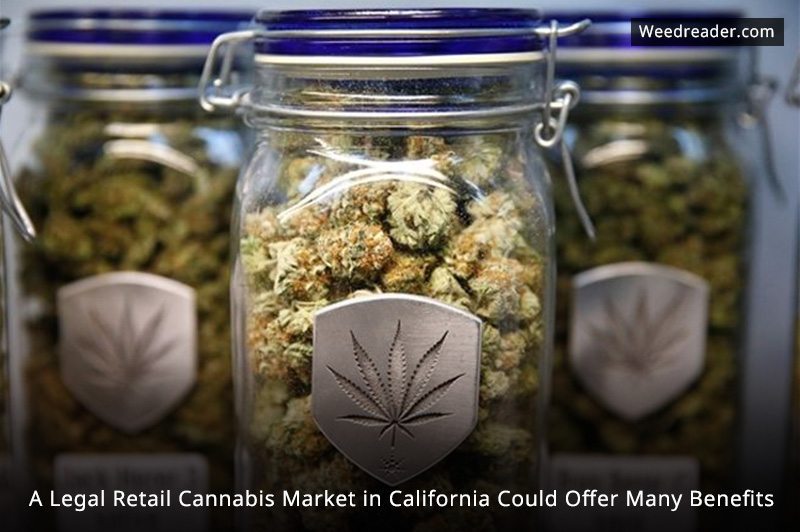
A Legal Retail Cannabis Market in California Could Offer Many Benefits

When it comes to cannabis legalization in the U.S., California is where it all began back in 1995 when they became the first state to legalize cannabis for medicinal uses. The retail/recreational legalization of cannabis has been a hot topic in the state of California ever since. While there have been many initiatives over the years calling for the legalization of adult recreational cannabis, this November the citizens of the state will finally have the chance to make it happen.
If voters in the state pass Proposition 64 to legalize an adult retail market, it is estimated that the sales in the first year will exceed 1.6 billion dollars. According to research by The Arc View Group and New Frontier, the combination of retail and medical sales in the state would most likely exceed 6.5 billion dollars by 2020. In 2015 the state’s medical market brought in 2.8 billion dollars in revenue.
According to the Executive Vice President of Industry Analytics for New Frontier, “the adult use market in California will undoubtedly make California the new epicenter in cannabis.” While the legalization of cannabis for adult use in the state would benefit many individuals in California, as well as the state’s economy, it has other benefits to offer as well. California has a significant influence on drug laws in Mexico. It is thought by many, that if California legalizes a retail market, it will also encourage their neighbors to the South to do the same.
While this market could offer many benefits, it will not be implemented without having to overcome several hurdles many of which will have to do with cultivation and regulations. When medical marijuana was legalized in 1995 there was very little government oversight of the program. This lack of oversight and the lack of stringent regulations is said to have led to a significant amount of the legally cultivated product being diverted to the black market and sold illegally. This has led to the “gray cultivation market” making in excess of 9 billion dollars annually.
According to John Kagia, the Executive VP of New Frontier, the state will not only become an epicenter in terms of revenue, it will also become a leader in the innovation throughout the industry. Kagia, as well as other co-authors of the report, believe that Silicon Valley should play an essential role in providing intellectual and technical expertise as well as capital to help progress the industry further than ever before. Many people also feel that if a legal retail cannabis market is introduced in the state, that California will become an epicenter for cannabis research as well as a pioneer in developing organic cultivation standards.
Thousands of Californians are Being Arrested for Cannabis Each Year

Despite the fact that Californians voted to legalize medical marijuana in 1996 and reduced the consequences of possessing small amounts of marijuana to be a minor nonarrestable infraction back in 2011, there have still been thousands of cannabis-related arrests made in the state in the past 10 years. According to a report released by the Drug Policy Alliance, there were almost a half million marijuana arrests made in the state in the past decade. In 2015 alone there were almost 9,000 felony arrests for cannabis.
In between 2006 and 2015, there were 465,873 cannabis-related arrests in the state including felony and misdemeanor charges. During this period of time, there were roughly 14,000 marijuana felony arrests made each year. Misdemeanor charges related to cannabis averaged at around 70,000 per year between 2006 and 2011 when a joint could land you a charge rather than a ticket. After the changes in 2011, cannabis related misdemeanor arrests dropped significantly to just over 20,000 and in 2015, this number dropped again to just over 17,000 which is something worth celebrating.
Unfortunately, when looking at the statistics surrounding who accounts for the majority of these arrests it is disheartening to see that minorities still make up the majority of the arrests despite the fact that individuals in the Caucasian, African-American, and Latino communities use and sell cannabis at about the same rates. According to the statistics in the report released by the DPA, African Americans are twice as likely to be arrested for a marijuana misdemeanor and 5 times more likely to be arrested for a felony charge than Caucasians. The report also showed that Latinos are 26% more likely to be arrested for a cannabis related felony charge than Caucasians.
Another statistic that is equally disheartening is the fact that as of 2015 individuals under the age of 18 accounted for two-thirds of the misdemeanor marijuana related arrests in the states. This is a substantial increase from 2011 when this demographic only accounted for one-third of misdemeanor marijuana arrests.
Californians are set to vote on retail cannabis legalization this November. If Proposition 64 passes, you can expect to see the number of misdemeanors and felony charges drop significantly as it would legalize many of the activities that individuals are still being arrested for today such as possessing cannabis concentrates, giving ganja to others, and cultivating a few plants for personal use.
Will it fix the racial disparities that are so widely evident throughout California as well as prohibition and legal states? Probably not unfortunately and this is why the war on drugs needs to be ended immediately. Until that happens cannabis will be just one more way they are trying to divide us all.
Image Credit Stock Photo/pow420