msweed

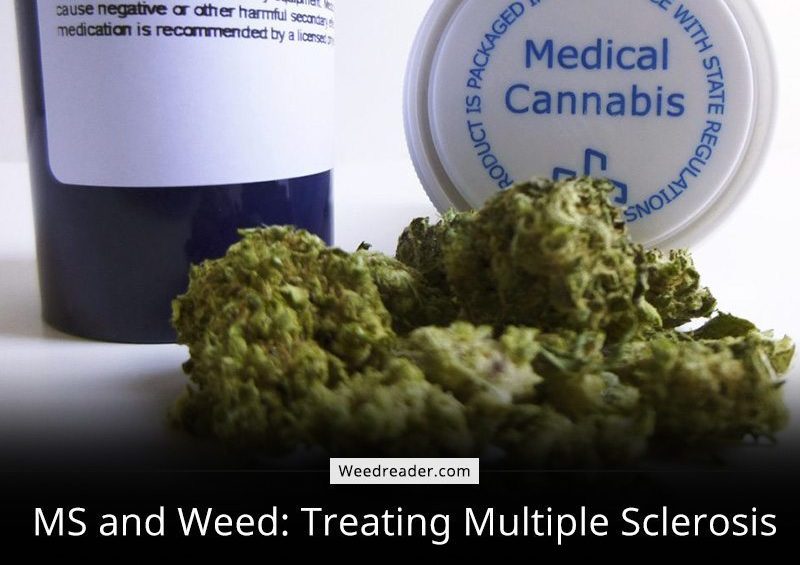
MS and Weed: Treating Multiple Sclerosis

Multiple sclerosis (MS) is a chronic degenerative disease.

It affects the central nervous system and causes inflammation, muscular weakness and a loss of motor coordination. As MS progresses, the patients typically become permanently disabled. In extreme cases this can be so severe that it causes patient death.
The US National Multiple Sclerosis Society estimates that 200 people are diagnosed with the disease each week. MS most often strikes individuals between 20 and 40 years old but has been seen appearing across the age spectrum. Because of the symptoms of MS, it is recognized by all states as a qualifying condition for medical marijuana.

Efforts have been made to protect medical patients from federal punishment.

Although marijuana is still federally illegal, legislation passed in 2015 clarified that the federal government would no longer use federal funds to enforce federal marijuana laws. This included states that permit medical marijuana use. The legislation was an effort to reduce confusion about federal intervention in states that legalized use.
The directive effectively overturned the Supreme Court’s 2005 ruling which said the federal government could prohibit and prosecute the possession and the medical use of marijuana. The court also ruled that state laws did not protect medical users from prosecution. The legislation was careful to ensure that if White House later chooses to reverse the federal directive, it can.

Cannabis isn’t the only treatment out there but it is one of the best.

Most agree that better therapies are needed to treat the symptoms of MS (since there is no cure) which include pain, tremors and spasticity. Current pharmaceutical options may not sufficiently treat the symptoms of MS but there are about the benefits of marijuana relative to its side effects.
The National Multiple Sclerosis Society is one of the biggest non-profit names in MS. Over the years, they have proven to be allies of patients as they fought to help promote awareness and access to new and alternative treatments.
On their website the Society claim to support:
“the rights of people with MS to work with their MS health care providers to access marijuana for medical purposes in accordance with legal regulations in those states where such use has been approved. In addition, the Society supports advancing research to better understand the benefits and potential risks of marijuana and its derivatives as a treatment for MS.”

We know a lot about treating MS with cannabis.

There have been tons of studies on effects of cannabis on cognition / cognitive function in people with MS. Two of which stand out as examples of the common outcomes for treatment with cannabis. While both were published in the journal Neurology, the first was in 2012 and the second was 2014.
In the 2012 study, 25 MS patients who regularly smoked or ingested street cannabis were tested and results compared to 25 MS patients who didn’t use cannabis. The users were tested at least 12 hours after last using to minimize intoxication.

The 2014 study used 20 MS patients who smoked cannabis and 19 who didn’t.

They matched them based on demographics and neurological variables before undergoing magnetic resonance imagining(fMRI). The scan revealed brain activity while performing tasks and tested their working memory. As memory tasks became more demanding, cannabis users performed increasingly worse than their non-using counterparts.
Cannabis users performed significantly worse on measures of information processing speed, working memory, executive functions and other cognitive functions than non-users. In addition, they were twice as likely as nonusers to be considered cognitively impaired. The study showed that cannabis can worsen cognitive problems in MS.

Cannabis doesn’t have to be smoked to be medically beneficial.

Participants in another study with stable MS were randomly assigned to receive oral cannabis extract.  The test group consisted of 144 using cannabis and 135 on a placebo. Participants reported their perceptions of changes in muscle stiffness.
The administrators tested participants both before and after 12 weeks of treatment. They found that muscle stiffness had improved almost twofold in the group taking cannabis compared to placebo. Patients also reported improvements in body pain, spasms and sleep quality.
Contrary to popular belief, using cannabis did come with some negative side effects. While only a percentage of the population, the study noted increased risk/frequency of urinary tract infections, dizziness, dry mouth and headache. These side effects should not be news to anyone who has used cannabis before and the team reported observing no new safety concerns.

No discussion would be complete without mentioning Nabiximols.

Nabiximol is an oral spray derived from cannabis marketed as Sativex by GW Pharmaceuticals. Available in 15 countries and approved in 12 more (excluding the US), Sativex is used to treat MS-related spacity. It significantly improved spasticity in a proportion of the population with MS who had been identified as likely to respond to the therapy.
The Journal of Neurology, Neurosurgery & Psychiatry reported on a long term study on the safety of cannabinoids in MS. The study used 630 subjects with stable MS and muscle spasticity from 33 centers around the UK and randomly assigned some to receive oral THC, cannabis extract or a placebo.
Over the course of 15 weeks, the oral derivatives did not provide objective improvement to the subjects according to a standardized assessment tool. When it came to subjective improvement though, there were significant improvements in spasticity and pain. Even though the tremor and bladder control symptoms did not seem to respond to the treatment, people felt better.

A study has to be ready for some complications.

Basically, when participants report feeling improvements that cannot be confirmed by the physicians, there is a problem. This could be dealt with normally but the Nabiximol study became unblinded. The side effects of THC made it clear to patients they were receiving the active drug rather than the placebo.
In another study published by Lancet Neurology during 2013, they tested orally administered dronabinol. The test group consisted of 493 patients with 329 receiving at least one dose while 164 received at least one dose of placebo. The results showed that dronabinol had no overall effect on MS progression.

What has your experience been?

Do you have MS and treat with cannabis or know someone who does? What have your experiences been? Do you prefer using a natural flower or synthetic pharmaceuticals?  Let us hear about your struggles and triumphs in the comments below. Thanks for reading.
 

cbd wr

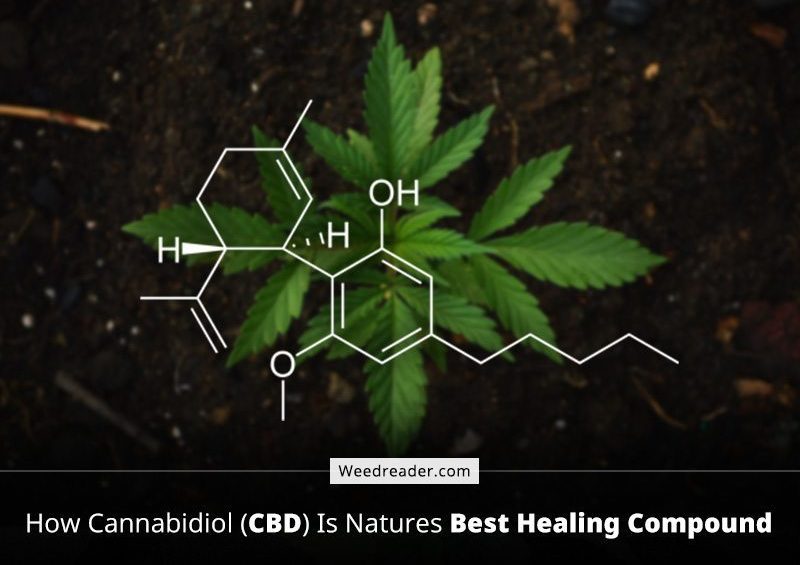
CBD: How Cannabidiol (CBD) is Natures Best Healing Compound

What is CBD?

Cannabidiol (CBD) is a naturally occurring compound found in cannabis plants.Scientific research over the last few decades has shown that Cannabidiol has dozens of medical benefits. Cannabidiol is one of over 60 compounds found in cannabis.  Both THC and CBD belong to a class of molecules called cannabinoids.
Of the known cannabinoid compounds, CBD and THC are usually present in the highest concentrations, and are therefore the most recognized and studied. The difference between CBD and THC comes down to how they interact with the cannabinoid 1 (CB1) receptors. Cannabidiol inhibits the interaction of CB-1 receptors throughout the body with a major focus on receptors in the central nervous system.
CBD Flower

How does CBD work in the body?

Cannabinoid receptors are cell membrane receptors  that contain transmembrane spanning properties. Cannabinoid receptors are activated by three groups of ligands (a molecule that binds to another molecule):  endocannabinoids that are produced inside the mammalian body, cannabinoids produced in plants and synthetic cannabinoids. Because CB-1 receptors bind with all three types of cannabinoids, one source can be supplemented for the other to provide medical benefit to patients.
The endocannabinoid system is a vast network of cell receptor proteins and serves many functions. CB-1 receptors are heavily concentrated in the central nervous system. Others types of cannabinoid receptors are found all over the body. They’re in every humans skin, digestive tract, and even in their reproductive organs. All of the endocannabinoids and plant cannabinoids bind to fatty compounds in the body. The binding properties of cannabinoids are why THC and CBD remain in a person’s system for so long.

How does CBD work in the brain?

Cannabidiol has low binding affinity for CB1 receptors. THC binds well with CB1 cannabinoid receptors but CBD does not. This is why one (THC) will cause a high and the other (CBD) will not. While this makes Cannabidiol a bad choice for recreational users, it is a significant advantage for use as a medicine. The high associated with cannabis is generally considered a side effect.
Since health professionals prefer treatments with minimal side effects. CBD is seen by most medical professionals as preferable to THC. CBD is non-psychoactive because it doesn’t act on the same pathways as THC. These pathways, called CB1 receptors, are highly concentrated in the brain and are responsible for the mind-altering effects of THC.
CBD Flower 1

What does CBD do?

The fact that Cannabidiol-rich cannabis is non-psychoactive or less psychoactive than THC-dominant strains makes it an appealing option for patients who want to avoid the stereotypical feelings associated with consuming cannabis.
Scientific and clinical research underscores Cannabidiol’s potential as a treatment for a wide range of conditions. People looking for relief from inflammation, pain, anxiety, psychosis, seizures, and other conditions without disconcerting feelings of lethargy find Cannabidiol to be an effective treatment.
Conditions including arthritis, diabetes, alcoholism, MS, chronic pain, schizophrenia, PTSD, depression, antibiotic-resistant infections, epilepsy, and other neurological disorders find the most relief from treatments. This is because CBD has demonstrable neuroprotective and neurogenic effects along with anti-cancer properties. These properties are currently being investigated at several academic research centers around the world.

How does CBD treat all these health issues?

The biggest distinction between CBD vs. THC comes down to a basic difference in how each one interacts with cannabinoid 1 (CB1) receptors. THC binds well with CB1 cannabinoid receptors while CBD does not. Think of it like an electrical plug connecting to an outlet.
A THC molecule is perfectly sized to connect with CB1 receptors. When that connection happens, THC stimulates those CB1 receptors like turning on a switch. THC works to activate those CB1 receptors.Cannabidiol works in a different way. It doesn’t act directly to activate or suppress CB1 receptors. Instead, it acts to suppress the CB1-activating qualities of a cannabinoid like THC.  So while THC turns on CB-1 receptors like sticking a key in an outlet, CBD blocks the outlet.

If CBD is so good, why isn’t it more mainstream?

Even though CBD shows great promise as a medicine, it remains illegal in most of the world. CBD is classified as a Schedule I drug (right beside THC) in the United States and a Schedule II drug in Canada and the UK.
The US government has been studying CBD for a while and fund most of the science going on stateside due to the difficulties associated in researching a schedule 1 substance. Even with the challenges, intrepid researchers have identified dozens of conditions that can be treated or cured using Cannabidiol.
A team of researchers at the California Pacific Medical Center, led by Dr. Sean McAllister, has stated that they hope to begin trials on CBD as a breast cancer therapy. Due to the challenges of navigating the FDA, they are fighting an uphill battle.

If CBD is great as medicine, why aren’t more drug companies using it?

All is not dark for CBD research. The U.S. Food and Drug Administration recently approved a request for a clinical trial of a CBD based drug. The drug in question is a pharmaceutical version of CBD used to treat children afflicted with rare forms of epilepsy. The drug is called Epidiolex and is made by GW Pharmaceuticals. GW Pharmaceuticals also makes another cannabis-based drug called Sativex.
Even with approval of trials for Cannabidiol based meds, the U.S. Drug Enforcement Agency (DEA) made it clear that marijuana-based extract is still considered a Schedule I drug under federal law. They made sure to say in a Dec. 2016 address that the ban includes CBD oils and other types of CBD-rich extracts.

What does the future of CBD look like?

In general, far more research is needed to figure out all of the effects cannabis has on our bodies. But, to say that our overall understanding of CBD is “lacking” would be an understatement. In the midst of medical and recreational legalization happening in the US state by state, the federal stance on cannabis remains staunchly opposed. While the UK classifies CBD as a schedule 2 substance, the US still tightly holds to its schedule 1 status of all things cannabis.
A pharmaceutical version of Cannabidiolwas recently developed by a drug company based in the UK. The UK based company, GW Pharmaceuticals, is now funding clinical trials on Cannabidiol as a treatment for schizophrenia and certain types of epilepsy through the significantly easier UK process.
Only time will tell if cannabis will become a mainstream medical tool in the future. With political pressure and overwhelming public support for legalization, there has been a lot of gains in recent years. As legislation moves cannabis out of the darkness and into the limelight, government agencies like the FDA will have to reevaluate how they have classified cannabis. Thanks for reading.