

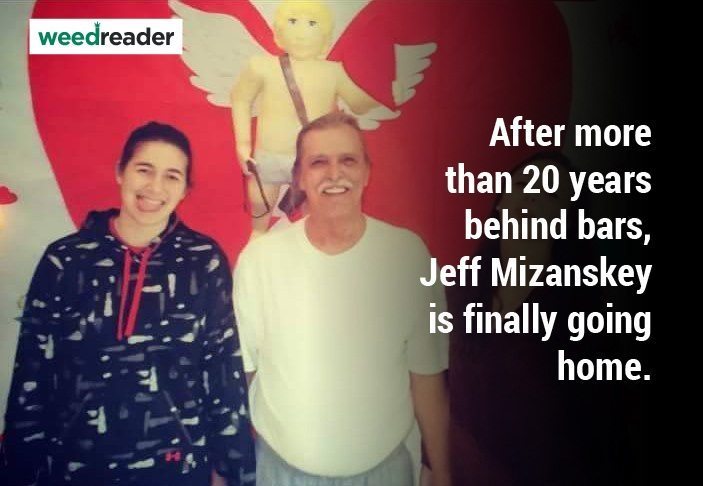
After more than 20 years behind bars, Jeff Mizanskey is finally going home.
The 62 year old grandfather has been in prison since 1993, when he was arrested at the scene of a pot deal gone bad. He was neither the seller nor the buyer, just “guilty by association.” But because of prior convictions, and Missouri’s “3 strikes you’re out” policy toward drug offenders, Mizanskey was sentenced to life without parole.
In 2011, the “3 strikes” rule was repealed. I guess lawmakers finally came to their senses, and realized what they had done was cruel and inhumane. Too bad for Jeff, that revision was not retroactive — meaning that it didn’t apply to those who had already been convicted and sentenced.
His story went mainstream in 2013, and pro-cannabis activists from across the nation joined in the #freejeffmizanskey campaign. An online petition calling for clemency from Missouri governor Jay Nixon gathered nearly 400,000 signatures. The governor responded by commuting Jeff’s sentence back in May, making him eligible for parole. He went before the parole board on August 7th.
His parole was granted.
He’s scheduled to be released on September 1st. Jeff is going home to his family. Finally.
Obviously, this is a momentous occasion for the Mizanskeys and their supporters, and for the whole cannabis movement. And we should celebrate, of course! But as we rejoice for Jeff and his family, and bask in the glow of a major victory, let’s not lose sight of the big picture…
There are still more than 2 million people behind bars in America — the largest prison population on the planet. And 17% of people in state run prisons are incarcerated for drug offenses; in federal prisons, nearly half (48%). There are still thousands of people serving life sentences for non-violent drug offenses, including more than a dozen who, just like Jeff, are serving life sentences for pot.
There were more than 1.5 million drug-related arrests in 2012, and 42% of them were for possession of marijuana.
That means that more than 650,000 people were handcuffed and caged just for getting high. Our nation’s correctional facilities are overcrowded and underfunded — or being run for profit by private corporations with government contracts… which is so tragically flawed it ought to be a crime.
And yet every year, thousands more are locked up for possession of a plant. A medicine.
That’s not even counting the number of people who get fired from their jobs, or lose custody of their children, because of a failed drug test. It is no exaggeration to say that millions of people have suffered because of pot prohibition, and the criminalization of one of Nature’s most powerful herbal remedies.
When will we finally stand up and say enough is enough?
As we celebrate Jeff Mizanskey’s release, and the happy ending (at last!) to his story, let’s also remember the lessons there are to be learned, and the work there is still left to do.
1. We must continue to campaign for retroactive decriminalization, so that all those currently serving time for pot possession can have their sentences overturned, and be sent home.
2. In the states where weed is made legal, recreationally or medicinally, we need laws on the books to protect cannabis users from being fired over drug test results.
3. Ultimately, we must not stop until we see reform of federal drug laws, and a re-classification of marijuana from a Schedule 1 narcotic to a legal and regulated substance. Because no one should be in jail over a plant.
Congratulations to Jeff and his family! We wish you nothing but the best. But let’s remember that the struggle isn’t over. We’ve got to continue to be involved, and let our voices be heard in the media, through petitions, and most importantly through the ballot box.
Let’s keep on fighting the good fight until all the victims of the Drug War are sent home, and all people are free to use cannabis as Mother Nature intended.


