
MEDS Act Sponsored By Senator Hatch

MEDS Act Sponsored by Senator Hatch

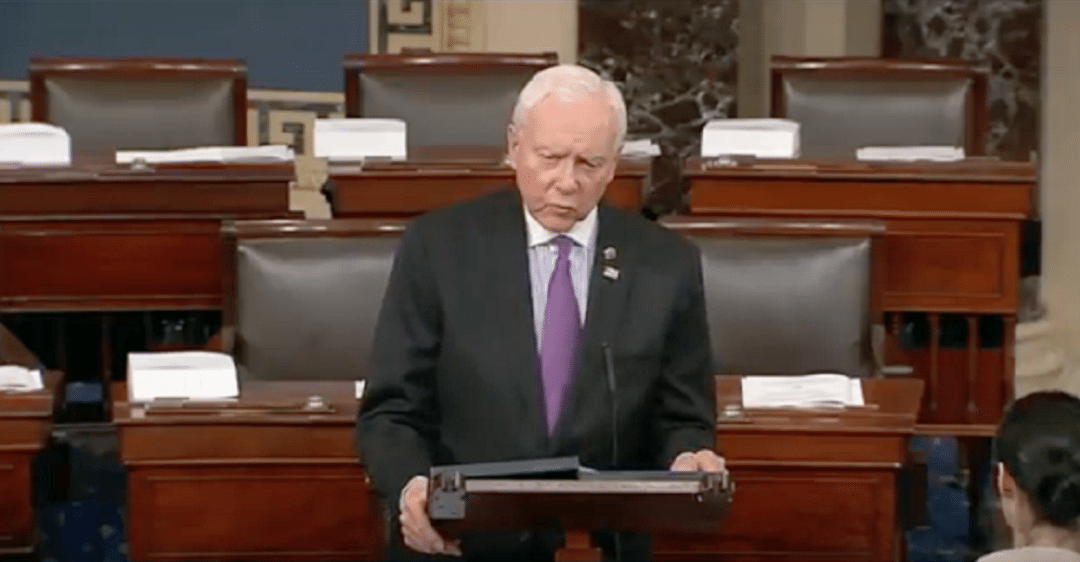
Senator Hatch Introduces the MEDS Act.
MEDS Act
The Marijuana Effectiveness Drug Study Act (MEDS Act) was just sponsored by Senator Orrin Hatch from Utah. If you have ever been to Utah, you might know that it is a highly religious state. The Mormon temples are proudly displayed and most stores are closed on Sunday. So it comes as no surprise that Senator Hatch is a dedicated Mormon.
But the Senator isn’t a blind follower. He sees the damage that opioid addiction causes and the good that cannabis can do. Especially as the U.S. grapples with spikes in teen overdose deaths rates. And the opioid crisis is causing a significant drop in U.S. labor force participation—particularly among American men. And Senator Hatch wants to stop it.
But the problem is bigger than just one state. The entire nation seems under the oppressive whip of opioid addiction. If you aren’t struggling with opioids, chances are you know someone who is. And most of them got hooked by their doctors.
Trump even declared the opioid crisis a national emergency and seeks solutions that will appease his base and his face. But Trump has yet to put forth a comprehensive sentence, much less a policy directing the nation on how to handle cannabis. And Hatch is much more pragmatic about his approach to dealing with this sensitive and rampant issue.

Senator Hatch has a plan for how to fight the opioid crisis.
Youtube Bong
As part of his plan to combat the opioid epidemic, Hatch introduced the Marijuana Effectiveness Drug Study Act of 2017 (MEDS Act). The speech he gave during the introduction Wednesday, he couldn’t help but sneak in some weed puns.
He started his speech by saying “Mr. President, it’s high time to address research into medical marijuana. Our country has experimented with a variety of state solutions without properly delving into the weeds on the effectiveness, safety, dosing, administration, and quality of medical marijuana.”
Hatch wore his religion on his sleeve but showed his willingness to compromise when he said “it will surprise no one that I am strongly against the use of recreational marijuana. I worry, however, that in our zeal to enforce the law, we too often blind ourselves to the medicinal benefits of natural substances like cannabis.”

He feels cannabis is a powerful ally in the fight.

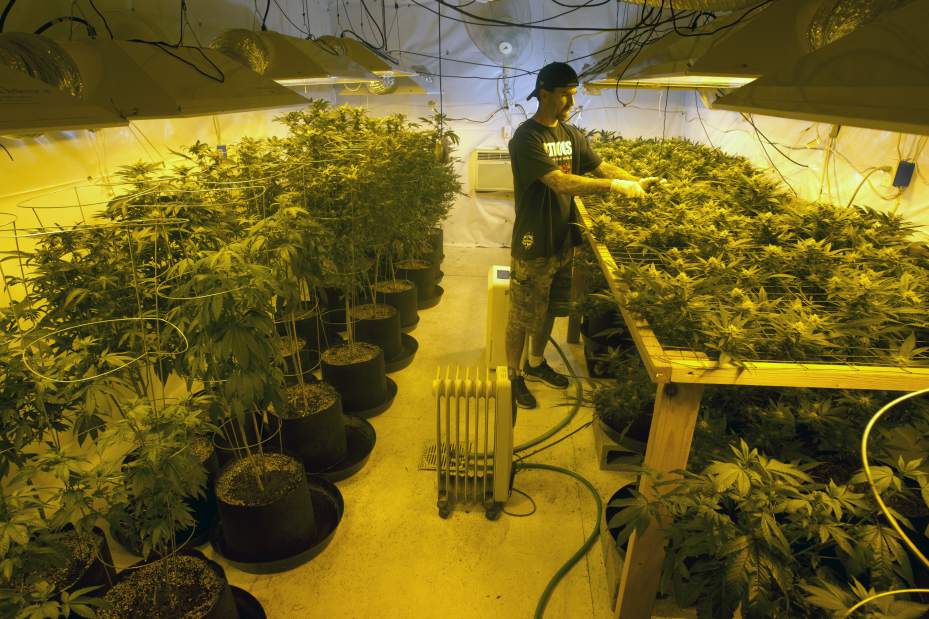
Senator Hatch sees red tape as the big problem with cannabis today. He explained that there are no federal quality controls for marijuana-based medications. The MEDS Act would remedy that and establish standards for growing medicinal marijuana.
Bureaucratic red tape surrounding safety and efficacy prevent the kind of “rigorous scientific evidence” Hatch feels is still needed. He understands that there are many unique and powerful compounds in the cannabis plant. And the MEDS Act is his attempt at stimulating research into the potential of cannabis.
Like most of us, it took Senator Hatch a personal encounter to come around to cannabis. When a friend was faced with the choice between using weed and getting a risky brain operation, Hatch realized how important research into cannabis is.

Hatch isn’t a hippy.


He was quick to clarify that he wasn’t going to be advocating recreational consumption though. His very next words were “While I certainly do not support the use of marijuana for recreational purposes, the evidence shows that cannabis possesses medicinal properties that can truly change people’s lives for the better. And I believe, Mr. President, that we would be remiss if we threw out the baby with the bathwater.”
Senator Hatch wants to encourage research into potential medical uses for marijuana. The plan involves streamlining the research registration process. The goal is to make marijuana more available to the scientific and medical research communities.

The MEDS Act will make an impact if it passes.
marijuana grow
Ideally, the bill will sail through both houses, get signed into law and become a new foundational piece of legislation moving forward. But that seems like a pipe dream. There is plenty of cannabis reform legislation making the rounds right now and none of it has much support.
More likely, it will suffer the same fate as the other pro-cannabis legislation making the rounds in congress. Bills like the Compassionate Care Act and the Research Expansion and Respect States (CARERS) Act couldn’t find the support they needed to move forward.
These bills are stuck in a state of limbo, dead on the floor and unable to pass on. Mainly because there isn’t enough support to pass them or even to get them to a vote. This effectively makes them zombie legislation with little hope of actually passing.

Senator Hatch wants to do things right.

Smoke Sessions
The MEDS Act encourages commercial production of FDA-approved drugs derived from marijuana. It would also put pressure on the Attorney General (AG) to increase the national marijuana quota in a timely manner. It would do this by requiring the AG meet the nations changing medical, scientific and industrial needs for marijuana.
The bill would also include certain protections against abuse as well. The National Institute on Drug Abuse (NIDA) would then have to develop and publish recommendations and best practices. These would include how to grow and produce marijuana for research.
But there is still a long road ahead. Even if the bill gets passed, there will be many edits, re-writes and last minute additions. Political opponents will try to dismantle the important protections and stall it out like past bills. It’s hard to tell how far this one will go. But we can at least hope it goes all the way.

What do you think about Senator Hatch and the MEDS Act? Do you think it will become law? Let us know why or why not in the comments below.

The New Jersey Marijuana Justice Act

The New Jersey Marijuana Justice Act

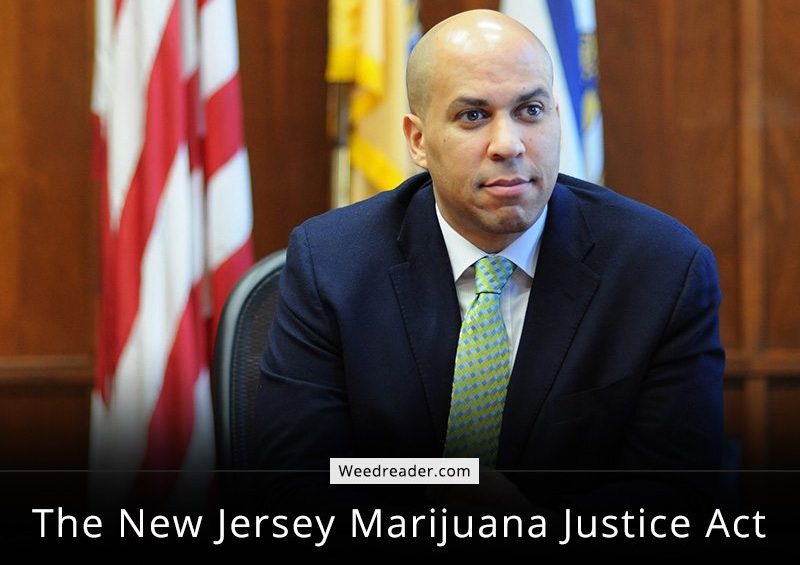
Senator Cory Booker’s Marijuana Justice ActYoutube Bong

The Action Together New Jersey (ATNJ) Supports Senator Cory Booker’s Marijuana Justice Act. The ATJN advocates for fair and equitable drug policy reform. Sen. Booker’s Marijuana Justice Act would legalize marijuana at the federal level. It would also encourage states to legalize marijuana. One of the most important parts of the Marijuana Justice Act is the promise of expunging criminal records. This includes those convicted solely for possession and/or use. Also, to hold sentencing hearings for those currently serving time.
ATJN’s Director of Drug Policy Reform, Moira Nelson made a statement. “We know that communities of color and low income communities have been disproportionately impacted by marijuana prohibition. African Americans are three times more likely to be arrested for marijuana than white people even though both use marijuana at similar rates. This is a fact. These convictions are tearing families apart, it’s difficult to find a job once you’ve been convicted, it’s impossible to get a student loan and hard to obtain housing. Marijuana should not have prohibited in the first place. It was an oppression tactic. The time has come to regulate and tax marijuana in the same way we do alcohol”.
Several New Jersey groups have paired up with ATJN such as the Drug Policy Alliance (DPA), and the New Jersey United for Marijuana Reform Coalition (NJUMR). In addition, thousands of citizens support the move. Also, the NAACP – NJ State Conference, National Organization of Woman NJ (NOW-NJ), New Jersey Policy Perspective, New Jersey Citizen Action, People’s Organization for Progress, Latino Justice PRLDEF, to name a few.

The New Jersey Senate Bill 3195 / Assembly Bill 4872 would legalize marijuana in the state.marijuna justice act

ATJN and other members of the coalition are working together to ensure policies are fair, equitable and just. The coalition is fighting for policies such as expungement for people previously convicted of marijuana offenses, investment of some portion of the revenue generated from the sale of legal marijuana back into the communities that have been disproportionately impacted by marijuana prohibition, and equal opportunity to access employment created by the cannabis industry.
After the hearing, Nelson said that it was inspiring to see how thoughtful the state legislators were about this legislation. And how many people are in favor of marijuana legislation. Nelson also went on to comment that it was really uplifting hearing person after person speak on behalf of those communities. These communities have feel the deep impact of prohibition and speak for many. “I am very hopeful for our future. In this unsettling political climate, we need advocates and allies to speak up for those that are disenfranchised in some way. What I witnessed today brings me immense hope.”
For more information about what ATJN commits too and what they strive to accomplish, please visit them at www.ATJN.org.
For a closer look at the conference, check out this YouTube video. Any comments? We’d love to hear them. And as always, thanks for reading.
 

sessions

CARERS Act Says No To Sessions

Congress uses CARERS Act to stop Jeff Sessions War on Drugs.

Congress recently introduced the CARERS Act in response to the Attorney General. AG Jeff Sessions recently petitioned congress for additional funds to pursue medical and recreational cannabis users. His deep ties to the prison-industrial-complex have raised concerns. That Session’s attempts to target law-abiding citizens is an attempt to enrich himself at any cost.
Sessions is drowning in the Russia scandal and desperate to impress the first president to demand senators grovel publicly. He also recognizes the current president will likely take no action to stop him from shooting every pothead in the nation. The only real thing stopping Sessions from rolling out the nonexistent FEMA coffins is the funding.
The Attorney General claims that his efforts are an attempt to slow the opioid epidemic that professionals prescribed the nation into. But that seems unlikely given how effective cannabis is at treating opioid addiction. Additional concerns about Sessions long history of racial bias and overt discriminatory behavior drastically weaken his position.

The AG wants to reinvigorate a racial war but congress won’t fund it.Youtube Bong

The long-running War on Drugs has produced drastically unequal outcomes across racial and social lines. One in three men of color between the age of 20 and 29 are currently in the criminal justice system. White populations use drugs as often as anyone else, they are 4 times less likely to be arrested for marijuana.
The effect of the war is targeted violence by the dominant group against smaller groups. Such acts are commonly known as racism. While individuals can claim they were “just following orders”, the denial rings as hollow and delusional. The Nuremburg Trials after WW2 established an international consensus about orders. They are not justification for committing acts of evil and terror.
Yet America is a country constantly at war with itself. It claims to be a free democracy and bastion of capitalism, it is anything but. The united states account for 5% of the global population yet account for over 25% of the world’s prisoners. But Sessions doesn’t believe that enough people are in overcrowded cages.
The Justice Department does a lot of good but there is also plenty of vile behavior that it protects. Black men are legally shot dead by police for following that officer’s orders. Homes get invaded and the residents are killed with surprising regularity. Generations of people grow up only knowing the inside of a cell.

Whole communities are ripped apart emotionally, physically and socially.

And it’s not just time behind bars that is the issue; arrests stay with a person, often for life. And the consequences of a criminal record are most dire for the poor. A conviction disqualifies anyone from many social safety nets. Public housing and student financial aid, employment opportunities, child custody determinations, and immigration status evaporate after a conviction.
These are systems overwhelmingly used by poor and minority populations. And it seems that the Justice Department willfully misunderstands basic facts. Sessions continues to refer to the “historic drug epidemic” in his letter but appears to conflate opioids with cannabis.

Despite his desperate pleas, congress told Sessions no.

A bipartisan group of U.S. senators introduced the bill. It allows state medical marijuana laws to supersede current federal prohibition of marijuana. The bill is called the CARERS Act, which stands for the Compassionate Access, Research Expansion, and Respect States Act.
Rep. Blumenauer said, “The people have been pretty clear that this is something they don’t want the federal government to interfere with.” The legislation allows the different laws legalizing medical marijuana in 30 states, and multiple territories including Washington D.C. to remain.
The CARERS bill submitted through congress but it failed. In 2015, it was the first medical marijuana bill ever introduced into the U.S. Senate. The latest version is better positioned to pass than the original which only had three sponsors. The newest version has six and includes names like Rand Paul, Lisa Murkowski and Al Franken.

Trump is the randomizer on this subject.

While running for president, Trump claimed marijuana laws are a state level issue. He then appointed Jeff Sessions to be his attorney general. Presidential support gives Sessions the daring to ask congress for permission to blow up a functioning portion of the economy.
Sessions sounded like a Hipster Hater when he said, “I believe it would be unwise for Congress to restrict the discretion of the Department to fund particular prosecutions, particularly in the midst of an historic drug epidemic and potentially long-term uptick in violent crime.” Especially after calling the KKK “OK, till I found out they smoked pot”. Sessions continued “The Department must be in a position to use all laws available to combat the transnational drug organizations and dangerous drug traffickers who threaten American lives.”
But the new bill’s proponents argue Sessions’ thinking is flawed. Cannabinoids like cannabidiol (CBD) have been clinically proven to reduce epilepsy and other seizures by up to 45%. Cannabis shows great promise in treating opioid addiction, cancer, mental disorders and many other conditions with minimal side effects.

The bipartisan commission understands the potential consequences.

“I dare him to sit down with families and listen to their stories and then pursue a policy like he’s advocating for now,” Booker says of Sessions’ letter. In addition, allowing states to set their own policies, the CARERS Act would take CBD off the controlled substances list.
The FDA and DEA only recently made CBD a controlled substance. If the decision were reversed, it would allow children to access life-saving medicine. It would be especially impactful in states where medical marijuana isn’t legal.
The bill’s sponsors know it will be difficult to correct the course of the Justice Department. They feel that their bill has the backing it needs to send a message to Sessions. That spending additional time and money pursuing medical marijuana is not OK.

The bill aims to remove current restrictions at Veterans Affairs hospitals.

The legislation removes penalties and procedures currently in place that silence doctors. It would essentially allow doctors to talk about and prescribe pot to their patients. The legislation also allows the nation’s veterans to access legal weed by removing the current restrictions. These policies bar doctors at Veterans Affairs hospitals from prescribing pot to their patients.
But it doesn’t approach the eight states that opted to legalize weed for recreational use. Many of the bill’s proponents promise that those efforts will come later. Washington State should keep an eye out for Sessions and his Hipster Haters. Sessions will eventually find a way around congressional roadblocks.

The full text of the petition can be found at:

https://rohrabacher.house.gov/sites/rohrabacher.house.gov/files/documents/Final%20MMJ%20Letter%20to%20CJS%20Subcommittee.pdf